
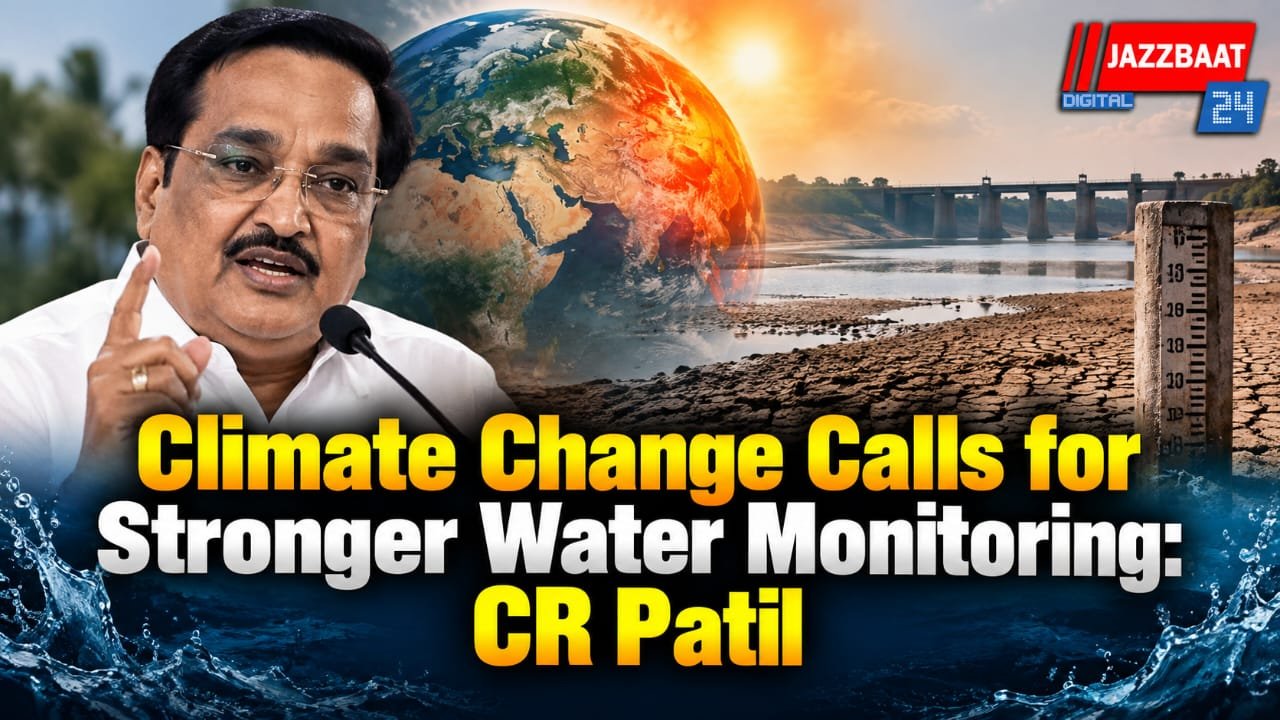
Union Jal Shakti Minister CR Patil on Tuesday called for stronger scientific research, improved water monitoring, timely early warning systems and better preparedness to tackle the growing impact of climate change on water resources.
Speaking at the inaugural session of the 9th India International Water Week 2026, held under the theme “Climate Resilient Water Management”, Patil said climate change was rapidly altering global water cycles. While some regions are facing excessive rainfall and flooding, others are experiencing water shortages, creating new challenges for vulnerable ecosystems, including the Himalayas.
Patil stressed that countries and regions must share their experiences and work together to address emerging water-related risks. He described water as a shared resource and said water security should therefore be treated as a shared responsibility.
The minister said India’s water security agenda must go beyond simply increasing water availability. It should also focus on efficient use of water, protecting existing sources, groundwater recharge and preparing for rising future demand.
Highlighting the Jal Jeevan Mission, Patil said the number of rural households with tap-water connections had increased from around 3.24 crore in 2019 to nearly 16 crore. However, he said the next challenge was to ensure that households receive safe, adequate and regular water supplies.
According to Patil, this would require better protection of water sources, proper operation and maintenance of water infrastructure and greater participation from local communities.
He also highlighted the potential role of technology in improving water management. Real-time data, satellite information, improved weather forecasting and artificial intelligence could help authorities make better decisions related to floods, groundwater, reservoirs and irrigation.
However, Patil said technology alone could not address the country’s water challenges. Scientific knowledge needs to be connected with local communities and technological solutions must respond to local requirements, he said.
The minister also called for greater coordination between governments, institutions and communities, noting that water-related problems cannot be addressed by a single ministry, state or country.
He said India was prepared to share its experience in water management while learning from international practices as the country works towards strengthening climate-resilient water systems.


Reader Comments 0