
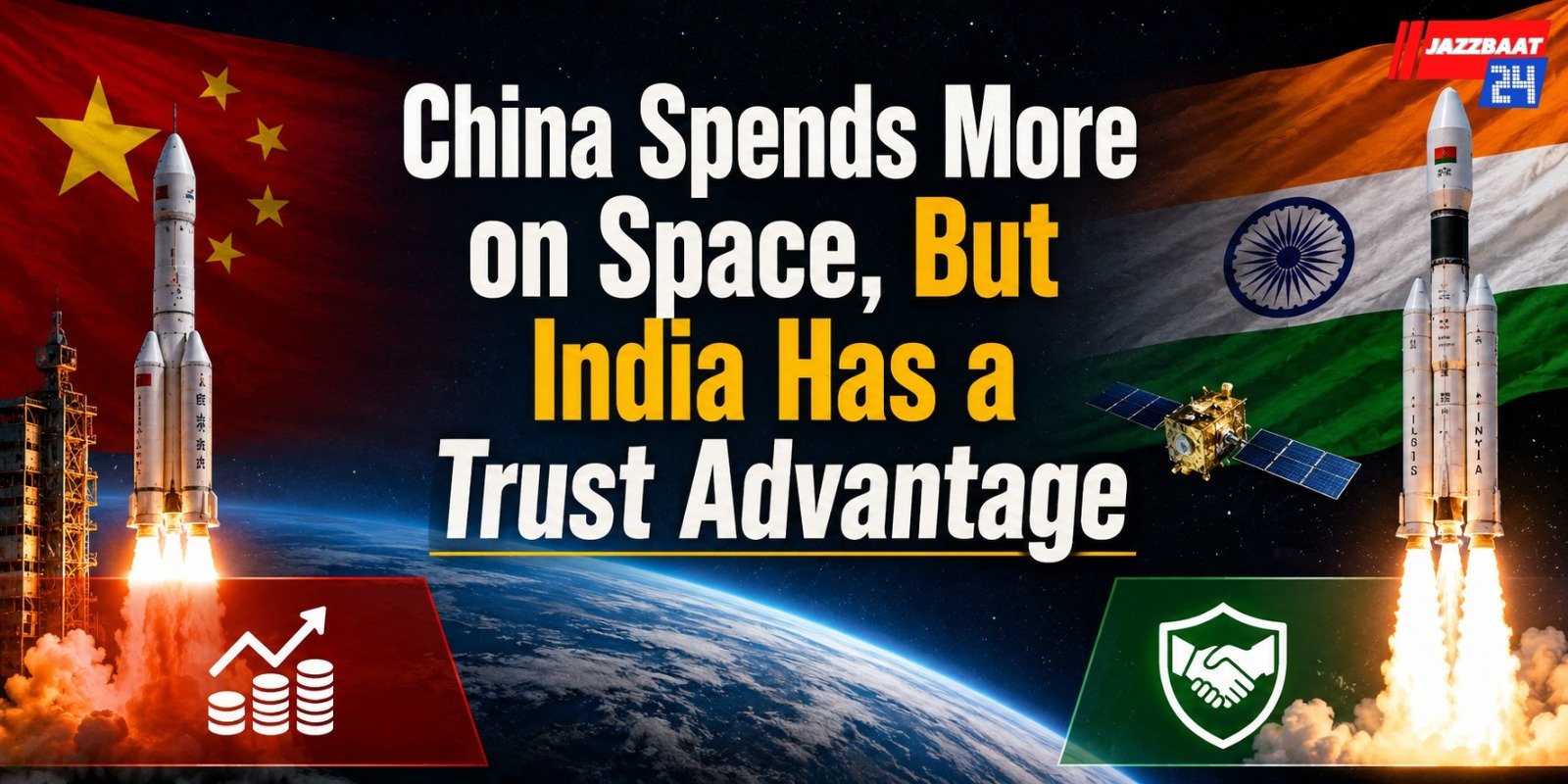
India is rapidly expanding its presence in the global space sector, but it still faces a major gap in spending and overall capabilities compared with China, according to Yash Karanam, Co-Founder and COO of Bellatrix Aerospace.
Speaking to NDTV, Karanam said China currently has a much broader range of space capabilities and significantly greater financial resources. He pointed out that the scale of investment remains one of the biggest differences between the two countries.
However, he argued that money is not the only factor that determines success in the space industry. According to Karanam, China faces a major challenge when it comes to international trust. Growing geopolitical concerns have made several Western countries and companies cautious about working closely with Chinese space companies.
India, in contrast, has an opportunity to build partnerships based on greater international confidence. Karanam believes this trust could become an important advantage for New Delhi as India's private space sector continues to expand.
He also discussed the growing movement of scientists and engineers from the Indian Space Research Organisation (ISRO) into private space companies. While concerns have been raised about a possible brain drain, Karanam said the main reason is the significant salary difference between government organisations and private companies.
He said many experienced ISRO scientists are choosing Indian space-tech startups after retirement or during career transitions. According to him, foreign companies are not currently engaged in widespread poaching of India's top space talent.
Karanam remains optimistic about India's position in the global space race. He said the United States remains the clear leader, while China has established itself among the top space powers. However, he believes India's growing number of startups, expanding manufacturing capabilities and strong engineering talent could help the country eventually target a place among the world's top three space powers.
He also highlighted the rapid growth of the global space economy, particularly in satellite communications, defence and surveillance, Earth observation and emerging technologies such as in-orbit servicing.
The industry itself has undergone a major transformation, with satellites becoming smaller and increasingly moving into Low Earth Orbit. Lower orbital altitudes have helped improve communication speeds, reduce latency and strengthen Earth-observation capabilities.
Karanam said the next technological challenge could involve operating satellites at altitudes as low as 200 kilometres, where propulsion becomes a critical requirement.
Bellatrix Aerospace, which he co-founded, has been working on propulsion technologies for the evolving space industry. Karanam recalled that the company faced more than 100 investor rejections during its early years, when India's private space sector was still in its infancy.
Today, he said, the situation has changed significantly, with space technology emerging as one of India's most promising deep-tech sectors.




Reader Comments 0