
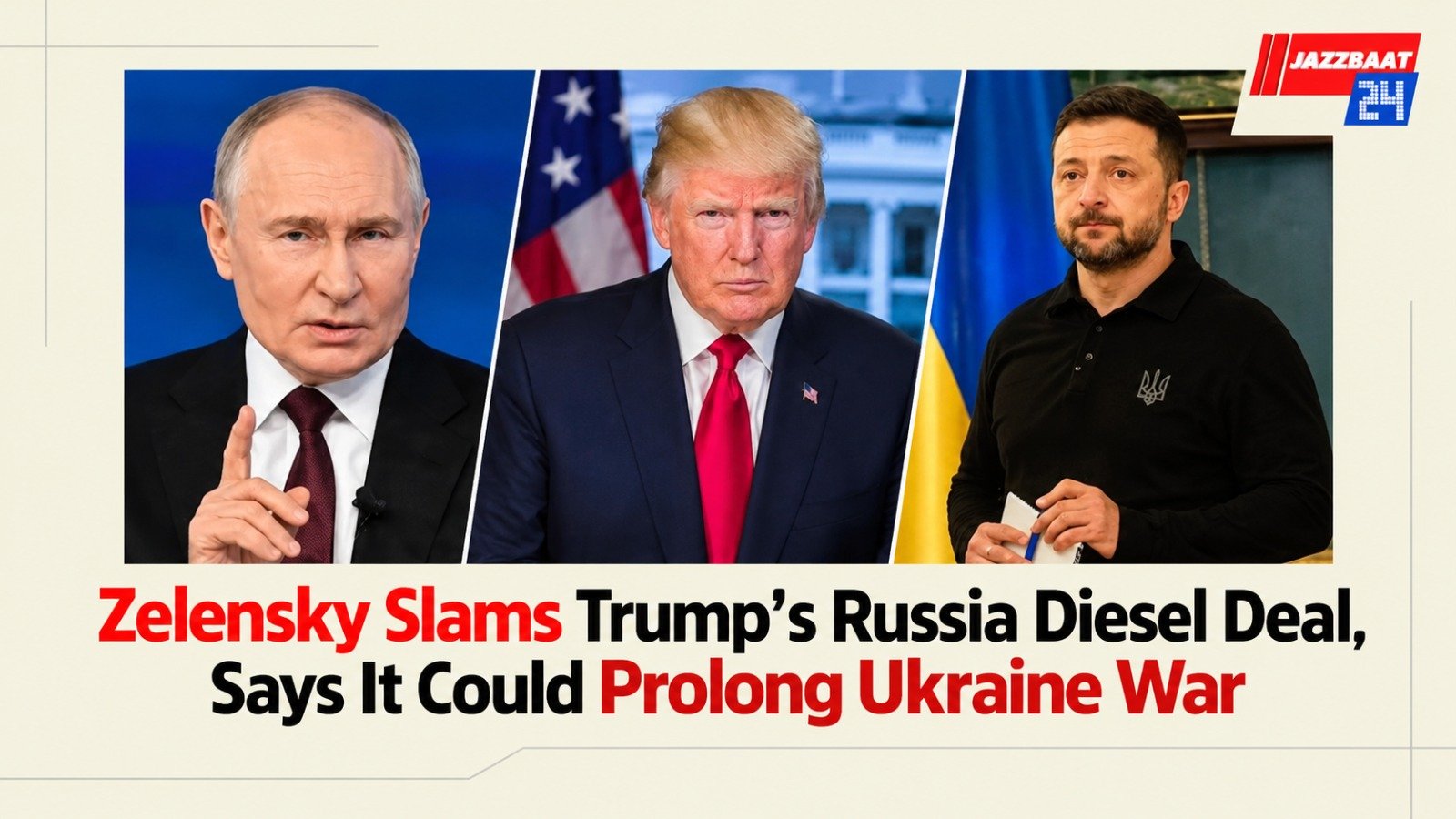
News desk: Speaking to reporters on Friday, Zelensky described the decision as unfair to Ukraine and expressed concern about Washington’s approach to its partners.
He argued that allowing Russia to earn revenue from petroleum sales while the war continues could undermine international efforts to end the fighting.
The Ukrainian president also raised concerns that Kyiv’s position might be overlooked during discussions between Washington and Moscow. He suggested that Ukraine’s negotiating team risked being sidelined in decisions directly affecting the country’s future.
‘Investment in War’, Zelensky Warns
In a post on social media platform X, Zelensky strongly opposed the arrangement, arguing that additional revenue from petroleum exports could help Russia sustain its military campaign.
He described the move as an “investment in a war that must be ended, not prolonged” and warned that concessions to Russian President Vladimir Putin would not necessarily bring peace.
Zelensky also called for meaningful de-escalation, arguing that both sides should take reciprocal steps to reduce tensions rather than pursue arrangements that could strengthen Moscow’s ability to continue the conflict.
Trump Prioritises Lower Fuel Prices
Trump has defended the reported diesel arrangement, saying that reducing fuel costs for Americans remains a major priority. The decision reflects Washington’s focus on energy prices, even as diplomatic efforts to resolve the Russia-Ukraine conflict continue.
However, the arrangement has exposed differences between Washington and Kyiv over how economic engagement with Russia should be handled while hostilities persist.
For Ukraine, the central concern is that fresh revenue for Moscow could help finance its military operations. Zelensky has maintained that any steps towards a settlement must take Ukraine’s interests into account and contribute to ending the war.
As negotiations continue, the dispute over Russian diesel supplies has emerged as another point of tension between the United States and Ukraine, highlighting the challenge of balancing domestic economic priorities with international efforts to secure peace




Reader Comments 0