
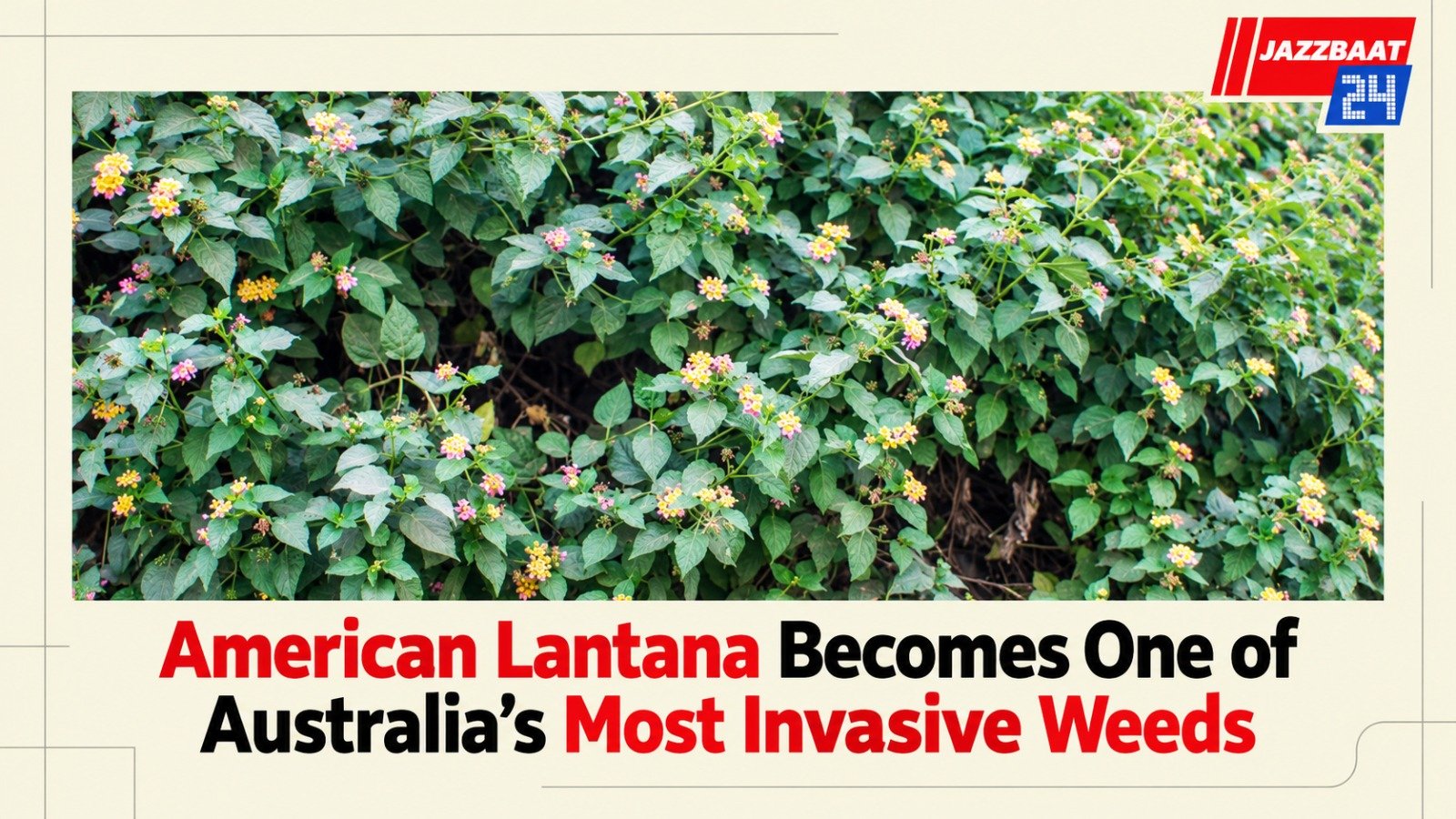
News desk: A plant once admired for its colourful flowers has turned into a major environmental and economic problem in Australia. Lantana, a shrub native to the tropical regions of the Americas, has spread across large areas of Queensland, becoming one of the region’s most invasive weeds and causing significant losses to the grazing industry.
According to a 2012 study published in the journal PLOS ONE by researchers from the University of Oxford, lantana is among the most problematic invasive plants recorded worldwide. Originally introduced as an ornamental garden plant, it escaped cultivation and gradually spread into natural landscapes.
Lantana reached Australia shortly before 1850 and was initially grown in botanical gardens, including those in Adelaide. Its attractive flowers made it popular among gardeners, leading to further introductions in New South Wales and Queensland. By the late 19th century, however, it had been recognised as a harmful weed.
Why is lantana so difficult to control?
Lantana is a hardy plant that can grow across a wide range of environments, from sea level to elevations of 1,800 metres or more. It competes with native vegetation for water and nutrients and can release chemicals that inhibit the growth of neighbouring plants.
Birds also play a significant role in its spread by carrying its seeds over long distances. Under favourable conditions, lantana forms dense thickets that prevent native plants from growing and alter local ecosystems.
The plant is also poisonous to livestock, making it a concern for farmers and grazing communities. Its spread threatens biodiversity in several ecologically important areas, including Queensland’s rainforests, Fraser Island and the Greater Blue Mountains in New South Wales.
Heavy economic losses for farmers
The financial impact of lantana has been substantial. A 2003 assessment ranked it as Queensland’s most invasive weed. The cost of controlling it in the state was estimated at around A$1 million annually in 1973.
The economic consequences increased considerably over the following decades. An assessment cited in the Oxford study estimated that lantana imposed an opportunity cost of approximately A$121 million on Queensland’s grazing sector in 2007. A comparable estimate for 1985 put the annual cost at A$3 million, although the figures came from different sources.
Opportunity costs represent the economic value lost when land cannot be used as productively as it otherwise could be.
Why eradication remains difficult
Australia has attempted to control lantana through several methods, including biological control using insects that feed on the plant. However, efforts to eradicate it have largely failed, and the weed continues to spread in affected regions.
The Queensland government classifies lantana as a restricted invasive plant under the Biosecurity Act 2014. Landholders have responsibilities regarding its management, and restrictions apply to activities such as selling, giving away or releasing the plant into the environment.
The experience of lantana highlights the risks associated with introducing non-native plants without fully understanding their ecological effects. What began as a decorative garden favourite has become a persistent challenge for Australian farmers, land managers and conservationists.




Reader Comments 0