
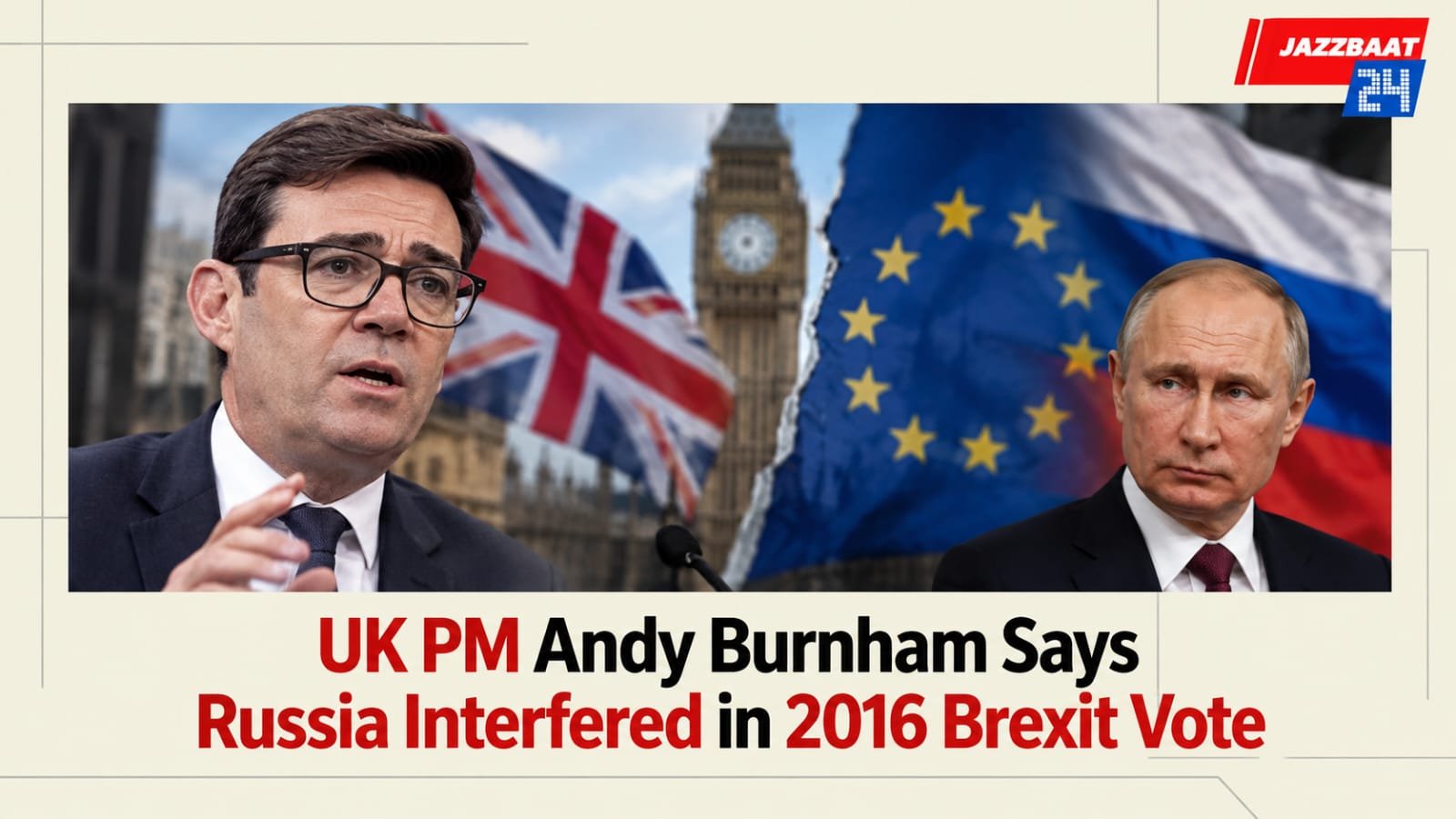
London, October 12: British Prime Minister Andy Burnham has said Russia interfered in the United Kingdom’s 2016 referendum on leaving the European Union, marking what is believed to be the first time a British prime minister has publicly acknowledged Moscow’s role in the Brexit vote.
Burnham made the remarks during an appearance on the podcast The Rest Is Politics, excerpts of which were released on Sunday. He said he sought clarification from his advisers after becoming prime minister in July and received a clear response regarding Russian interference.
“I’ve had the clear answer that yes, there was,” Burnham said.
He stressed that the issue needed to be placed on the public record, particularly as other European countries face concerns about foreign interference in their democratic processes.
“These things are important now to put clearly on the record,” he said, adding that the information could help voters in Germany and France understand how foreign powers might influence political debates.
Earlier concerns over Russian interference
Questions about possible Russian involvement in the Brexit referendum have been raised in Britain for years. In 2020, the UK Parliament’s Intelligence and Security Committee published a report criticising the government for failing to fully assess the potential impact of Russian state-run media and online troll accounts on the referendum.
However, the extent to which any foreign interference influenced the final result remains disputed. Russia has repeatedly denied interfering in elections and referendums in other countries.
The 2016 referendum resulted in 51.9% of voters supporting Brexit, against 48.1% who voted to remain in the European Union. Britain formally left the EU in January 2020.
Pro-Brexit group rejects claims
Burnham’s remarks drew criticism from Britain Unbound, a pro-Brexit campaign group. The organisation described his comments as “another crude attempt to undermine the legitimacy” of the decision made by British voters in 2016.
The group said foreign interference in British elections was unacceptable but rejected the suggestion that Russian intervention had determined the referendum’s outcome.
It also argued that suggesting voters had been influenced by foreign activity was insulting to the electorate.
Concerns extend to Germany
Burnham’s comments come amid wider warnings from British intelligence agencies about the threat of Russian interference in democratic institutions.
The UK prime minister also discussed the issue during a meeting with German Chancellor Friedrich Merz in Berlin last week. According to Burnham, their conversation included concerns about alleged links between Russia and Germany’s far-right Alternative for Germany (AfD) party.
Burnham said Merz had raised concerns about the party’s alleged connections with Moscow and added that Russian-origin misinformation and disinformation were entering German political discourse.
The allegations highlight growing concern among European leaders about the potential use of online influence campaigns and disinformation to shape public opinion.
While Burnham’s statement has renewed debate over the Brexit referendum, the precise impact of Russian activity on the 2016 vote remains a contested issue.


Reader Comments 0