
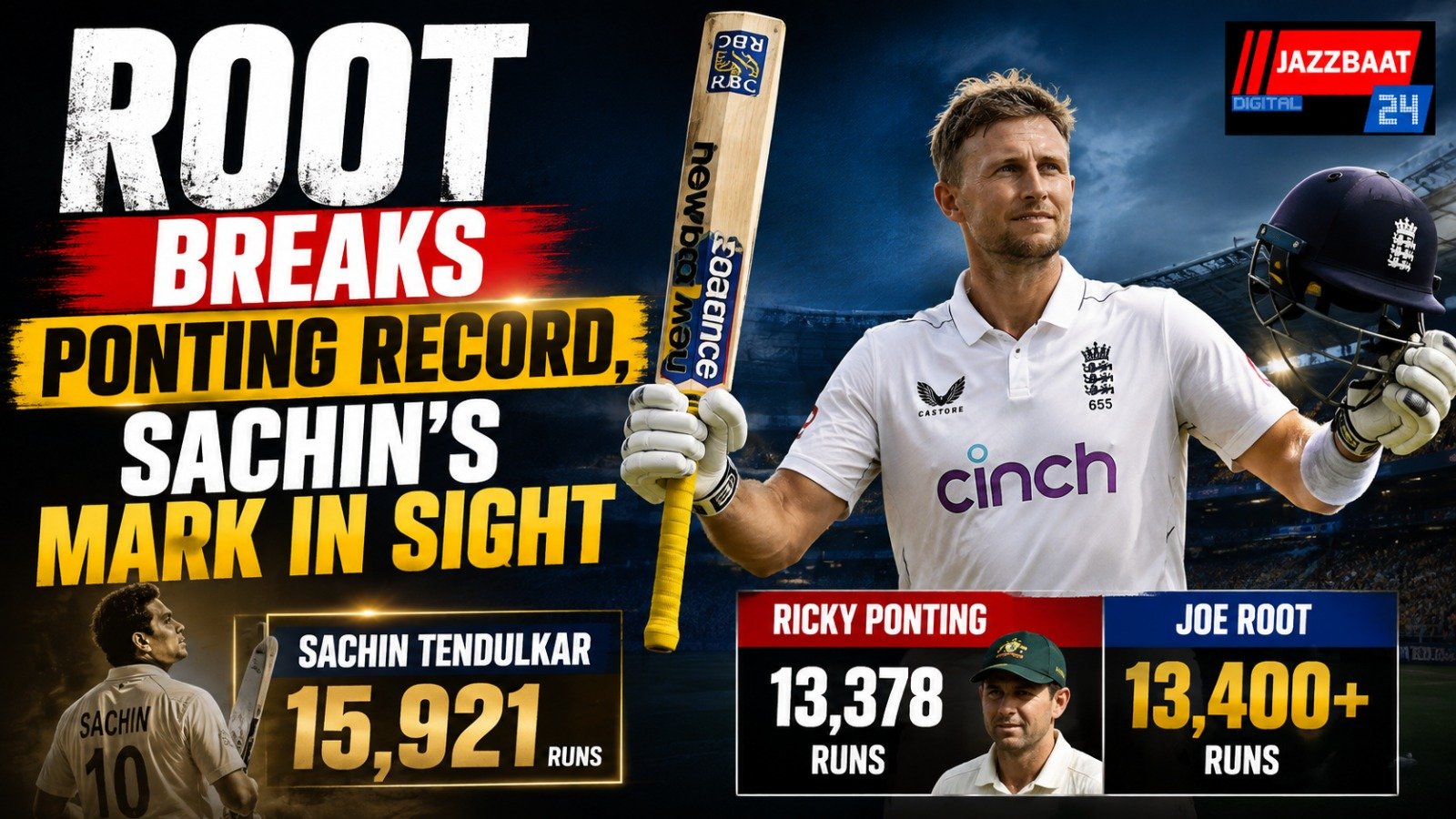
Joe Root has added another remarkable chapter to his Test career, surpassing Ricky Ponting’s long-standing record for the most Test runs scored on home soil during England’s second Test against Pakistan at Lord’s.
Root entered the match needing just 13 runs to overtake Ponting’s tally of 7,578 runs in home Tests. After scoring four in England’s first innings, Root returned in the second innings and made 24 off 37 balls before being dismissed by Pakistan’s Mohammad Ali. Those runs took his home Test tally beyond Ponting’s mark.
Root has now scored around 7,594 Test runs in England, moving ahead of Ponting, who accumulated 7,578 runs in Australia. The England star also reached the landmark in fewer home Tests than the Australian great, underlining his extraordinary consistency over a long international career.
The latest achievement adds to a growing list of records that Root is chasing. Earlier this year, he became only the second batter after Sachin Tendulkar to cross 14,000 Test runs. His career tally has continued to move closer to Tendulkar’s world record of 15,921 Test runs.
Root is currently about 1,700 runs short of Tendulkar’s Test-run record, meaning the possibility of a new all-time record remains a major storyline in Test cricket. At 35, Root still has an opportunity to close the gap if he maintains his remarkable longevity and consistency.
The Englishman is also closing in on Tendulkar’s record for the most Test centuries. Root has 41 Test hundreds, level with Ponting and behind only Tendulkar’s 51 and Jacques Kallis’ 45.
However, Root’s current home season has been less productive by his usual standards. He has gone 10 Test innings without a century, with 77 remaining his best score in the 2026 home season so far.
Even so, his latest record against Pakistan highlights just how close he has come to rewriting some of Test cricket’s most celebrated batting records. With Tendulkar’s numbers now firmly within sight, Root’s remaining career could become one of the most closely watched record chases in the history of the format.




Reader Comments 0