
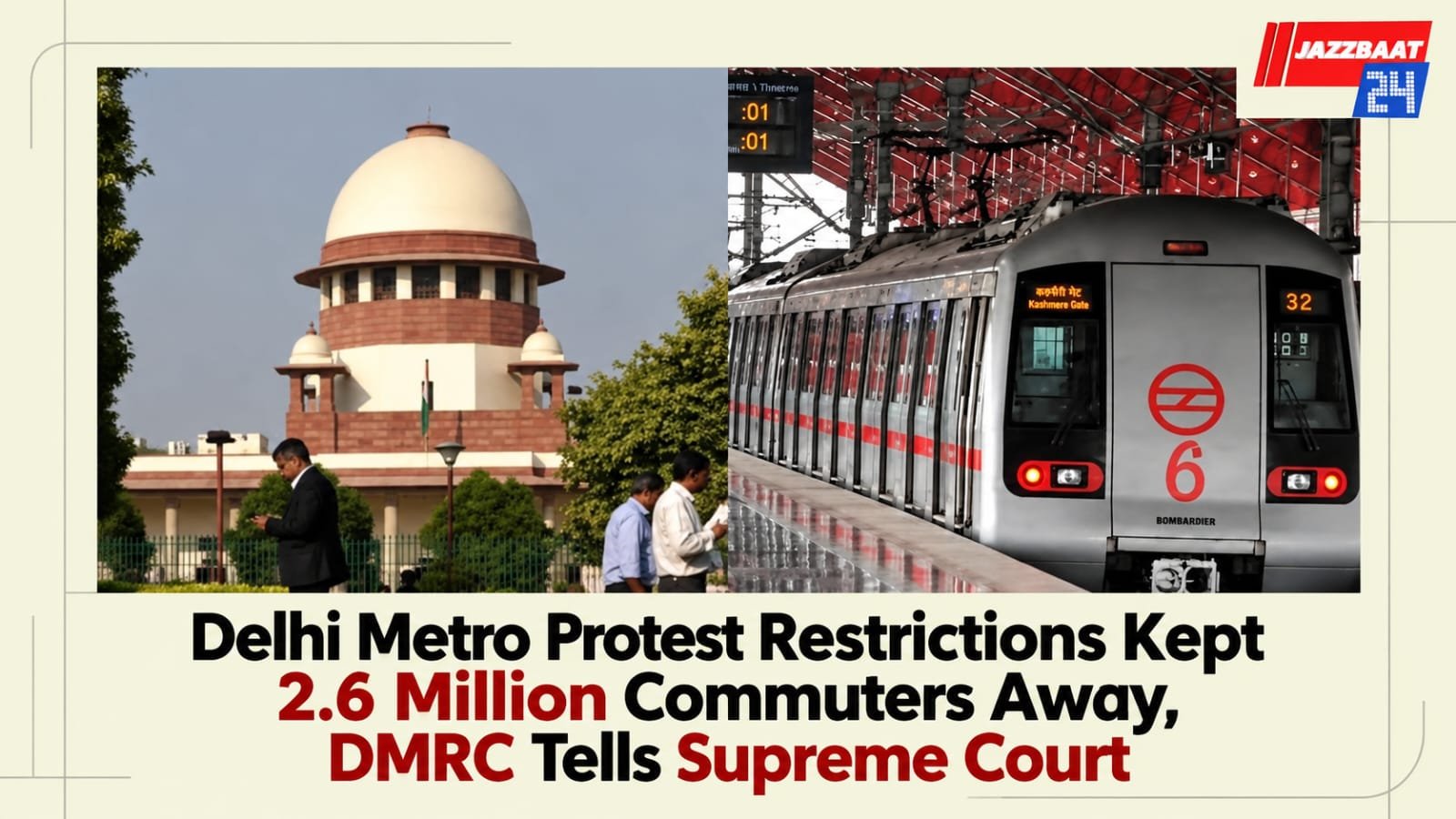
News Desk: The Delhi Metro Rail Corporation (DMRC) has told the Supreme Court that ridership across its network dropped by nearly 45% on October 10, when protests against Chief Election Commissioner Gyanesh Kumar led to restrictions at several Metro stations in the national capital.
In an affidavit submitted to the court, the DMRC said approximately 3.2 million passengers travelled on the network that day, compared with around 5.8 million on a normal second Saturday. The corporation attributed the decline to the impact of the protests, suggesting that many commuters avoided travelling or changed their usual plans.
The DMRC maintained that Metro train services were not cancelled or reduced. According to its affidavit, 271 trains were deployed and all 4,157 scheduled trips operated throughout the day.
The clarification comes amid contempt proceedings initiated by the Supreme Court over restrictions imposed on Metro and railway services ahead of a protest organised by the Cockroach Janata Party (CJP) at Jantar Mantar. The demonstrators had demanded Gyanesh Kumar’s resignation over alleged irregularities in the revision of electoral rolls.
### Restrictions at 45 Metro stations
The DMRC said its network comprises 303 stations, of which entry and exit gates at 45 stations were restricted following directions from the Delhi Police. An earlier communication had proposed restrictions at 57 stations, but the number was reduced after the Supreme Court intervened on October 9.
The remaining 258 stations, accounting for more than 85% of the network, remained fully operational and accessible to commuters. Interchange facilities also continued uninterrupted at 14 of the affected stations, including major hubs such as Rajiv Chowk, Kashmere Gate, Central Secretariat, Mandi House and Hauz Khas.
The corporation said the restrictions were imposed following security assessments by law enforcement agencies and did not amount to a complete shutdown of public transport. At certain stations, passenger exits were permitted even when entry was regulated.
The DMRC also said it informed passengers through its website, social media platforms, the Sarthi mobile application and announcements inside trains. Additional personnel were deployed at major interchange stations to guide commuters and manage movement.
Restrictions at the 45 stations were lifted at 10 pm on October 10.
### Supreme Court had intervened
On October 9, the Supreme Court expressed concern over proposed restrictions that could disrupt Metro services and railway operations ahead of the protest. It directed the authorities to ensure that there was no blanket prohibition on the movement of Metro trains and other rail services.
Subsequently, the court issued notices to Union Home Secretary Govind Mohan, Delhi Police Commissioner Anurag Kumar and DMRC Chairperson D. Thara in connection with contempt petitions, observing that a prima facie case had been made out.
The matter is scheduled for further hearing as the court examines whether its directions were properly followed. The DMRC's affidavit seeks to establish that train operations continued despite the restrictions at selected stations.


Reader Comments 0