
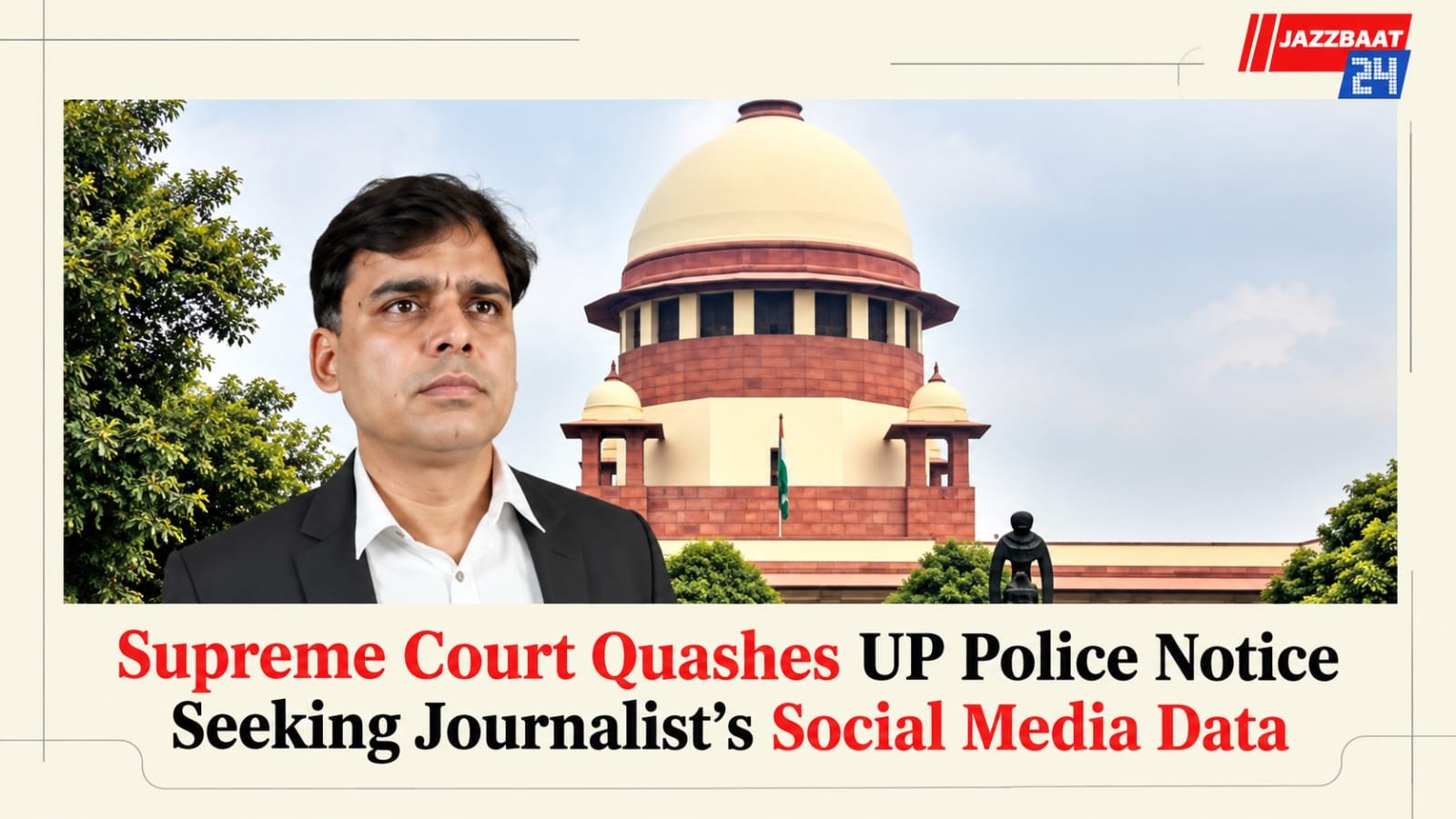
News Desk: The Supreme Court on Wednesday quashed a notice issued by the Uttar Pradesh Police seeking the social media data of journalist Abhishek Upadhyay, who had reported allegations of donation theft at the Ayodhya Ram Temple. The court described the police action as an “overkill” and raised concerns about the protection of personal privacy during criminal investigations.
A bench comprising Chief Justice of India Surya Kant and Justice Joymalya Bagchi questioned why the police needed months of the journalist’s social media activity to investigate an alleged road rage incident that took place on August 18, 2026.
The Ghaziabad Police had issued the notice to social media platform X on August 22, seeking information covering the period from June 1 onwards. The police reportedly wanted to trace Upadhyay after he could not be located following the registration of a first information report (FIR).
Questioning the relevance of the request, the bench observed that seeking such extensive personal data for a road rage investigation appeared disproportionate. The court subsequently quashed the August 22 notice.
The Supreme Court clarified that the police could not use any information collected about the journalist for the period before August 22 against him. It also ruled that even post-FIR information could not be sought unless the authorities demonstrated that the request was proportionate and that alternative investigative measures were inadequate.
The court further directed that Upadhyay’s arrest would remain stayed until further orders. It also instructed the police to release his vehicle, which was involved in the alleged incident, within two days.
During the hearing, the bench highlighted the need for clear guidelines governing requests by investigating agencies for citizens’ private and confidential information. It cautioned against indiscriminate searches into personal data under the pretext of investigation, warning that such practices could affect the work of investigative journalists.
Representing the Uttar Pradesh government, Additional Advocate General Sharan Dev Singh Thakur argued that the Information Technology (Intermediary Guidelines and Digital Media Ethics Code) Rules, 2021, empowered the police to seek information from intermediaries.
However, the court clarified that the issue was not simply whether the police possessed such powers, but how those powers were exercised.
Upadhyay’s lawyer, senior advocate Pradeep Rai, alleged that the road rage case was fabricated to target the journalist over his reporting. Upadhyay has published reports concerning alleged irregularities in donations to the Ayodhya Ram Temple.
The journalist had also sought the quashing of the FIR or the transfer of the investigation to an independent agency. The Supreme Court allowed him to pursue the challenge before the appropriate court without expressing any opinion on the merits of the allegations.
The ruling has brought renewed attention to the balance between police investigative powers, individual privacy and the freedom of investigative journalism.


Reader Comments 0