
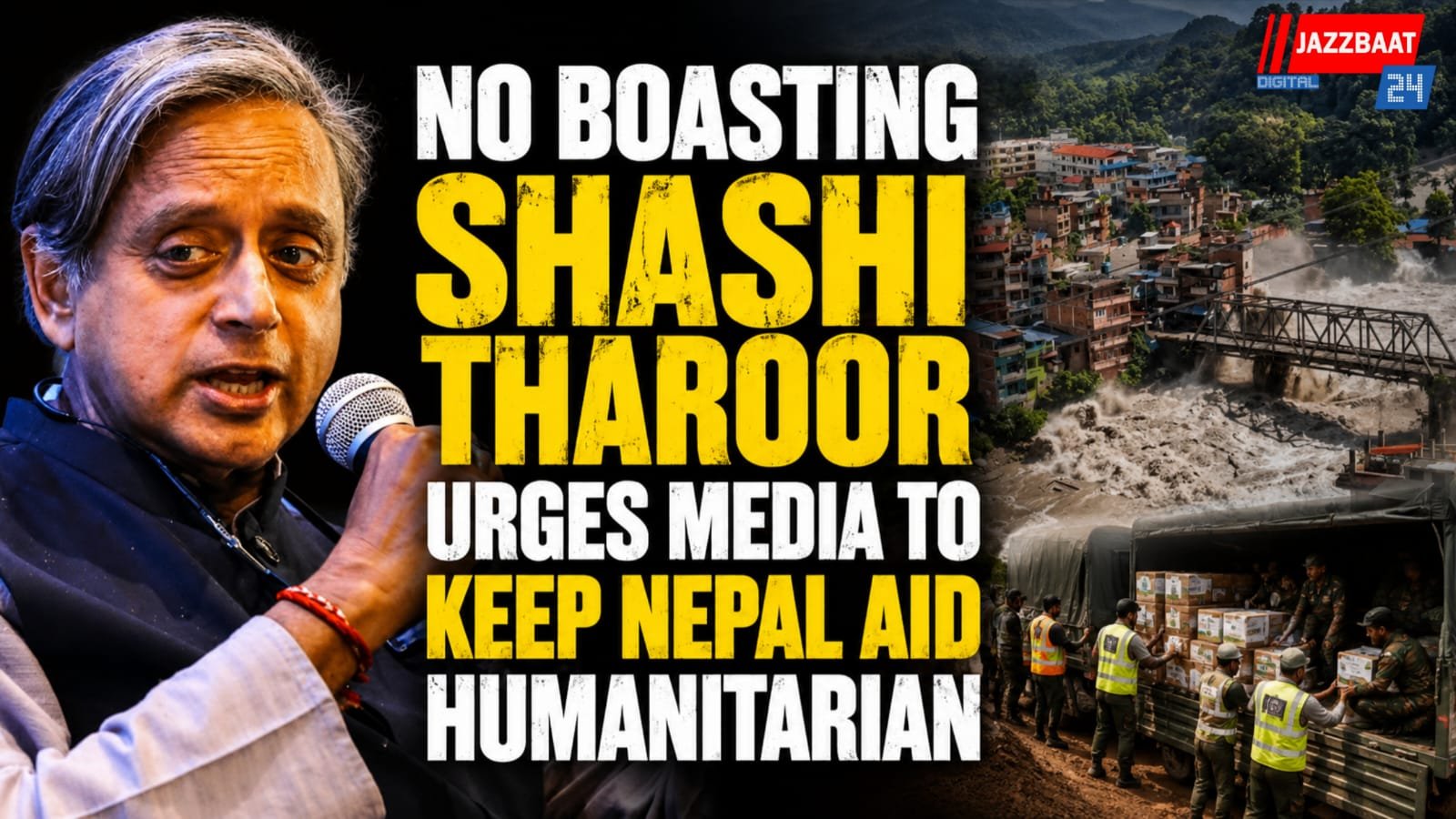
Congress MP Shashi Tharoor has urged the media to avoid turning India’s relief assistance to flood-hit Nepal into an opportunity for self-congratulation, stressing that humanitarian help should remain focused on people affected by the disaster.
Tharoor’s remarks came as India stepped up its assistance to Nepal after devastating flash floods and mudslides struck the country’s northern areas near the Tibet border. The disaster has left a large number of people dead or missing, while rescue operations continue in difficult conditions.
India initially dispatched 10 tonnes of Humanitarian Assistance and Disaster Relief material and essential medicines to Nepal. The first consignment included temporary shelters, blankets, hygiene kits, solar lamps and medicines. Prime Minister Narendra Modi also spoke with Nepal’s Prime Minister Balendra Shah and offered condolences over the loss of lives, assuring him that India was ready to provide all possible humanitarian assistance.
A second Indian flight carrying 37.5 tonnes of relief supplies was subsequently sent to Nepal as the scale of the emergency became clearer. The assistance is intended to support rescue and relief operations and provide essential supplies to communities affected by the floods.
Tharoor, who was in Kathmandu when the disaster unfolded, has also spoken about the situation facing Indian nationals caught in the floods. Several Indian tourists and other foreign nationals have been reported missing, adding to concerns surrounding the disaster. Reports indicate that hundreds of people remain unaccounted for as rescue teams search cut-off areas.
The Congress MP’s message to the media was essentially that India’s assistance should be presented as an act of solidarity rather than national boasting. His comments come at a time when the humanitarian response has attracted considerable attention, with several countries and international organisations offering support to Nepal.
The floods have caused widespread destruction across affected areas, damaging roads, bridges, homes and other infrastructure. Rescue personnel are using helicopters and other resources to reach isolated communities and evacuate stranded people. Authorities are also working to establish the identities and whereabouts of missing people.
For India, the relief operation also has a direct humanitarian dimension because of the number of Indian citizens travelling in Nepal when the disaster struck. Indian authorities have been coordinating with Nepalese officials and state governments to track those missing and assist those seeking evacuation.
As Nepal continues its search-and-rescue efforts, Tharoor’s appeal places the emphasis on the victims rather than the politics surrounding relief. The immediate priority, he suggested, should be saving lives, helping survivors and ensuring that assistance reaches those who need it most. The disaster has once again highlighted the close ties between India and Nepal and the importance of cooperation during a major humanitarian crisis.


Reader Comments 0