
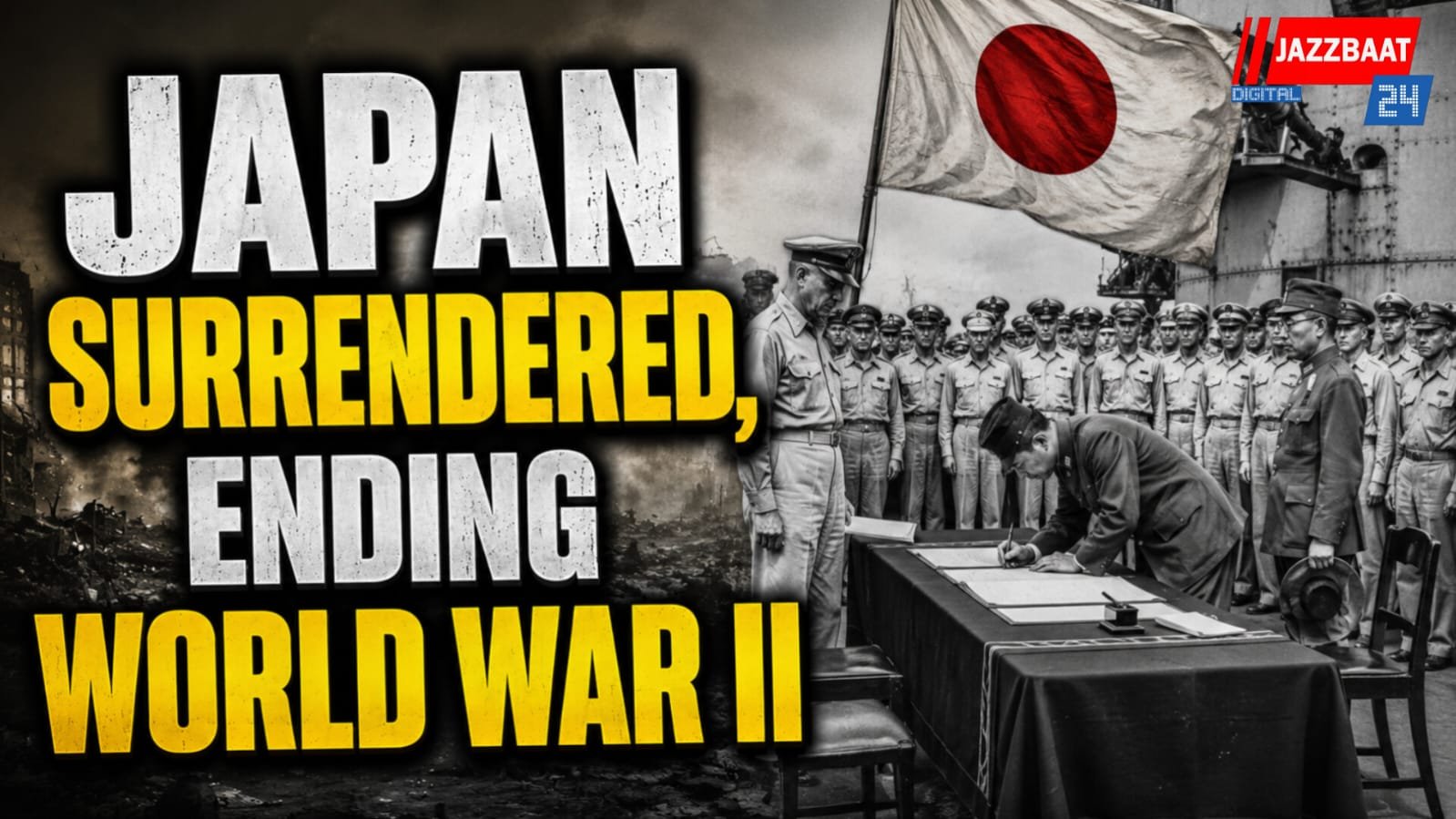
World War II formally came to an end 81 years ago, on September 2, 1945, when Japan signed the Instrument of Surrender aboard the USS Missouri in Tokyo Bay. The ceremony lasted just 23 minutes.
The surrender came after six years of devastating conflict that killed millions of people and destroyed cities across Europe and Asia.
The ceremony began at 9:02 am. Japanese Foreign Minister Mamoru Shigemitsu signed the document on behalf of the Japanese government, while General Yoshijiro Umezu signed for the Japanese armed forces.
General Douglas MacArthur, Supreme Commander for the Allied Powers, then signed on behalf of the Allies. Representatives of the United States, China, Britain, the Soviet Union, Australia, Canada, France, the Netherlands and New Zealand also signed the document.
By 9:25 am, the historic ceremony was over.
The formal surrender followed one of the most destructive periods of the war. Germany had surrendered in May 1945, ending the conflict in Europe, but Japan continued fighting in the Pacific.
In July 1945, the Allied powers issued the Potsdam Declaration demanding Japan’s unconditional surrender. Tokyo rejected the ultimatum.
The situation changed dramatically in August. The United States dropped an atomic bomb on Hiroshima on August 6 and another on Nagasaki three days later. The Soviet Union also declared war on Japan and launched an offensive against Japanese forces in Manchuria.
On August 15, Emperor Hirohito announced Japan’s surrender in a radio address to the Japanese people. The announcement paved the way for the formal signing aboard the USS Missouri.
The surrender document contained eight paragraphs. Japan agreed to cease military operations, surrender unconditionally, release prisoners of war and civilians held under Japanese control, and accept the authority of the Allied powers.
Even the historic ceremony had a brief moment of confusion. Canadian representative Colonel Lawrence Moore Cosgrave accidentally signed in the space meant for France. The error was quickly noticed and corrected.
After the surrender, the Allied occupation of Japan began, with MacArthur overseeing major political and social reforms. Japan’s wartime military structure was dismantled and several leaders were prosecuted for war crimes.
A new Japanese Constitution came into force in 1947. The Emperor retained his position but became a symbolic figure rather than a political ruler.
The end of the war also transformed Japan’s relationship with the United States. Former wartime enemies eventually developed a close alliance, marking one of the most significant geopolitical changes to emerge from World War II.


Reader Comments 0