
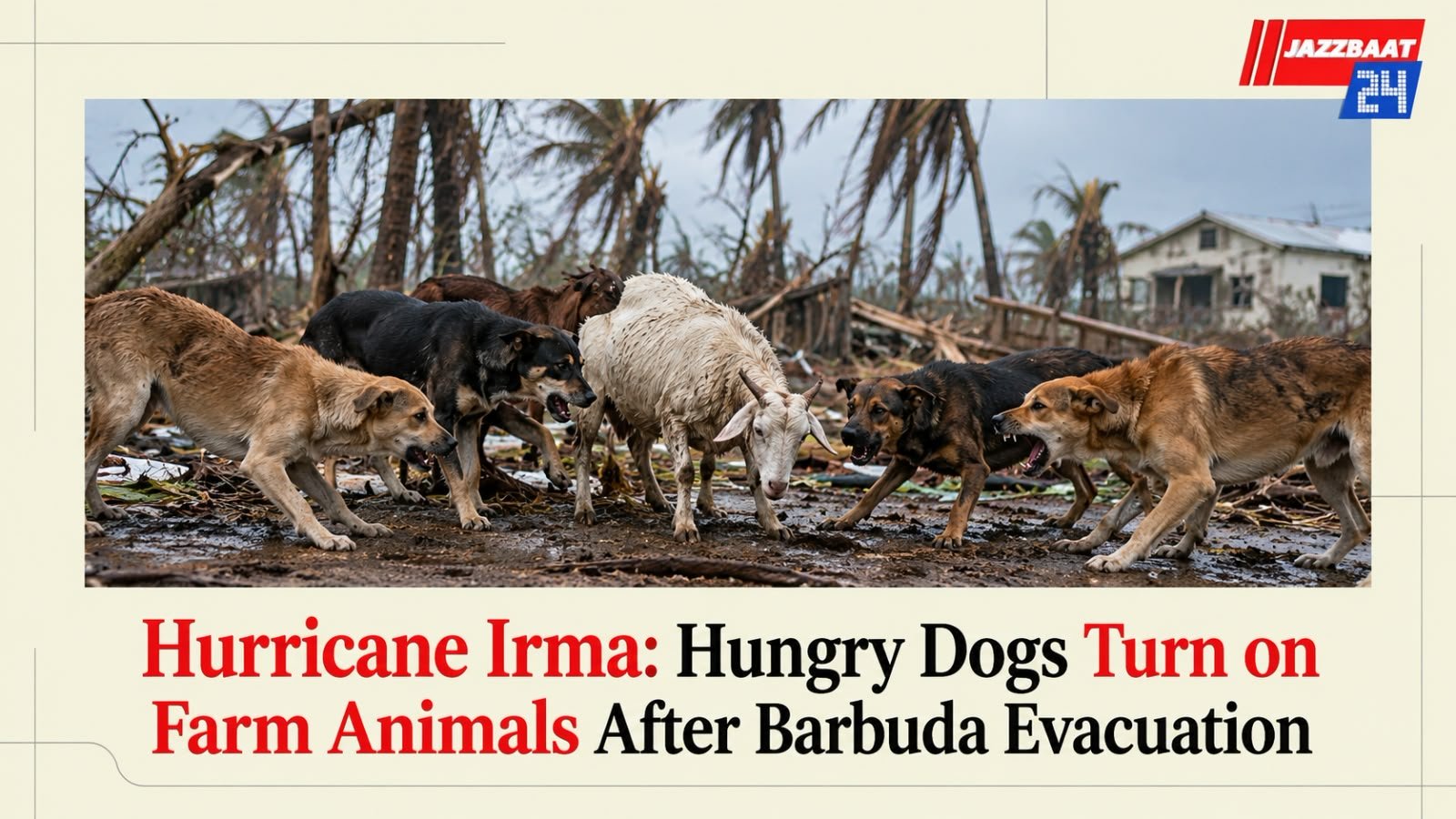
News Desk: When Hurricane Irma struck the Caribbean island of Barbuda in September 2017, it left widespread destruction and forced around 1,800 residents to evacuate to neighbouring Antigua. But as people fled the Category 5 storm, many pets and farm animals were left behind, setting off a desperate struggle for survival.
According to a report by TIME, the evacuation took place shortly after the hurricane hit and just hours before Hurricane Jose was expected to approach the island. With homes damaged, fences destroyed and animal pens torn apart, dogs and livestock were left without food, water or their owners.
As days passed, hunger became a serious problem. Karen Corbin, president of the Antigua and Barbuda Humane Society, warned that dogs were beginning to attack other animals, including horses, cows, goats, sheep, pigs and poultry. The crisis threatened not only the animals but also the livelihoods of local farmers.
Residents could not immediately return to rescue their pets. Officials feared that the damaged island could face a public health emergency, particularly because the region is vulnerable to mosquito-borne diseases such as Zika. The cleanup was expected to take between three weeks and two months.
During a visit to Barbuda, Corbin reportedly found half-eaten goats and a dead pig. She also observed that dogs had started attacking other animals and recommended removing them from the island to protect the remaining livestock.
Volunteers launch rescue efforts
Amid the crisis, Zifforah “Ziffy” Tyrell, a 29-year-old Antiguan-British goat farmer, launched a grassroots campaign to help the stranded animals. Her fundraising effort collected more than $3,000 in donations within days, allowing volunteers to purchase animal feed and antibiotics.
Accompanied by an army officer, the team travelled from house to house, providing food and water to starving dogs and treating injured animals. They also rescued a puppy found beside its dead mother and tended to a donkey suffering from a festering wound.
However, the rescue operation revealed heartbreaking losses. In one case, a woman who had asked volunteers to find her dogs was informed that two of her puppies had died. Tyrell also reported that police had shot dogs they considered aggressive.
Lessons for future disasters
Barbuda’s experience highlights the risks animals face during emergency evacuations. A separate Australian study of 352 pet owners affected by emergencies found that 15% of those who evacuated left some pets behind.
Animal welfare experts stress the importance of household evacuation plans, accessible transport and pet-friendly shelters. The Barbuda rescue operation was later coordinated under the Antigua and Barbuda Humane Society, with support planned from World Animal Protection.
The tragedy demonstrated that disaster preparedness must account for animals as well as people. Without advance planning, pets and livestock can remain vulnerable long after the immediate danger has passed.



Reader Comments 0