
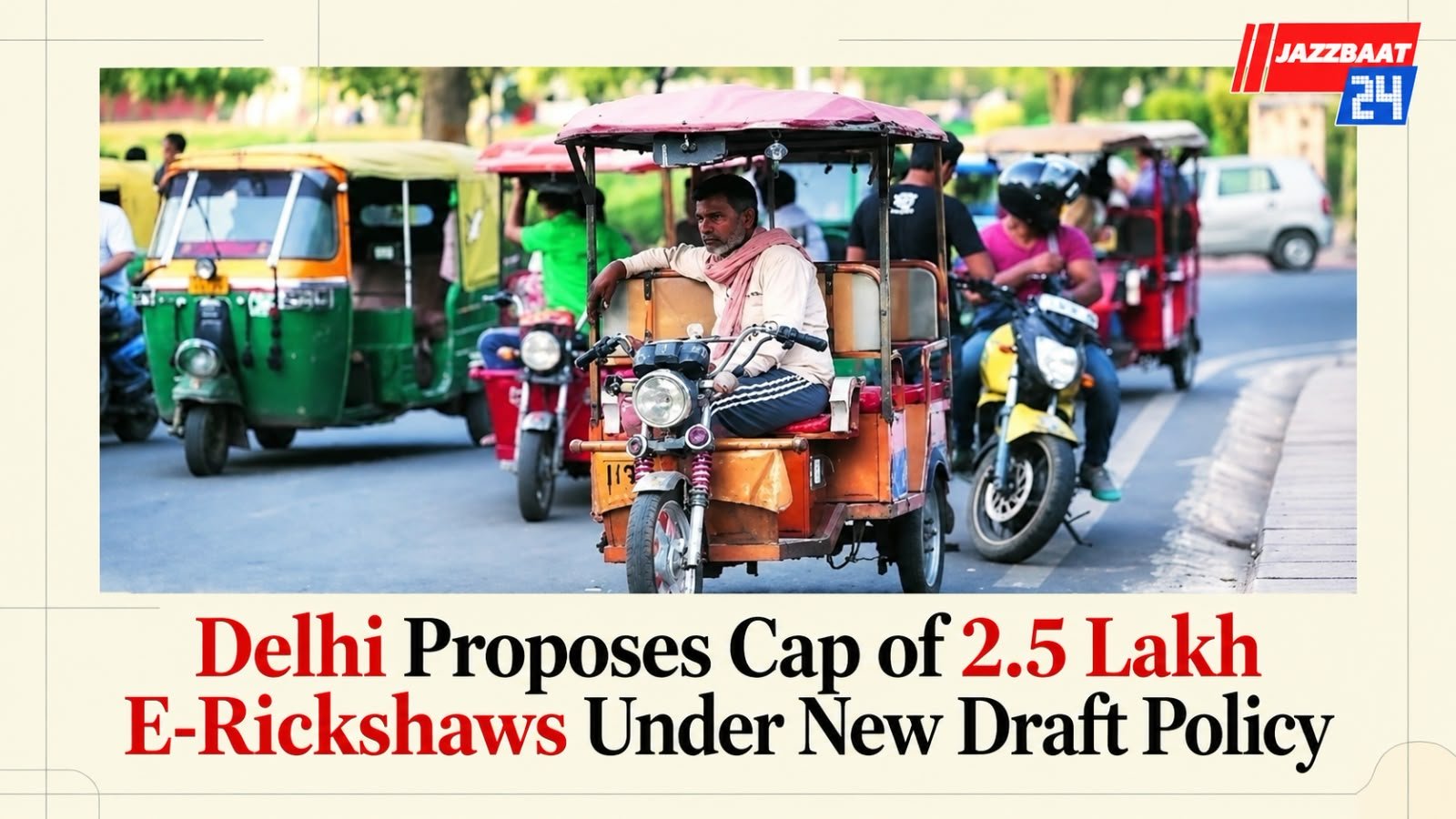
New Delhi: The Delhi government has proposed limiting the number of e-rickshaws operating in the national capital to 2.5 lakh under a new draft policy aimed at addressing traffic congestion, road safety concerns and the unregulated growth of these vehicles.
The proposed Delhi E-Rickshaw (Registration and Operation) Scheme, 2026, also seeks to restrict individual ownership to five e-rickshaws and introduce mandatory digital compliance certificates. The draft was released for public consultation on Sunday, with the government inviting suggestions and objections from the public and stakeholders within 30 days.
Under the proposal, no e-rickshaw would be allowed to operate in Delhi without valid registration and an E-Rickshaw Compliance Certificate (ECC). Existing registered vehicles would receive a 90-day window from the notification of the scheme to complete the required formalities. No additional certificates would be issued once the city-wide cap is reached, unless the government revises the limit.
The draft states that individual owners must be residents of Delhi and cannot own more than five e-rickshaws. Companies, firms, cooperatives and other permitted entities would face a separate ownership limit of 100 vehicles. Operators managing fleets of 25 or more e-rickshaws would also need to obtain an aggregator licence.
Each compliance certificate would be linked to the vehicle's registration, owner, authorised driver and relevant documents, including a valid fitness certificate and insurance. The certificate would remain valid for two years, subject to suspension or cancellation. Drivers would also need a valid e-rickshaw driving licence and a Public Service Vehicle badge.
The policy proposes several measures to improve passenger safety and traffic management. E-rickshaws would be allowed to carry a maximum of four passengers, excluding the driver, with luggage weighing up to 40 kg. Standing passengers and passengers occupying the driver's seat would not be permitted.
Vehicles would also have to follow notified traffic restrictions, avoid obstructing roads and footpaths, display the owner's contact details and carry prescribed reflective markings and high-security registration plates. Bull bars and frontal crash guards would be prohibited.
The draft further proposes mandatory compliance with applicable battery safety standards and disposal of used batteries through authorised recyclers. Vehicles operating without the required registration could be impounded, with certain vehicles facing crushing and auction under prescribed rules.
The Transport Department has invited public feedback within 30 days of publication. The proposals are part of the government's effort to bring e-rickshaw operations under a stricter regulatory framework. The measures are still at the draft stage and are not yet final rules.

Reader Comments 0