
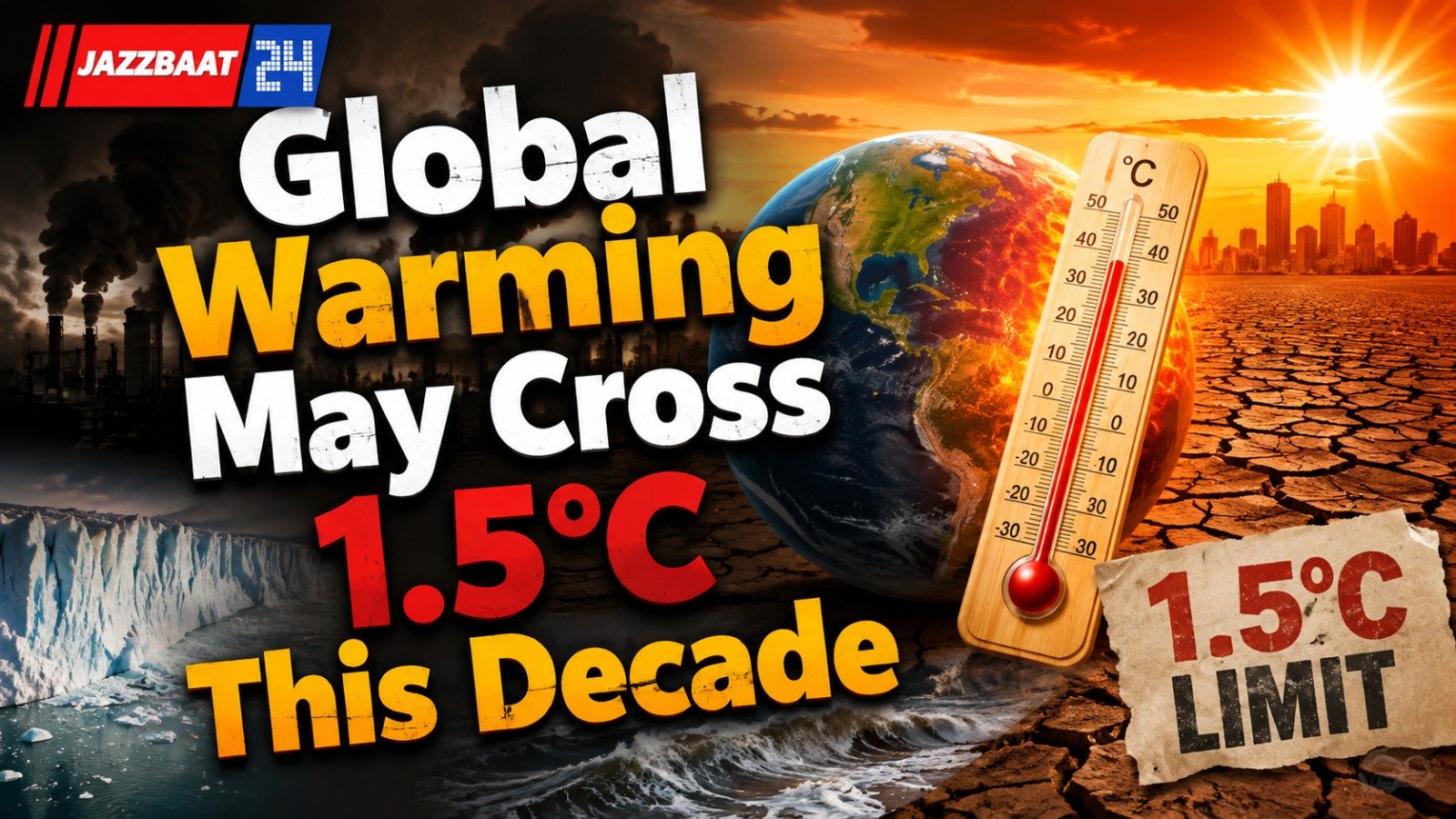
Global temperatures are likely to cross the crucial 1.5°C warming threshold by the end of this decade, raising the risk of more severe climate-related disasters, a new United Nations Environment Programme (UNEP) report has warned.
The report, titled Limiting Overshoot, said the world is approaching the 1.5°C mark above pre-industrial levels and is currently warming at roughly 0.25°C every decade. If present trends continue, the 1.5°C level could be reached around the end of the 2020s.
The 1.5°C threshold is a key goal of the 2015 Paris Agreement, under which countries agreed to pursue efforts to keep long-term global temperature increases well below that level. However, UNEP said crossing the threshold does not mean climate targets are impossible to achieve.
According to the report, the best remaining option is to allow the smallest possible temperature overshoot, reach a peak and then bring global temperatures back down below 1.5°C as quickly as possible.
Even under an optimistic scenario in which governments fully implement their current climate plans and meet long-term net-zero commitments, global warming could peak at around 1.8°C. Under current policies, warming could reach about 2.6°C by 2100, with a projected range of 1.9°C to 3.6°C.
UNEP warned that every additional fraction of a degree of warming could increase climate risks. These include more intense heatwaves, floods and other extreme weather events, along with growing threats to food and water supplies, human health, ecosystems, cities and infrastructure.
The report also highlighted the possibility of climate tipping points becoming more likely as temperatures rise. These could include the destabilisation of major ice sheets, damage to the Amazon rainforest and disruption of the Atlantic Meridional Overturning Circulation, an important system of ocean currents that influences global climate.
Some effects could appear suddenly, while others may build gradually over decades. How severe the consequences become will depend heavily on how quickly greenhouse gas emissions are reduced and how effectively countries adapt to changing conditions.
UNEP stressed that cutting methane and other short-lived climate pollutants should be a priority in the immediate future. It also called for stronger international cooperation, climate finance and policies focused on fairness and shared responsibility.
UNEP Executive Director Inger Andersen said there are no desirable outcomes from remaining above 1.5°C. She urged countries to accelerate emissions cuts, strengthen resilience and ensure that any period above the threshold is as limited as possible.
UN Secretary-General António Guterres also warned that extreme heat, wildfires and deadly floods are increasingly showing what a warmer world could look like, calling for stronger climate action.


Reader Comments 0