
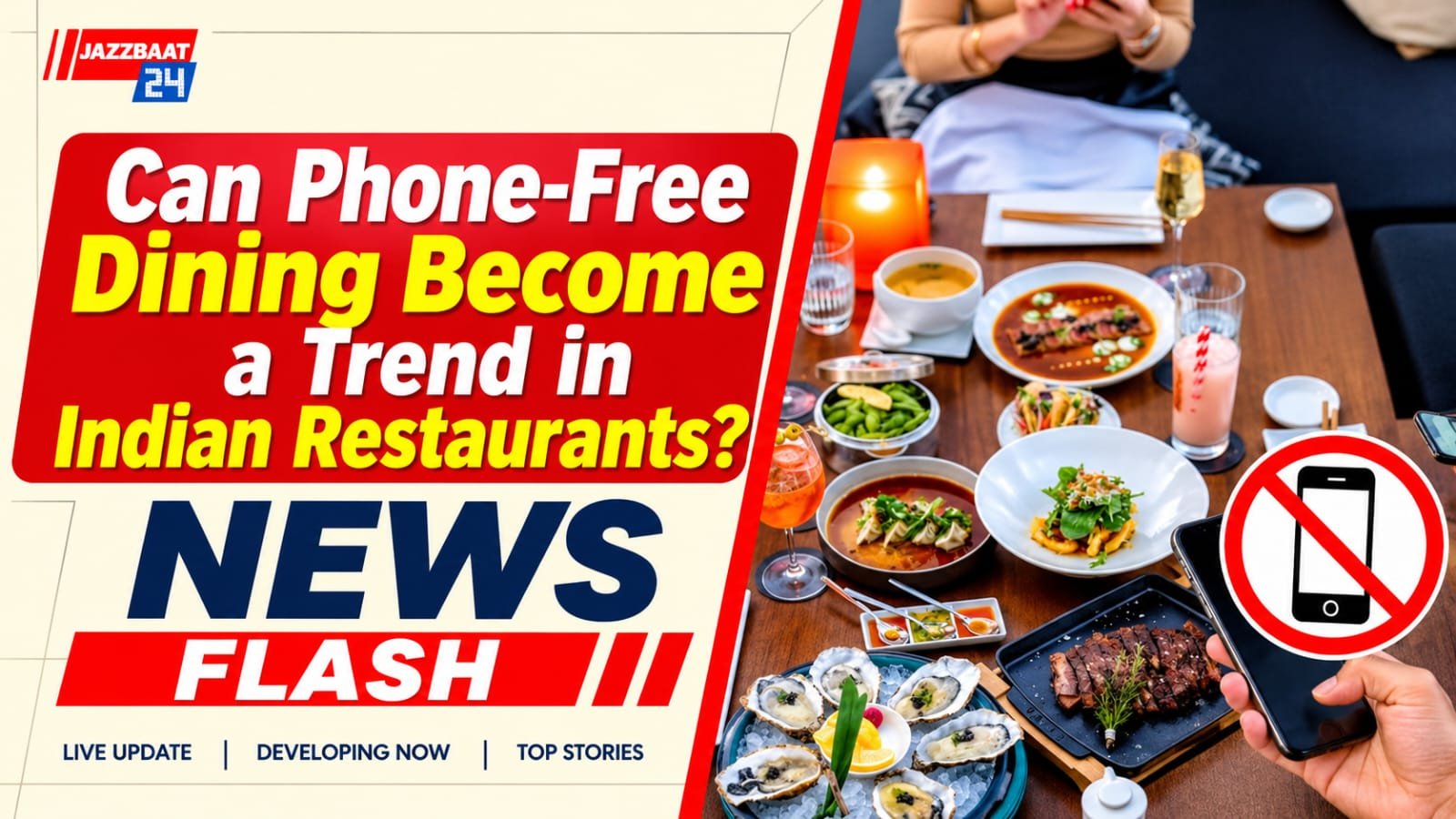
Imagine sitting down for dinner at a restaurant, only to be asked to keep your smartphone away for the entire meal. No scrolling through Instagram, no checking WhatsApp messages and no clicking pictures of every dish. Instead, the focus is entirely on the food, conversations and people sitting around the table. Phone-free dining, a growing concept in parts of the world, is raising an interesting question: can Indian restaurants embrace a dining experience without smartphones?
The idea is not entirely new in India. Some restaurants have already experimented with ways to encourage customers to disconnect from their devices. Bengaluru's 403 Forbidden Bar, for instance, has introduced a digital detox approach, using an immersive atmosphere and engaging experiences to encourage guests to spend less time on their phones.
Another example is Soul Pantry at Andaz Delhi, which introduced the 'Switch Off' initiative in April 2026. Customers are encouraged to leave their smartphones in designated wooden boxes while participating in food-making activities. Guests who keep their tables phone-free for 30 minutes can also receive a complimentary dessert.
Why are restaurants encouraging phone-free dining?
For chefs and restaurant owners, the concern goes beyond social media addiction. Constant phone usage can distract customers from the food, its presentation and the effort involved in preparing each dish.
Chefs argue that food is best enjoyed when diners pay attention to its aroma, temperature, texture and flavour. Taking too long to photograph a dish or scrolling through notifications can affect the overall dining experience. Food that is meant to be enjoyed hot may become cold while customers remain busy with their screens.
However, completely banning smartphones may not be a practical solution for Indian restaurants.
Smartphones have become an important part of restaurant culture. Customers photograph dishes, post reviews, share recommendations and tag restaurants on social media. For businesses, this online visibility can translate into publicity and new customers.
A complete ban may not work
Industry experts believe that encouraging mindful phone usage could be more effective than imposing strict restrictions. Allowing customers to take photographs before requesting them to put their devices aside could offer a reasonable middle ground.
Premium restaurants offering tasting menus, immersive dining and personalised culinary experiences may find it easier to introduce such policies. However, family restaurants, cafes and casual dining outlets may face resistance from customers who expect greater flexibility.
There is also a practical question: what happens when someone needs their phone for an emergency, work-related communication or digital payments?
The success of phone-free dining will ultimately depend on how restaurants introduce the concept. Voluntary phone lockers, discounts, complimentary desserts and interactive dining experiences could encourage participation without making customers feel restricted.
Perhaps the future of Indian dining is not about banning smartphones altogether. It is about creating an experience so engaging that customers willingly stop looking at their screens.
After all, a memorable meal should be about the food and the company, not just the photographs uploaded afterwards.




Reader Comments 0