
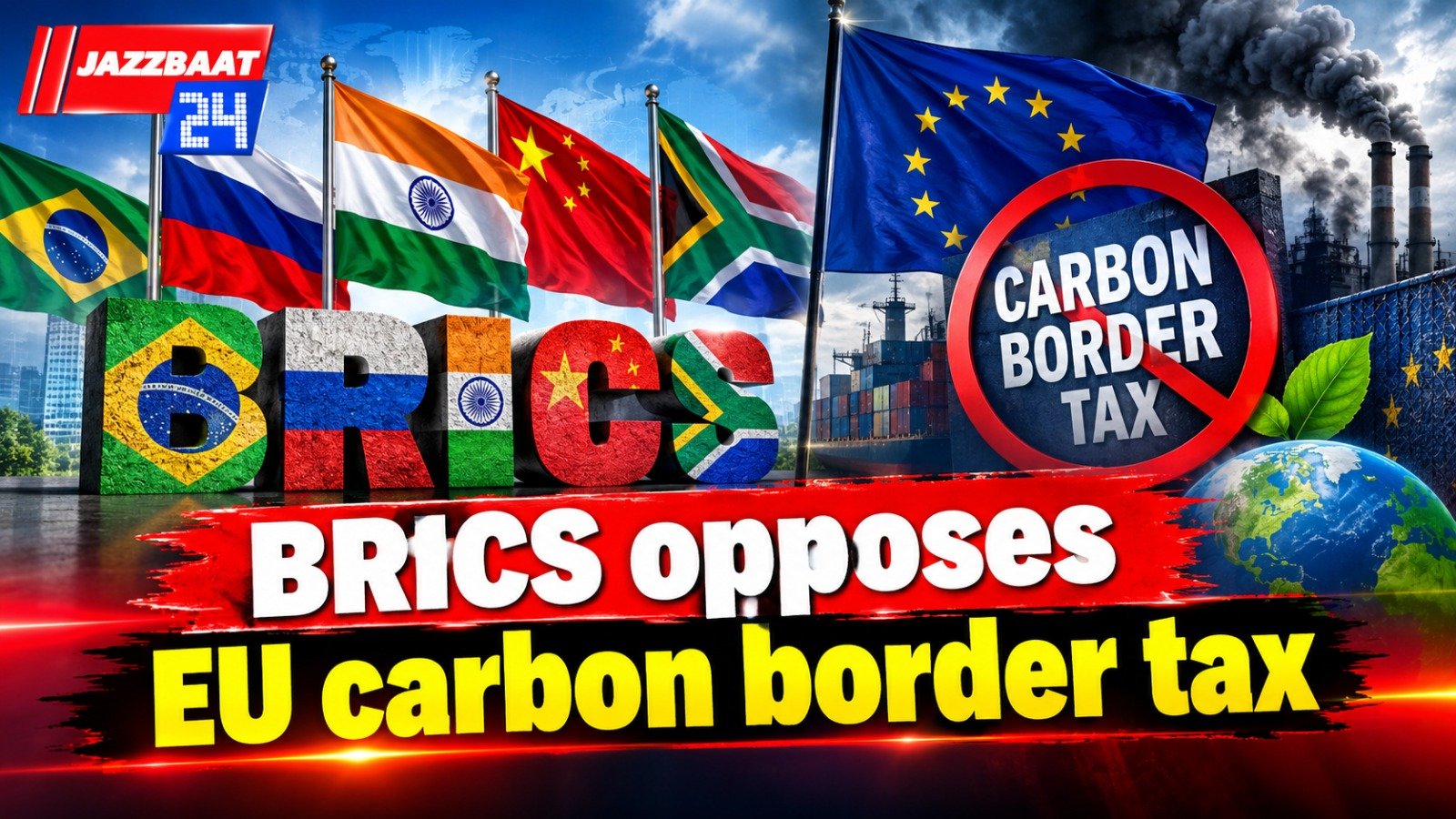
BRICS countries have opposed unilateral carbon-related trade measures, including the European Union’s Carbon Border Adjustment Mechanism (CBAM), arguing that such policies could place additional pressure on developing economies trying to balance economic growth with climate action.
The issue was highlighted in the New Delhi Declaration adopted at the BRICS Summit on Saturday. The grouping described energy security as an important foundation for social and economic development while stressing that fossil fuels will continue to have a role in the global energy mix.
The declaration criticised measures that are punitive, discriminatory or protectionist and said carbon border mechanisms could undermine developing countries’ efforts to address climate change and build greater resilience.
The EU’s CBAM, which came into effect across the bloc on January 1, 2026, applies carbon-related costs to certain imported goods. The mechanism is intended to prevent carbon-intensive production from gaining an advantage over European producers that face domestic carbon pricing.
BRICS nations also called for stronger cooperation on disaster risk reduction as climate-related disasters become more frequent. They emphasised the importance of accessible and predictable financing, along with better early warning systems and risk-informed planning.
The declaration welcomed the BRICS Guidelines for Disaster Management Early Warning Data Integration and the BRICS Voluntary Principles for Climate-Resilient Urban Infrastructure. It also highlighted the role of the Coalition for Disaster Resilient Infrastructure, an international partnership launched with India’s support.
Climate finance was another major concern. BRICS noted that developing nations often face a disproportionate financial burden in responding to climate change. The grouping also pointed to high debt levels, which can restrict governments’ ability to invest in climate adaptation and development.
The countries reaffirmed their commitment to the Paris Agreement, including its provisions on mitigation, adaptation, loss and damage, and financial support for developing countries.
On energy security, BRICS called for stable energy markets and uninterrupted supplies from diverse sources. It supported a balanced energy mix based on national circumstances, including renewable energy, nuclear power, hydropower, hydrogen, fossil fuels, energy storage and other low-carbon technologies.
The declaration also backed further development of the BRICS Climate Research Platform and the BRICS Laboratory for Trade, Climate Change and Sustainable Development.
Climate policy expert Li Shuo said the declaration reflected the bloc’s intention to pursue an energy transition that combines development and decarbonisation rather than treating them as competing goals. He said BRICS countries were seeking to determine their own path towards cleaner energy while continuing to recognise the importance of fossil fuels in emerging economies.



Reader Comments 0