
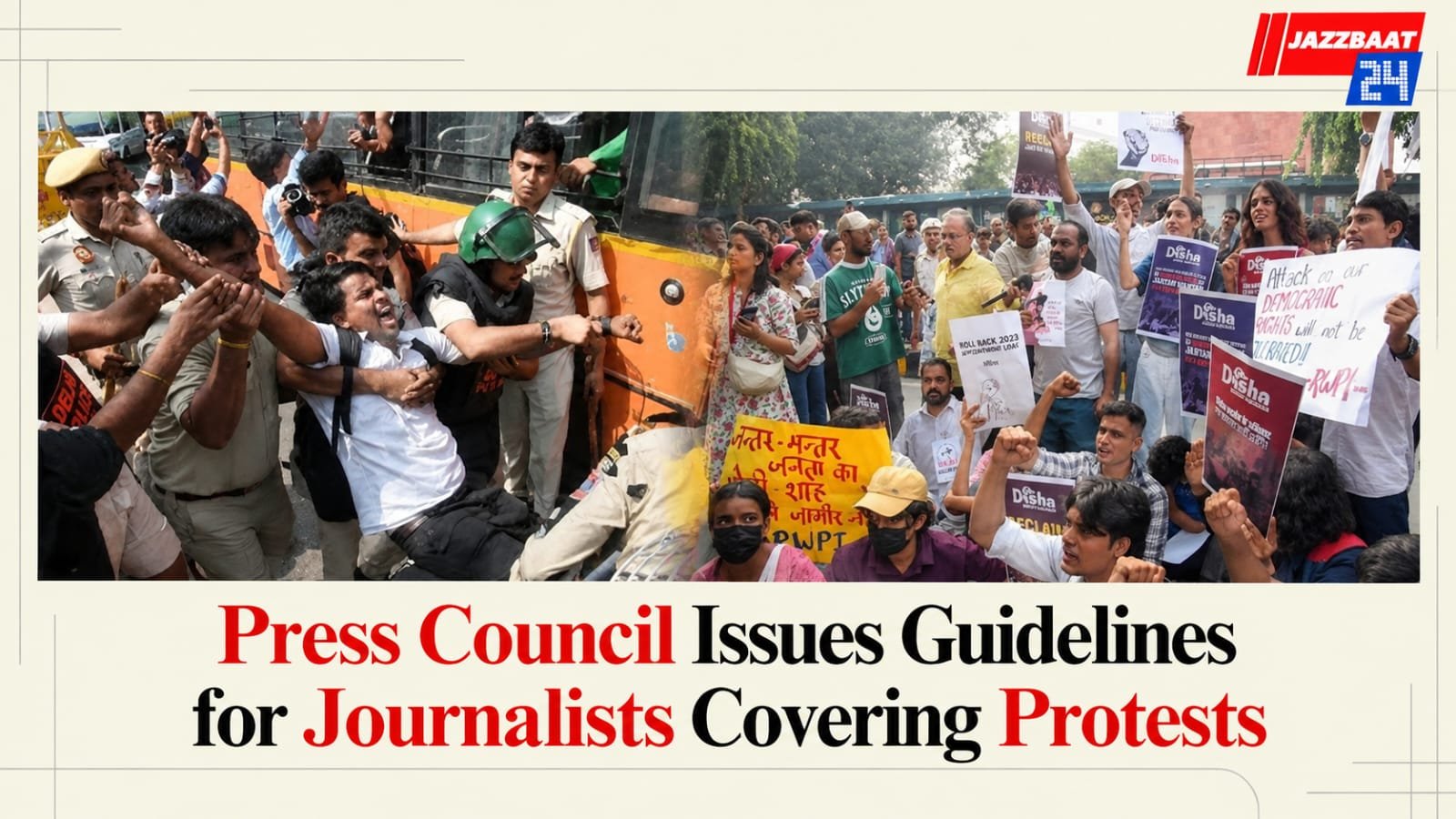
News Desk: The Press Council of India (PCI) has issued new guidelines for journalists covering protests and demonstrations, emphasising professional neutrality, safety, ethical reporting and coordination between reporters and newsrooms.
The guidelines were adopted at the council’s meeting on October 14 and detailed in a press release dated October 15. They aim to help journalists report on demonstrations effectively while reducing risks to media personnel working in volatile situations.
The PCI, a statutory and quasi-judicial body established under the Press Council Act, 1978, regulates standards for print media, including newspapers and news agencies. Its jurisdiction does not extend to television, radio or digital news platforms.
Under the guidelines, journalists have been advised to carry valid identity cards issued by their media organisations or applicable government accreditation authorities. They should keep their press identification visible and secure their cards and lanyards to prevent accidents during crowd movement.
The council has stressed that journalists must remain neutral and avoid participating in demonstrations, taking sides or provoking confrontations involving protesters, counter-protesters or police. Media personnel should remain respectful, follow lawful safety instructions and calmly assert their professional identity when necessary.
Focus on Safety During Protests
The guidelines urge journalists to maintain a safe distance from confrontations, particularly when tensions rise or police action is anticipated. Reporters should avoid obstructing movement or attaching cameras and recording equipment to police barricades and vehicles in ways that could cause damage or create hazards.
Journalists have also been advised to remain alert to changing crowd behaviour, identify nearby exits and safe locations, and plan escape routes in advance. In areas affected by tear gas or smoke, they should use visible landmarks to find safe routes out of the affected area.
The PCI recommends carrying emergency supplies, including first-aid materials, essential medication, drinking water, snacks, a flashlight and protective eyewear. Protective headgear and body armour may be considered depending on the level of risk. Journalists have been cautioned against touching or moving tear-gas canisters, flash-bang devices and smoke grenades.
Newsrooms Asked to Strengthen Coordination
News organisations have been advised to designate a contact person to monitor reporters’ locations and respond to emergencies. Freelance journalists should keep a trusted editor or contact informed about their assignment, location and expected return time.
On reporting standards, the council has called for accurate, objective and impartial coverage. Journalists should verify information through multiple sources and scrutinise claims made by protesters, organisers, police and government authorities equally.
The guidelines also advise reporters to distinguish verified facts from allegations and opinions, avoid revealing sensitive police movements in real time, and protect the privacy of minors, injured people and other vulnerable individuals.
The recommendations underline the importance of balancing the public’s right to information with journalists’ safety and responsible reporting during demonstrations.



Reader Comments 0