
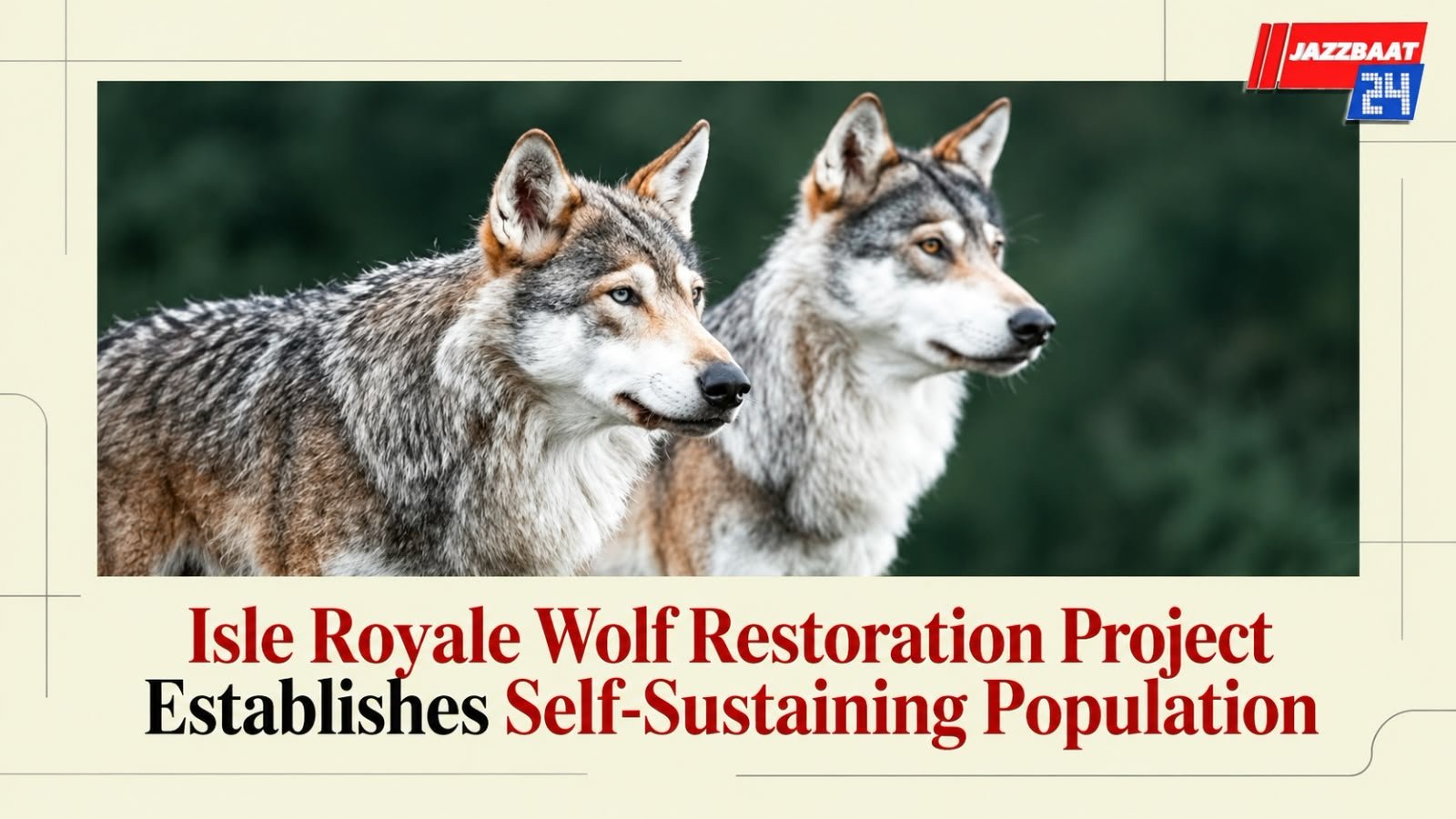
News Desk: A wildlife restoration project on Isle Royale, a remote national park in Lake Superior, has successfully established a self-sustaining wolf population, according to a five-year study published in the journal Conservation Science and Practice.
The project began in 2018 after the island’s wolf population declined to just two animals that were not breeding. Researchers and wildlife managers introduced 19 wolves between September 2018 and September 2019 to restore the population and improve the island’s ecological balance.
The study assessed the project’s progress between September 24, 2018, and September 1, 2023. Researchers examined wolf numbers, reproduction, survival rates and the recruitment of young animals into the population.
Wolf population grows after reintroduction
The results showed encouraging progress. During the first winter of monitoring, researchers counted 10 wolves on the island. By April 2023, the minimum confirmed population had risen to 27.
The introduced wolves came from Minnesota, Michigan and Ontario in Canada. Wildlife managers attempted to relocate animals that had previously lived together in packs to help preserve their social bonds.
Researchers recorded at least 10 litters and 29 pups during the study period. Wolves reproduced each year, including the year the reintroduction began. The animals also established packs and territories similar to those observed in earlier generations.
The study found that approximately three-quarters of the wolves survived each year, although some animals died or left the island. A family group originating from Michipicoten Island also contributed significantly to the birth of new pups.
The population exceeded the long-term average of 22 wolves in three of the five years examined, indicating that the restoration effort had made substantial progress.
Researchers assess long-term survival
Beyond measuring population growth, researchers used computer simulations to estimate whether wolves could continue living on Isle Royale over the next two decades.
The models indicated an over 80% probability that wolves would remain on the island for 20 years, even under high levels of inbreeding. The simulations accounted for inbreeding depression, which can reduce survival and reproductive success when closely related animals breed.
However, researchers cautioned that these projections are not guarantees. Maintaining genetic diversity remains a significant challenge for a relatively small population living in an isolated environment.
A major step for wildlife conservation
Wolves have been studied alongside moose on Isle Royale since 1958. The animals are important to the island’s ecosystem, making their recovery a significant development for wildlife management and ecological research.
The five-year assessment concluded that the restoration project had achieved its immediate goal of establishing a self-sustaining population. Whether the wolves can maintain a healthy population over the longer term will depend on reproduction, survival, genetic diversity and other environmental factors.
The findings offer an encouraging example of how carefully planned wildlife relocation can help restore a declining animal population, while highlighting the need for continued monitoring and conservation efforts.




Reader Comments 0