
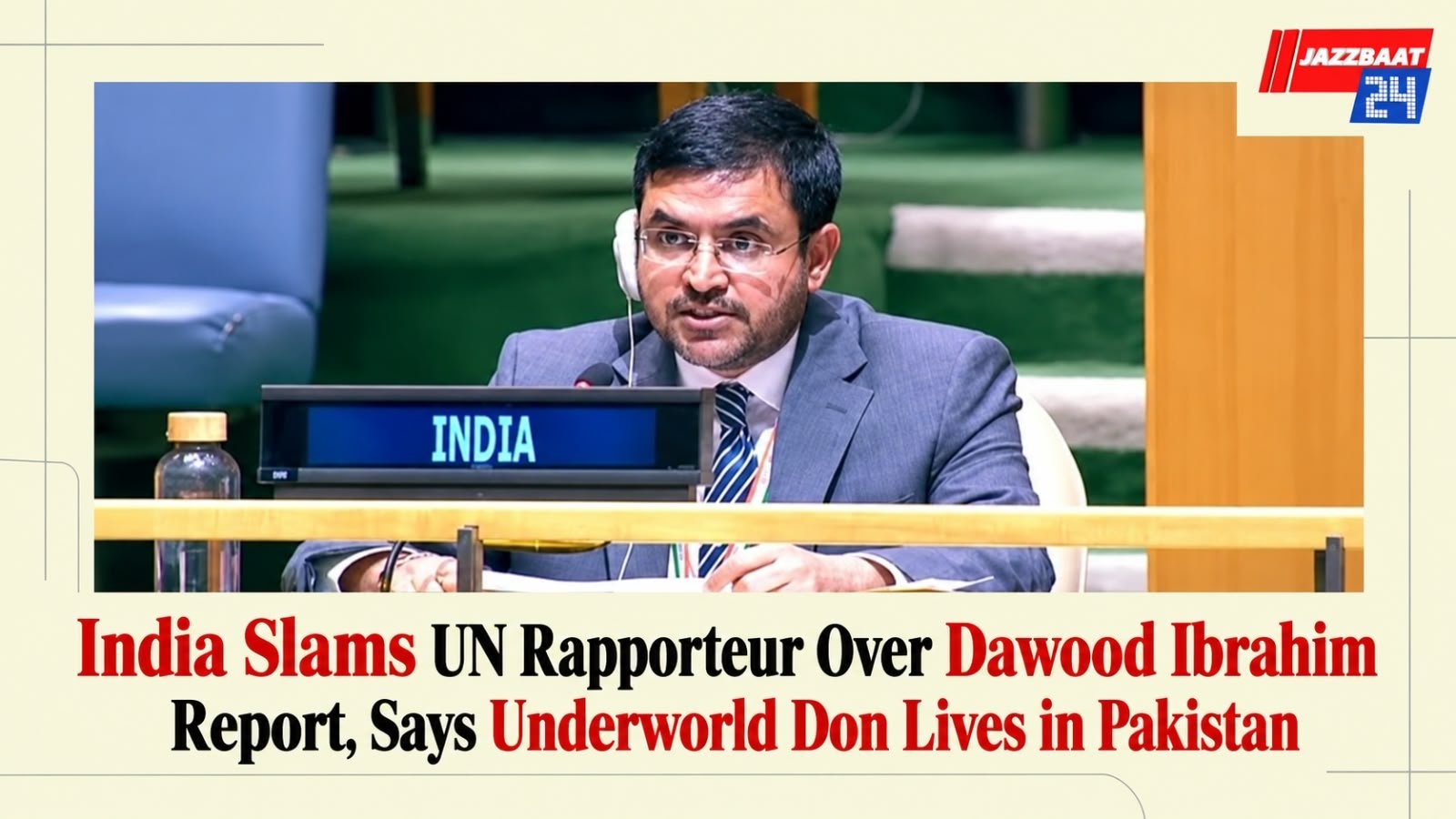
News Desk: India has strongly criticised a United Nations report that described underworld don Dawood Ibrahim as the leader of the “India-based” D-Company criminal network, accusing the report’s author of factual inaccuracies and a lack of impartiality.
Speaking at the UN General Assembly, Raghoo Puri, India’s First Secretary at the Permanent Mission of India to the United Nations, expressed serious concern over the report prepared by UN Special Rapporteur Ben Saul. He said reports containing factual errors should not be released without proper accountability.
Puri argued that the report’s description of D-Company failed to adequately reflect the criminal network’s alleged links to terrorism and its activities against India. He pointed out that Dawood Ibrahim has been wanted in India in connection with terror attacks since 1993.
According to Puri, the UN Security Council listed the head of D-Company in 2003 over his links to Al-Qaeda. He said the reasons for the listing, recorded under the UN’s 1267 sanctions regime, clearly referred to the group’s connections with terrorism.
The Indian diplomat also reiterated New Delhi’s position that Dawood Ibrahim resides in Pakistan. Referring to the UN’s own listing entry, Puri said the wanted criminal was living in the same country where Al-Qaeda founder Osama bin Laden was found and killed by US forces in 2011.
He said Dawood had been wanted by Indian authorities well before his inclusion on the UN sanctions list, adding that the omission of relevant details from the report was regrettable.
Puri further warned against the use of human rights principles to defend or justify terrorism and extremism. He maintained that the international human rights framework should not become a shield for those responsible for terrorist activities.
During his address, the Indian representative also responded to remarks made by Pakistan’s delegation concerning Jammu and Kashmir and Ladakh. He rejected the allegations as political propaganda and reiterated India’s position that both regions are integral and inalienable parts of the country.
The criticism comes a day after India challenged what it described as the selective use of human rights mechanisms to target countries politically. New Delhi had responded to concerns raised by more than 20 UN human rights experts over alleged heavy-handed police action against youth-led protests in Delhi and other areas.
India maintained that international human rights engagement should be guided by dialogue, transparency, cooperation and impartiality. It also said allegations must be properly documented and verified before being used to portray a country negatively.
The latest exchange highlights growing differences between India and certain UN human rights experts over the interpretation of counter-terrorism measures, human rights standards and political accountability.



Reader Comments 0