
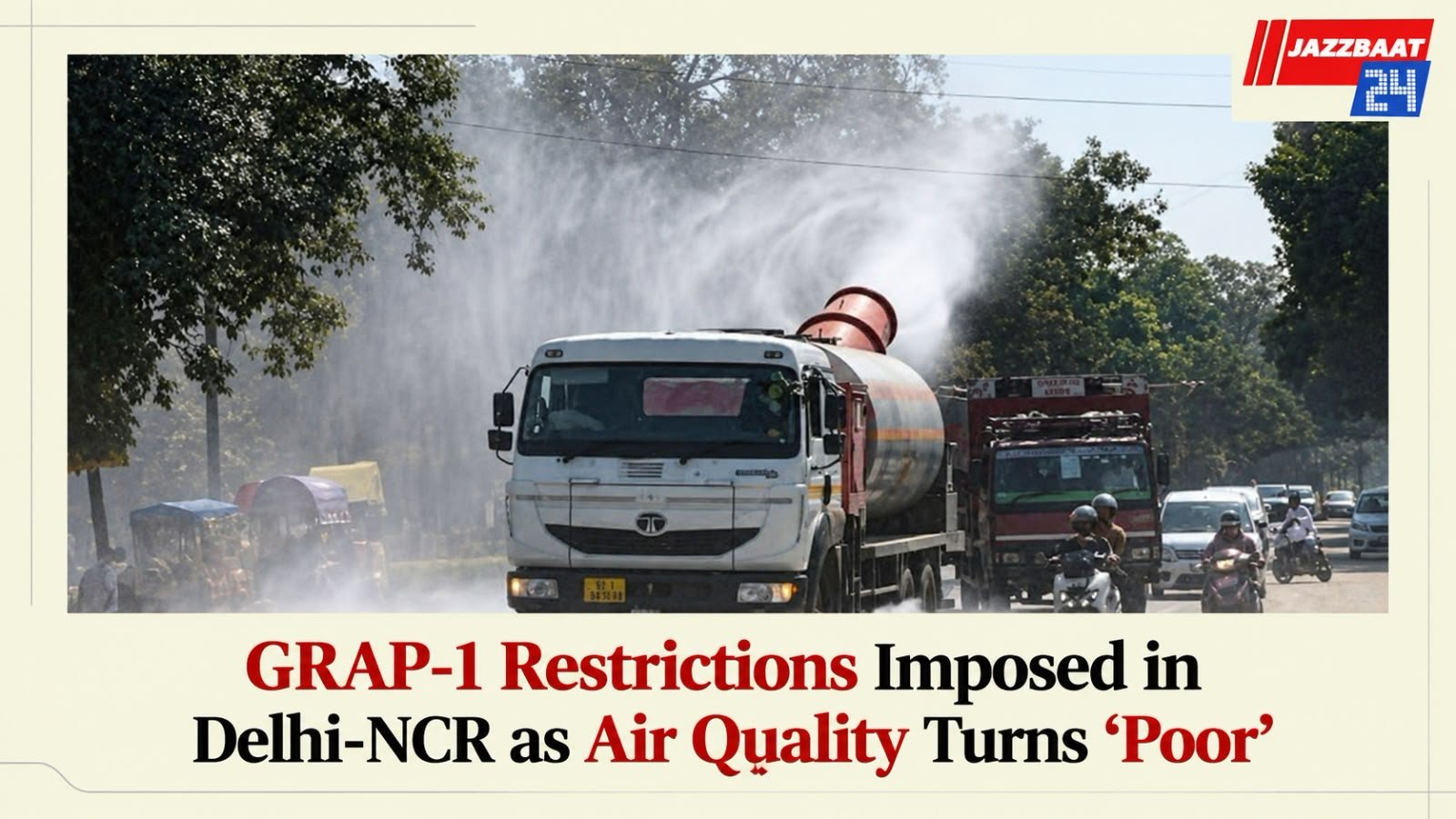
New Delhi: Air pollution concerns have intensified in Delhi-NCR after the region’s air quality index (AQI) entered the ‘poor’ category, prompting authorities to implement Stage I measures under the Graded Response Action Plan (GRAP). The Commission for Air Quality Management (CAQM) announced the restrictions on Wednesday, October 21, to curb rising pollution levels.
The move comes a day after Dussehra, as Delhi’s AQI reached the 201–300 range, classified as ‘poor’. GRAP measures are introduced in stages depending on the severity of air pollution, with the first stage focusing on preventive steps to control emissions and reduce the accumulation of pollutants.
Under GRAP Stage I, authorities are expected to strengthen dust-control measures at construction sites, increase road cleaning and water sprinkling, and ensure stricter monitoring of pollution sources. Open burning of waste is prohibited, while enforcement measures are aimed at reducing dust and emissions from construction and other activities.
The restrictions also include measures targeting the use of coal and firewood in eateries, with establishments required to comply with the applicable pollution-control guidelines. Authorities are expected to intensify inspections and take action against violations.
Why Has Delhi’s Air Quality Deteriorated?
Delhi’s air quality often worsens during the post-monsoon period as changing weather conditions make it harder for pollutants to disperse. Lower wind speeds, falling temperatures and the accumulation of emissions from vehicles, industries and construction activities can contribute to rising pollution levels.
Pollution from neighbouring areas, including agricultural residue burning when it occurs, can also affect air quality across the National Capital Region. However, the contribution of individual sources varies depending on weather conditions and other factors.
What Should Residents Do?
With the AQI in the poor category, residents may experience breathing discomfort, particularly children, older people and those with respiratory or heart conditions.
People are advised to limit prolonged or strenuous outdoor physical activity, especially if they experience coughing, breathlessness or irritation. Those with existing respiratory conditions should follow medical advice and keep prescribed medication available.
Authorities are expected to monitor air quality closely and strengthen enforcement of pollution-control measures as required.
The implementation of GRAP Stage I is intended to prevent further deterioration in air quality. If pollution levels rise, more stringent measures could be introduced under subsequent stages of the action plan.


Reader Comments 0