
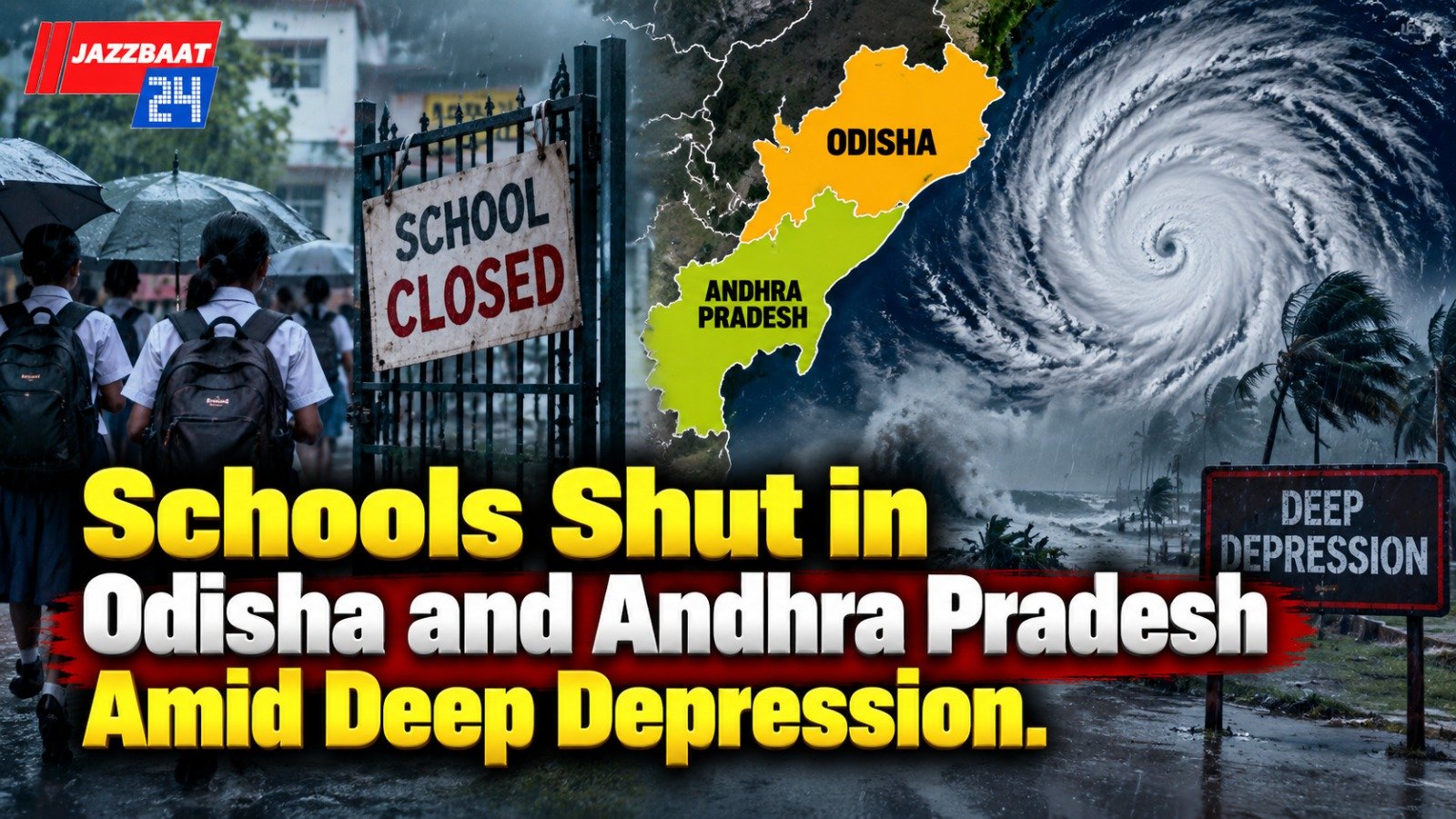
Several districts in Odisha and Andhra Pradesh have announced school closures as a deep depression over the Bay of Bengal brought heavy rain and prompted authorities to take precautionary measures.
In Odisha, educational institutions in Nabarangpur, Puri, Jagatsinghpur, Ganjam, Gajapati, Koraput and Khurda have been ordered to remain closed until Thursday, September 24. Malkangiri has also announced the closure of schools during the same period. Anganwadi centres in the district will also remain shut. Teachers and other staff, however, have been directed to report to their respective institutions.
The Puri district administration has taken additional safety measures along the coast. Red flags have been put up at beaches and sea bathing has been completely prohibited until Thursday in view of the rough weather conditions.
The India Meteorological Department (IMD) said the deep depression moved westwards at a speed of around 7 kmph during the six hours preceding its latest update. It was located over the west-central and adjoining northwest Bay of Bengal, around 100 km east-southeast of Kalingapatnam in Andhra Pradesh and about 150 km south of Gopalpur in Odisha.
According to the weather department, the system was expected to move west-northwestwards and cross the North Andhra Pradesh–South Odisha coast between Visakhapatnam and Gopalpur, close to Kalingapatnam, by the night of September 23.
The system has raised concerns over heavy rainfall, strong winds and difficult conditions in coastal areas. Local administrations have therefore been advised to remain alert and take necessary precautions.
Andhra Pradesh has also announced school closures in some districts. In Vizianagaram, all schools were declared closed on Wednesday, September 23, following an order from the District Education Officer. Schools in Srikakulam were also reported to have been ordered shut.
The weather system is being closely monitored as it moves towards the Andhra Pradesh-Odisha coast. Authorities in affected districts are focusing on public safety, particularly in coastal and low-lying areas.
The next cyclone to form in the North Indian Ocean is expected to be named ‘Arnab’, according to the regional cyclone naming list. However, the current system remained a deep depression at the time of the latest IMD update.
Residents in affected areas have been advised to follow official weather and administration updates and avoid unnecessary travel, particularly near the coast and other vulnerable locations.




Reader Comments 0