
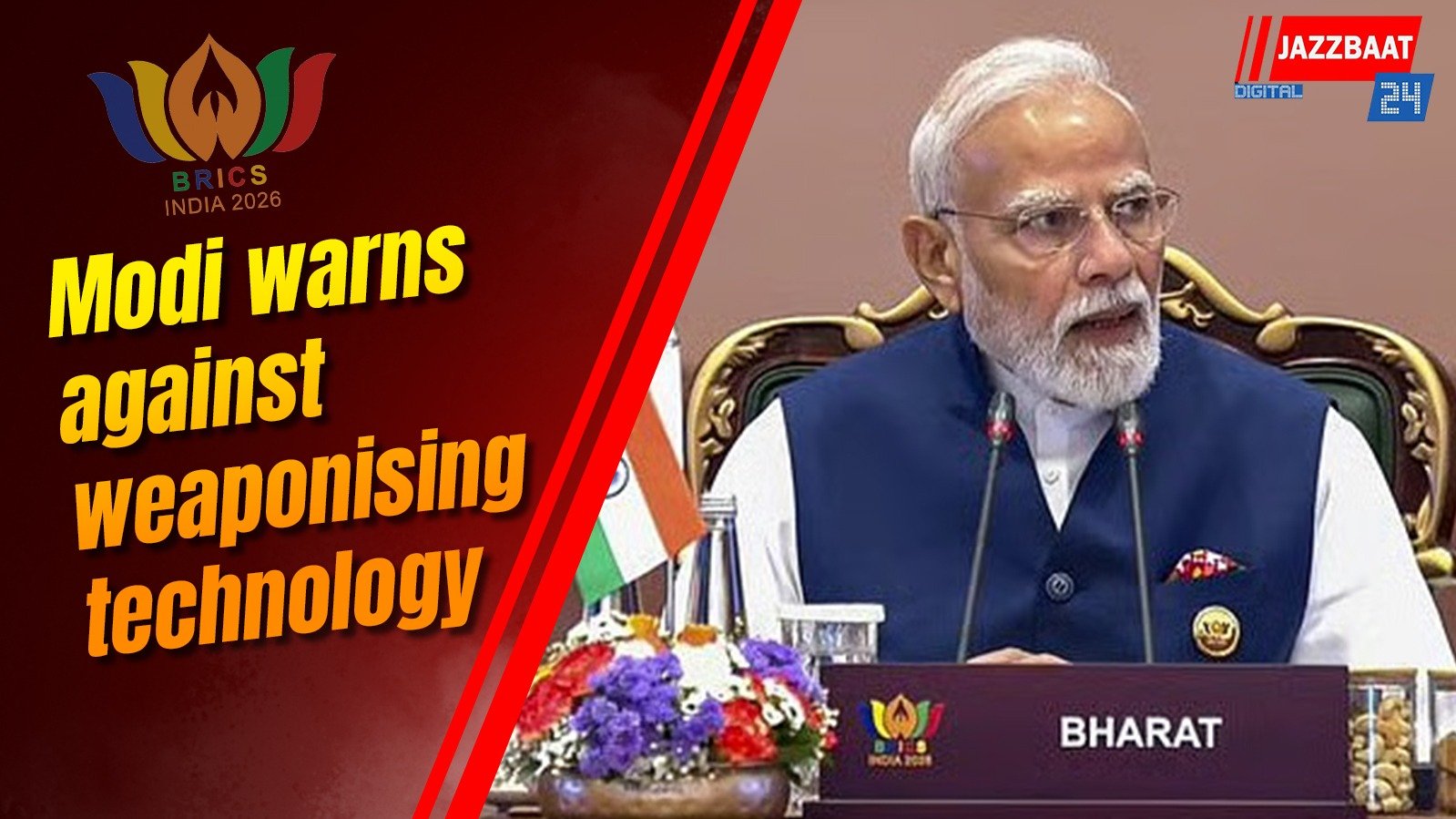
Prime Minister Narendra Modi on Sunday called for greater cooperation among BRICS countries and warned that the weaponisation of technology and critical minerals could threaten global development and shared prosperity.
Addressing the opening session of the second day of the BRICS Summit in New Delhi, Modi said India’s chairship of the grouping had focused on four key pillars — resilience, innovation, cooperation and sustainability. He said these principles were aimed at turning a shared vision into practical and mutually beneficial cooperation among member countries.
Modi’s remarks on critical minerals come amid growing global concerns over supply chains and access to resources that are essential for advanced industries and modern technologies. Critical minerals are increasingly important for sectors such as electronics, renewable energy, electric vehicles and defence.
The Prime Minister stressed that technology should remain inclusive and benefit a wider section of the global community. “Weaponisation of technology and critical minerals can hinder our shared progress,” he said, underlining the need for responsible and inclusive adoption of new technologies.
Modi also emphasised that BRICS cooperation should not remain restricted to governments. According to him, entrepreneurs, farmers, researchers, women, young people and ordinary citizens should all have a role in strengthening cooperation between member countries.
A major theme of his address was the growing importance of the Global South. Modi said solutions developed through BRICS should not be limited to the member countries but should also be adaptable and accessible to the wider needs of developing nations.
He said the confidence of Global South countries in BRICS had increased because their voices were being heard and their experiences respected. He stressed that solutions should be developed together with these countries rather than simply being created for them.
“The strength of BRICS lies in our diversity and cooperation,” Modi said, highlighting the group's broad geographical and economic representation.
The summit in New Delhi brings together leaders from the expanded BRICS grouping. The organisation currently includes 11 member countries — Brazil, China, Egypt, Ethiopia, India, Indonesia, Iran, Russia, Saudi Arabia, South Africa and the United Arab Emirates.
The presence of Chinese President Xi Jinping and Russian President Vladimir Putin alongside Modi has also given the summit significant geopolitical importance. The meeting comes at a time when countries are seeking greater cooperation on economic development, technology, global governance and international security.
Modi’s comments on critical minerals also highlight the increasing strategic importance of controlling access to essential raw materials. As economies move towards cleaner technologies and advanced manufacturing, reliable mineral supply chains have become an important part of economic and national security discussions.
The Prime Minister’s broader message was that BRICS should work as a platform for inclusive development rather than simply as a forum for governments. He argued that cooperation across sectors and greater participation from people and institutions could help the grouping deliver practical benefits.
The summit is also expected to focus on reforms in global governance and strengthening the voice of developing nations in international decision-making.
With BRICS continuing to expand its membership and influence, India is seeking to position the grouping as an important platform for cooperation among emerging economies and the wider Global South.



Reader Comments 0