
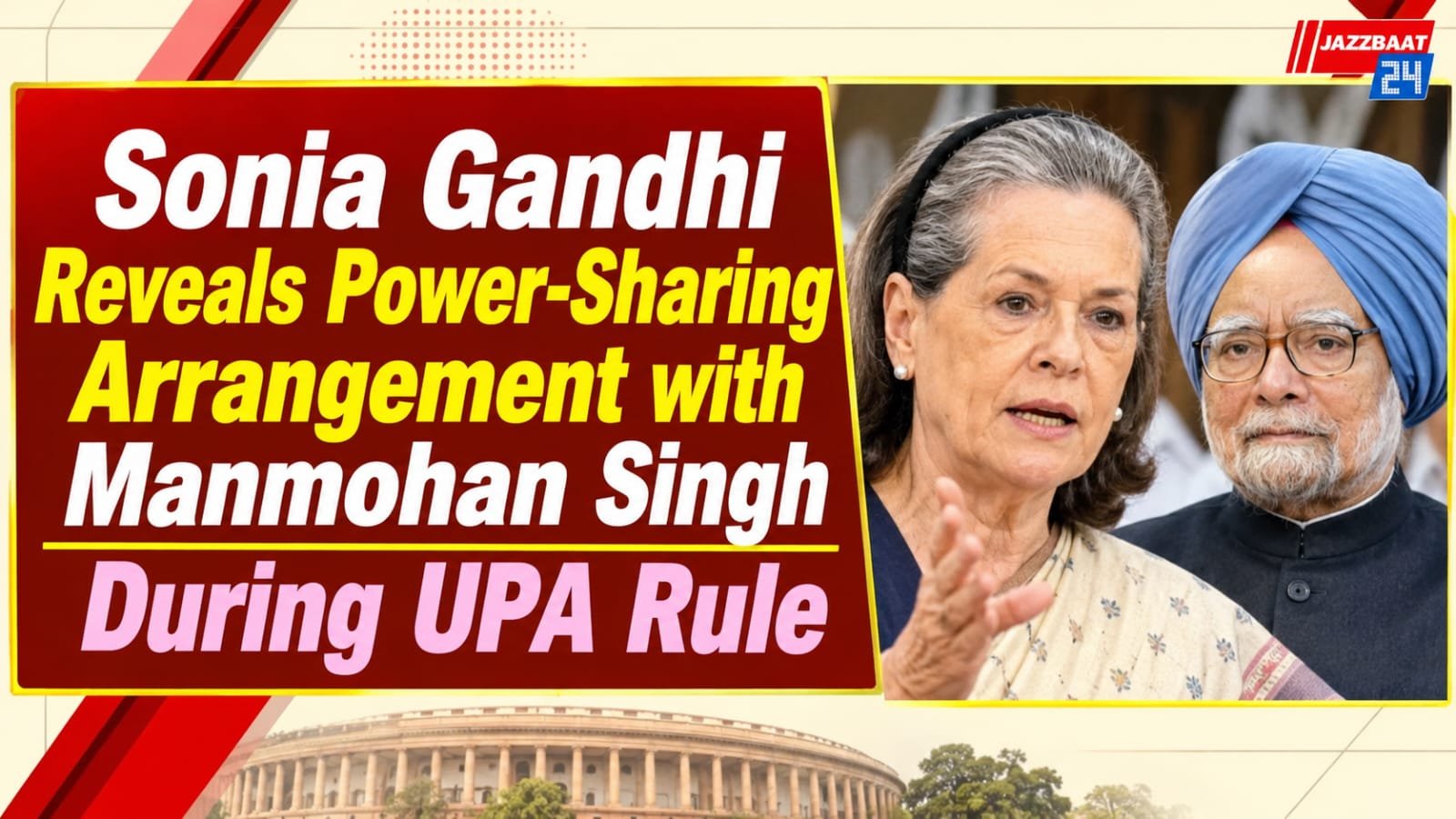
Former Congress president Sonia Gandhi has offered a rare insight into the division of responsibilities within the United Progressive Alliance (UPA) government, revealing how she and former Prime Minister Manmohan Singh managed power during their years in office.
In her memoir, The Governor’s House: A Memoir, Sonia Gandhi explains that while Manmohan Singh was responsible for running the government, she concentrated on managing the Congress party and strengthening the political alliance that supported the government. Her account sheds light on the working relationship between two of the most influential figures in Indian politics during the UPA years.
In the book, titled Belonging: A Journey of Love, Gandhi strongly rejects allegations that she interfered in the Prime Minister's Office or exercised authority behind the scenes. She describes claims that she summoned official files from the PMO as “malicious and totally false”. According to her, she respected the constitutional position of the Prime Minister and was careful not to create misunderstandings that could weaken the government.
Gandhi says she offered suggestions and opinions to Singh in her capacity as Congress president, but ultimately recognised that important government decisions were his responsibility. She also explained that her involvement in government formation was mainly aimed at ensuring that experienced Congress leaders who had stood by the party during its years out of power received due consideration.
The memoir also revisits her decision to decline the Prime Minister's post after the Congress-led alliance won the 2004 general election. Gandhi reveals that she had discussed the decision months before the election results with her children, Rahul Gandhi and Priyanka Gandhi Vadra. Both reportedly opposed her becoming Prime Minister because of concerns about her personal security.
She explains that Manmohan Singh emerged as her preferred choice because of his integrity, administrative experience and understanding of India's economy. His role in introducing economic reforms in 1991 was also considered important, particularly as the UPA depended on support from Left parties, which had reservations about certain economic policies.
Another interesting revelation concerns former Finance Minister Pranab Mukherjee. Gandhi recalls a conversation in 2010, when Mukherjee suggested that perhaps it was time for a change at the top. She interpreted his remark as a possible indication of his long-standing ambition to become Prime Minister. The revelation offers a glimpse into the internal political dynamics of the Congress leadership during the second UPA government.
Through her memoir, Gandhi has attempted to address longstanding questions about who exercised real authority during the UPA years. Her account presents the arrangement as a partnership based on separate responsibilities, with Singh leading the government and Gandhi managing the party and political alliance.



Reader Comments 0