
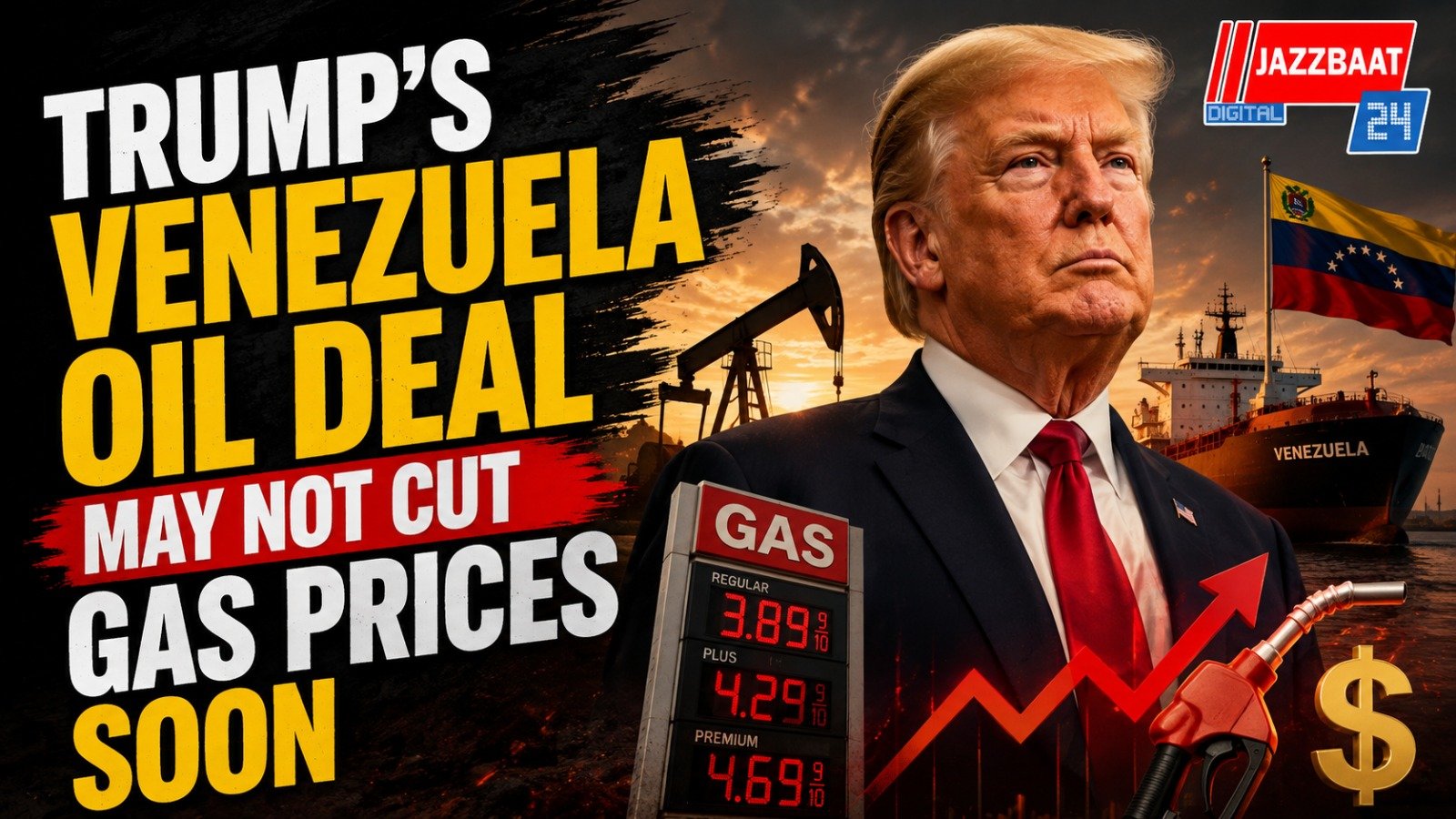
US President Donald Trump’s sweeping oil agreement with Venezuela has put the country’s vast petroleum reserves back at the centre of global energy politics. The deal gives a US-backed private company 100-year rights to develop 17 Venezuelan oil fields holding about 65 billion barrels of proven reserves.
The White House has described the agreement as the “biggest oil deal in world history”. Under the arrangement, the US government will receive a 35% stake in the parent company of North American Blue Energy Partners (NABEP), the private operator involved in the deal. Washington will also have the right to purchase 20% of the oil produced at cost and a first-refusal right over much of the remaining output.
Trump has presented the agreement as a way to increase US energy security and eventually bring down gasoline prices. The plan aims to revive Venezuela’s badly damaged oil industry and increase production substantially. NABEP is expected to invest up to $100 billion in infrastructure, while Venezuela could receive around $200 billion in taxes and royalties over 25 years.
But the huge size of Venezuela’s reserves does not mean millions of additional barrels will immediately reach US consumers. Much of the country’s oil infrastructure has deteriorated after years of underinvestment, mismanagement and political turmoil. Venezuela’s crude is also particularly heavy, meaning it requires specialised infrastructure and refining capacity.
Energy analysts say rebuilding production will take years and require enormous amounts of capital. The agreement is designed to eventually raise Venezuelan output to as much as 1.5 million barrels per day, but achieving that target will require repairing wells, pipelines, ports and other facilities.
There are also questions over whether major international oil companies will be willing to invest heavily in Venezuela. Several companies remain cautious because of the country's history of nationalisation, political instability and disputes over property rights. Although companies including Chevron, Eni and others are pursuing separate projects, attracting enough private capital remains a major challenge.
The deal therefore represents a potentially major long-term shift in the global oil market, but it is unlikely to provide an immediate solution to high US gasoline prices.
For American motorists, the key issue is not how much oil Venezuela has underground, but how quickly and cheaply that oil can actually be extracted, transported, refined and brought to market. Experts currently expect that process to take years rather than months.



Reader Comments 0