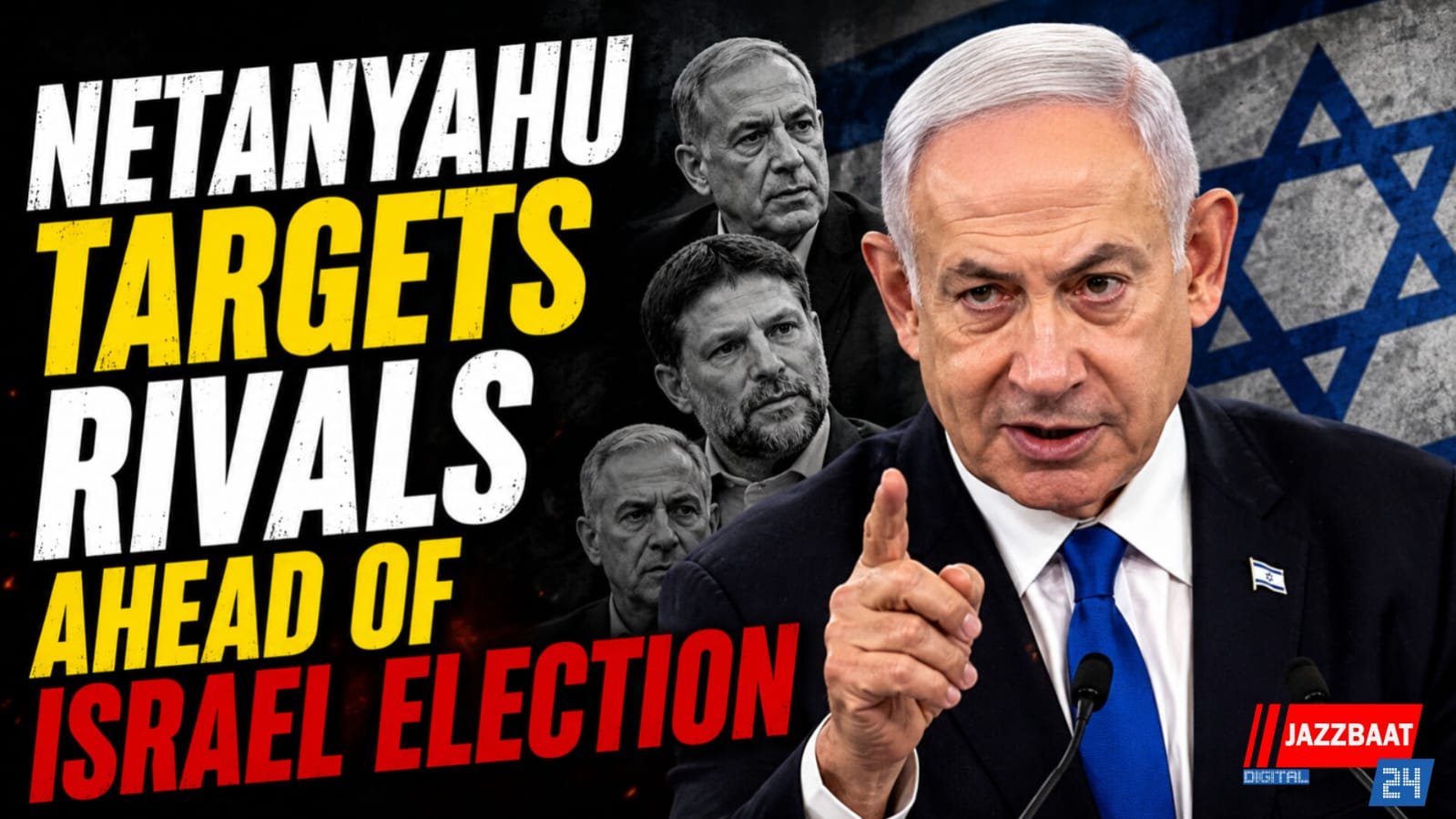
Israeli Prime Minister Benjamin Netanyahu has stepped up his election campaign by attacking opposition rivals and warning voters about possible alliances between centrist, left-wing and Arab parties ahead of the October 27 parliamentary election.
In a recent campaign advertisement, Netanyahu's Likud party used an AI-generated image of former military chief Gadi Eisenkot riding a “Trojan horse”. The video depicts opposition figures Mansour Abbas and Yair Golan emerging from inside the horse, suggesting that Eisenkot could secretly depend on them to form a government.
The message comes as Eisenkot's centre-right Yashar party has gained ground in opinion polling and, according to The Economist's poll tracker, has moved ahead of Netanyahu's Likud. That has made him an increasingly important challenger among voters who traditionally support the right-wing camp.
Netanyahu's campaign is seeking to portray Eisenkot as dependent on political forces that many right-wing and conservative Israeli voters distrust. In particular, the focus on Mansour Abbas and his Ra'am party taps into longstanding divisions over the role of Arab parties in Israeli politics.
The strategy reflects the increasingly fragmented nature of the election. No single political group is expected to easily secure the 61 seats needed to form a government, meaning coalition-building will be crucial after the vote.
Netanyahu himself faces a difficult electoral battle. His government has been under pressure over the Gaza war, security failures and domestic political disputes. At the same time, tensions within his governing coalition have continued, including disagreements with far-right allies and ultra-Orthodox parties.
The election campaign has also become increasingly personal and unconventional. Last month, Netanyahu published what he described as his personal phone number and invited Israelis to contact him with their problems and suggestions. The move quickly generated hundreds of messages and calls and raised questions over whether the campaign could also help collect voter information.
Netanyahu's latest advertisements show how the campaign is shifting towards fears about political alliances and the future shape of Israel's government. Rather than focusing only on policy differences, his campaign is attempting to convince voters that an opposition victory could bring together political groups with sharply different ideologies.
With the October 27 election approaching, the battle for centrist and right-wing voters is expected to intensify. The ability of Netanyahu and his rivals to build credible coalitions may ultimately determine who controls Israel's next government.


Reader Comments 0