
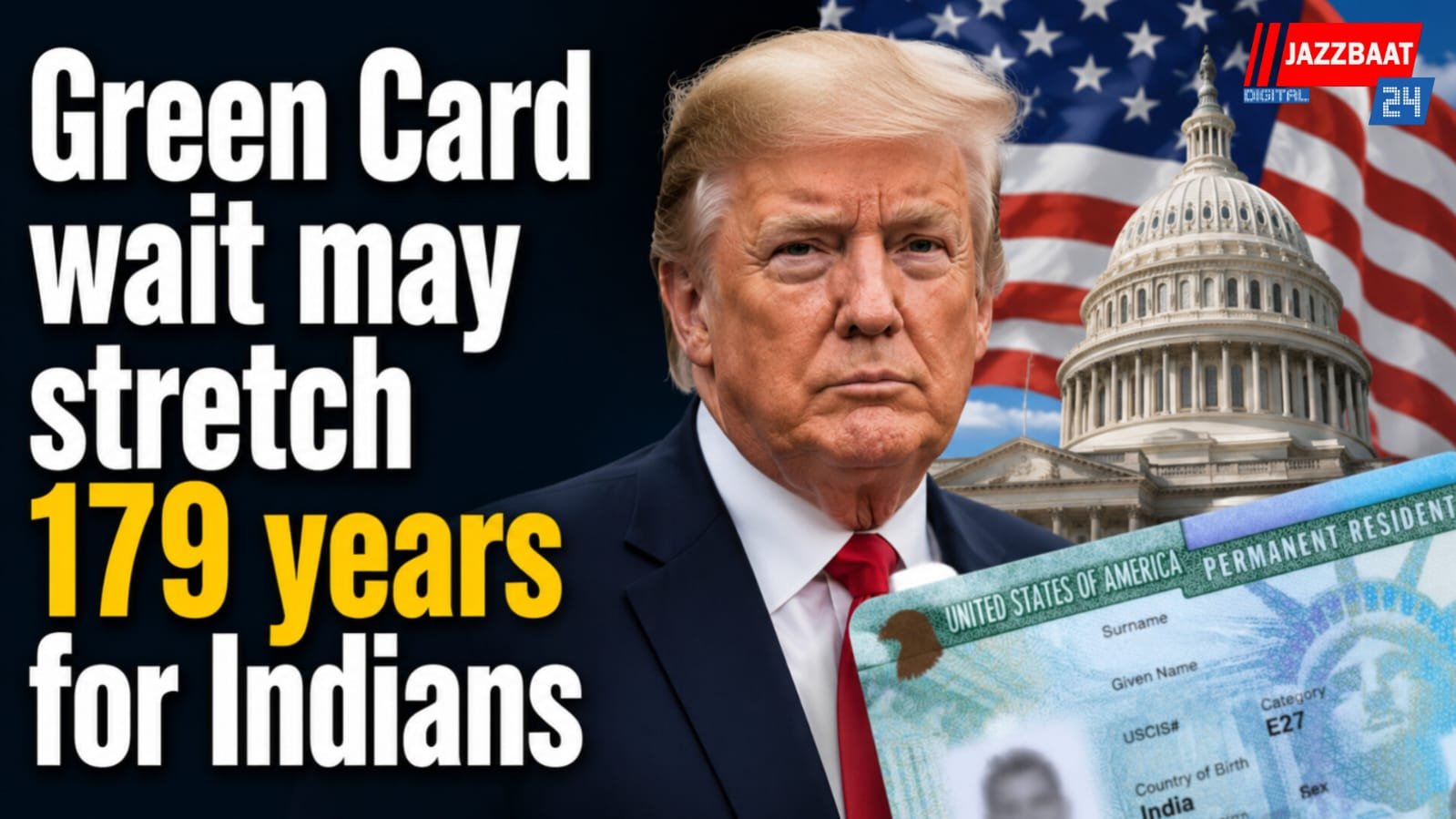
Indian professionals hoping to secure permanent residency in the United States could face extraordinarily long waits, with a new analysis estimating that some applicants may have to wait as long as 179 years for a green card.
According to the National Foundation for American Policy (NFAP), nearly one million Indian professionals and their dependents are currently caught in the employment-based green card backlog. Indians account for around 79 per cent of all people waiting in these employment-based categories.
The lengthy delays are largely linked to the US nationality-based green card limits. Around 140,000 employment-based green cards are available each year, while nationals of any one country generally cannot receive more than 7 per cent of the total.
Indian professionals can seek employment-based permanent residency through several categories. EB-1 is designed for people with extraordinary abilities, while EB-2 covers professionals with advanced degrees or exceptional ability. EB-3 is available to skilled workers and professionals, including those with bachelor's degrees.
The NFAP estimates that an Indian professional with a labour certification application or employment-based immigrant petition filed in January 2026 or later could face a potential wait of around 179 years under the EB-2 category. The estimated wait is about 38 years for EB-3 and five years for EB-1.
The situation is also difficult for applicants from China, although their projected waits are shorter. Chinese professionals could face approximately 25 years in EB-2 and seven years in EB-3.
The Indian backlog has been building for years. NFAP's analysis points to FY 2016 as an example. USCIS approved thousands of EB-2 applications for Indian nationals that year, but only a much smaller number ultimately received permanent residency. With dependents included, tens of thousands of people were therefore added to the backlog.
A temporary increase in employment-based green cards during the pandemic period provided some relief. Family-based visa numbers that went unused because of consulate closures were transferred to employment categories under US law. This resulted in roughly 280,000 additional green cards between FY 2020 and FY 2024.
Despite the additional numbers, the employment-based backlog still increased by 20.6 per cent over five years.
The NFAP argues that the prolonged delays are creating problems not only for Indian professionals but also for US companies. Employers may find it harder to attract and retain highly skilled Indian workers when permanent residency can remain uncertain for decades.
For many Indians working in the US on temporary employment visas, the green card backlog has therefore become a long-term immigration challenge, with some applicants potentially facing waits that extend far beyond their working lives.


Reader Comments 0