
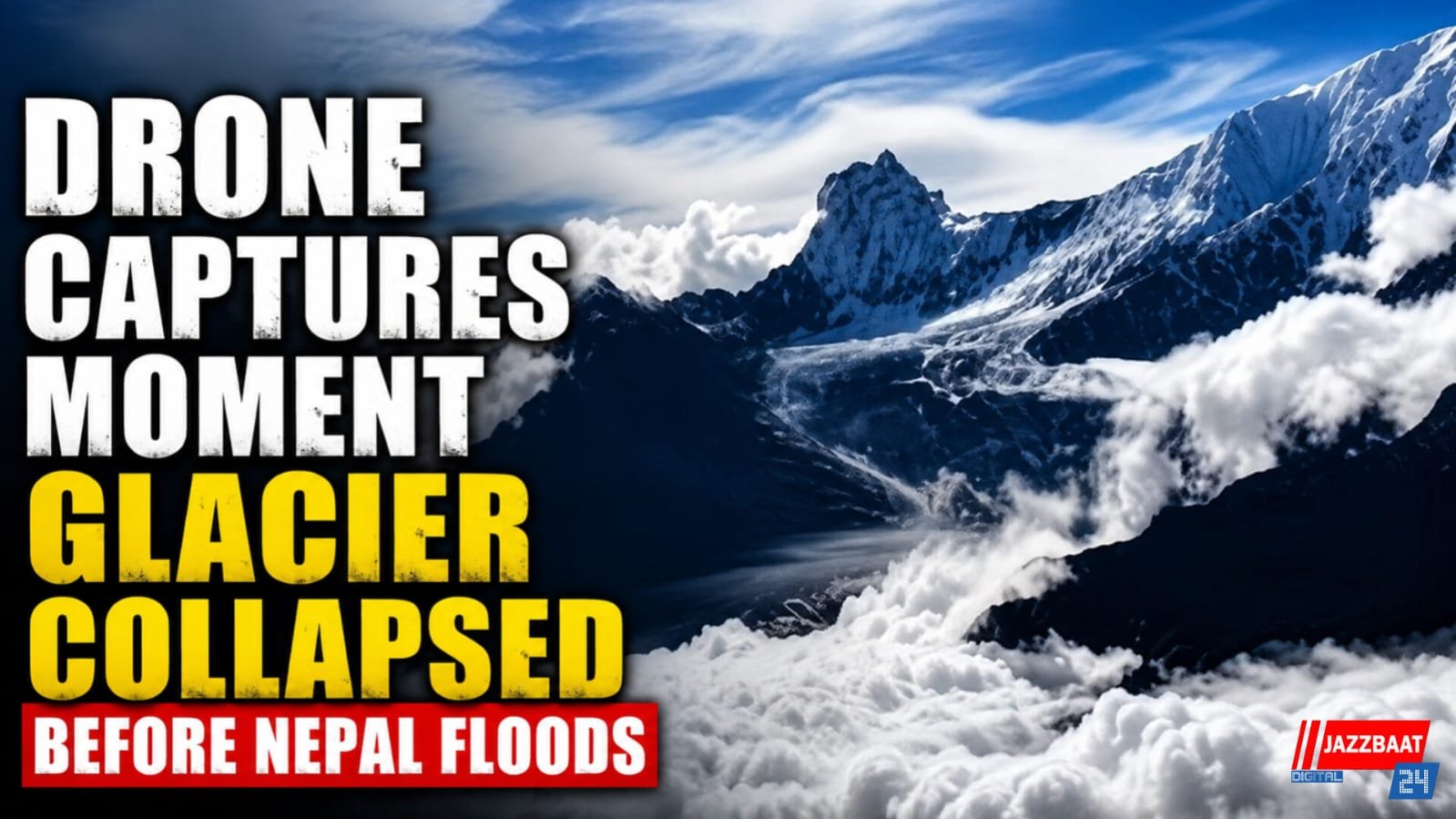
A dramatic drone video has captured the moment a massive glacier and rock formation collapsed in Nepal shortly before devastating flash floods swept through parts of Nepal and Tibet.
The footage, reportedly recorded accidentally by a Chinese photographer during a drone shoot, shows a huge mass of rock and glacier ice breaking away from a mountain slope near the Langtang Lirung peak. The mountain rises more than 7,200 metres above sea level.
The video shows enormous clouds of dust and debris rising as the avalanche rushes down the mountain. The collapsing ice and rock then plunged into the valley, around 1,200 metres below, triggering a powerful flow of water, mud and debris.
The disaster severely swollen the Bhotekoshi and Trishuli rivers and caused widespread destruction. According to the report, 903 people were killed in Nepal and another 16 died in Tibet on August 26. More than 4,500 people were still reported missing, most of them in Nepal.
The scale of the disaster has left authorities struggling to assess the full extent of the damage. Nepal Prime Minister Balendra Shah described the situation as an "unimaginable and heartbreaking" natural disaster.
He said rescue and assessment operations were being complicated by difficult terrain, adverse weather and continuing risks in affected areas. Authorities are continuing efforts to locate missing people and assess damage to homes, roads and infrastructure.
The latest incident has also raised concerns about the increasing frequency of major glacier and rock collapses in mountainous regions.
Similar disasters have occurred in recent years. In 2021, a massive rock-and-ice avalanche in Uttarakhand's Ronti Peak caused extensive destruction and left around 200 people dead or missing. In 2023, a rock collapse into South Lhonak Lake in Sikkim triggered a glacial lake outburst flood, damaging dams, buildings and bridges.
In 2025, a major rock-and-ice collapse from the Birch Glacier in the Swiss Alps buried much of the village of Blatten.
Experts have repeatedly warned that changing climatic conditions, including rising temperatures and melting ice and permafrost, can increase instability in high mountain regions. The Nepal disaster has once again highlighted the risks faced by communities living downstream of vulnerable glaciers and mountain slopes.




Reader Comments 0