
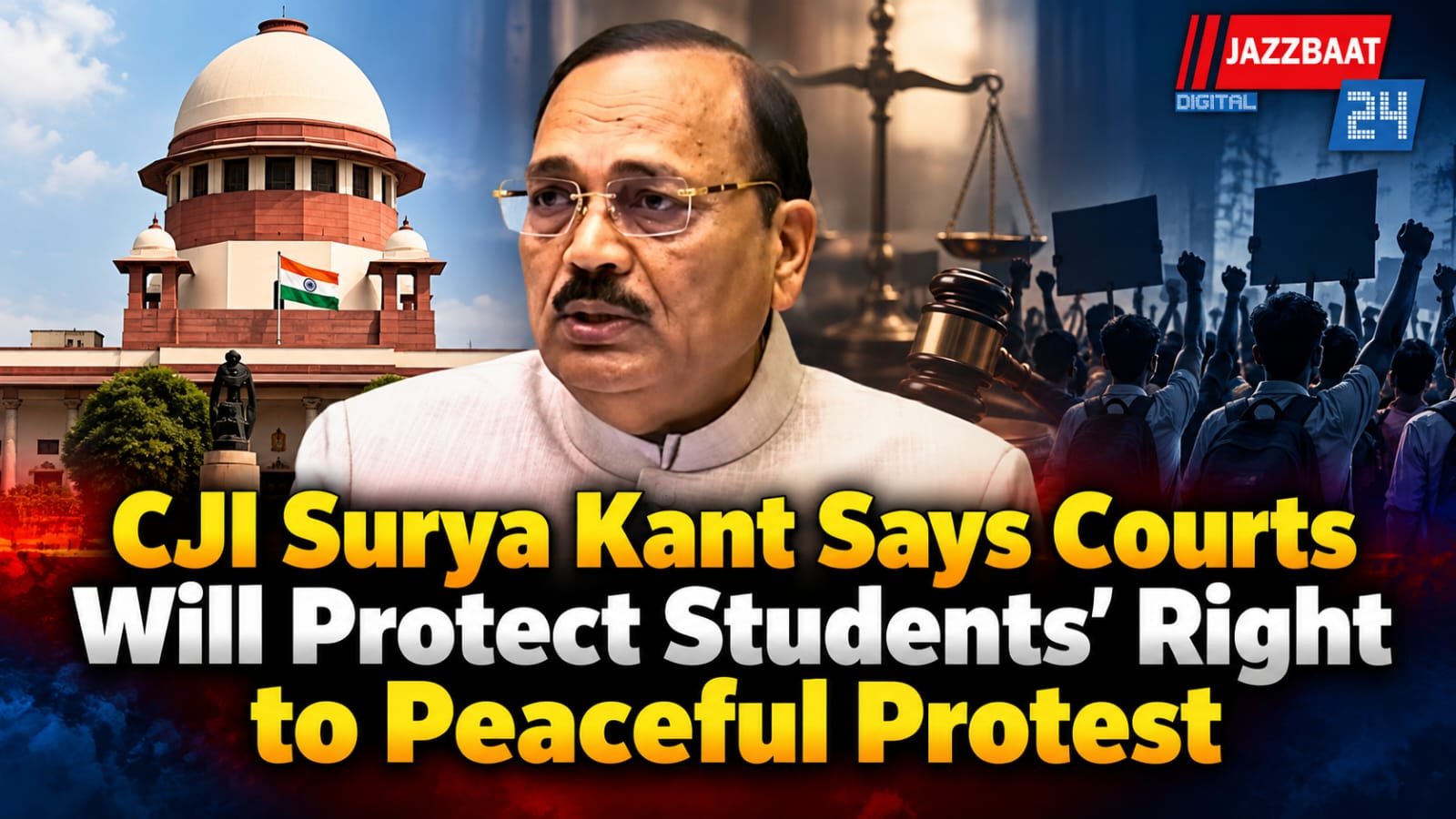
Chief Justice of India Surya Kant on Saturday said the judiciary is committed to protecting students’ fundamental right to peaceful protest and will not ignore cases involving alleged violations of that right.
The CJI made the remarks during an interaction with students at Chanakya National Law University (CNLU) in Patna. The university described the session as an “unfiltered interaction”, with Surya Kant encouraging students to ask frank questions.
One student asked about the police response to peaceful student protests, referring to demonstrations at Delhi’s Jantar Mantar over alleged NEET examination paper leaks. Responding to the question, the CJI said courts would not “look the other way” when students’ rights were allegedly violated.
The discussion also touched on transparency within the Supreme Court collegium. A student asked why dissenting views recorded during collegium discussions were not made public.
Surya Kant explained that transparency has limits when the dignity and reputation of an individual are involved. He questioned how a judge or Chief Justice could continue working if negative observations about them were publicly disclosed in collegium minutes.
The CJI was accompanied during his visit to the CNLU campus by Patna High Court Chief Justice V Kameswar Rao, who is also the university's Chancellor.
The university said the interaction took place against the backdrop of recent opposition to the CJI at NALSAR Hyderabad and NLSIU Bengaluru.
During the session, another significant issue concerning legal education was discussed. The CJI welcomed a proposal from CNLU Vice Chancellor and jurist Faizan Mustafa to restructure the five-year law degree.
Under the proposal, students would spend four years on academic studies followed by a mandatory court apprenticeship during the fifth year. The proposal could also remove the need for a separate one-year practice requirement for candidates appearing in judicial service examinations.
The interaction covered issues ranging from students’ rights and judicial transparency to reforms in legal education. Surya Kant's comments highlighted the judiciary's role in protecting peaceful protest while also explaining why certain judicial processes may require confidentiality.
The proposal for a mandatory court apprenticeship will now be part of the broader discussion on legal education and the preparation of future judicial officers.


Reader Comments 0