
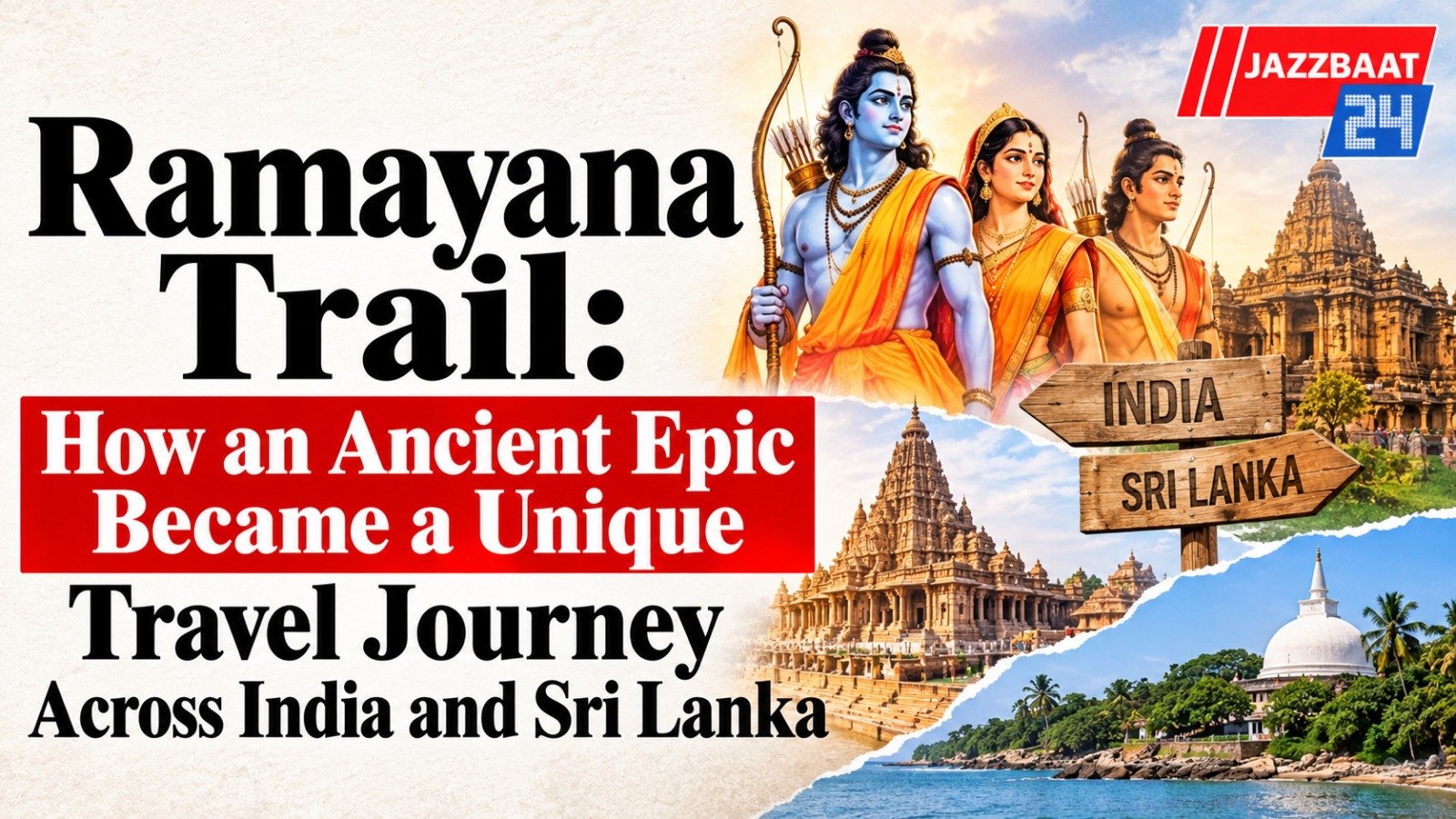
The Ramayana is no longer limited to books, religious stories and traditional performances. Today, the ancient Indian epic is inspiring a unique travel experience that connects destinations across India and Sri Lanka. From the forests of Chitrakoot to the temples of Rameswaram and the hills of Sri Lanka, the Ramayana Trail allows travellers to explore places associated with the journeys of Lord Rama, Sita, Lakshmana, Hanuman and Ravana.
The growing interest in mythology-based tourism has attracted a new generation of travellers who want to discover the cultural and historical significance of destinations while exploring the stories they grew up hearing.
How Did the Ramayana Trail Begin?
For centuries, the Ramayana travelled across generations through oral storytelling, temple traditions, folk performances and regional literature. As different communities developed their own interpretations of the epic, several geographical locations became associated with specific events and characters.
Over time, these places developed religious and cultural significance, attracting pilgrims and visitors.
However, the organised Ramayana Trail as a tourism initiative is relatively recent. Sri Lanka began promoting its Ramayana-related destinations in 2008. In India, the Ministry of Tourism identified the Ramayana Circuit under the Swadesh Darshan scheme in 2014-15 to improve tourism infrastructure at important destinations.
In April 2024, the Ramayana Trail – The Sacred Mission was also launched in Colombo, giving fresh momentum to cultural tourism between India and Sri Lanka.
Important Destinations Across India
The Indian route follows several locations traditionally associated with different stages of Lord Rama's life.
- Ayodhya, Uttar Pradesh: Associated with the birth of Lord Rama
- Prayagraj, Uttar Pradesh: Linked to the journey during his exile
- Chitrakoot, Uttar Pradesh and Madhya Pradesh: Traditionally associated with Rama, Sita and Lakshmana's forest years
- Nashik, Maharashtra: Associated with important events during the exile
- Hampi, Karnataka: Traditionally linked with Kishkindha and the kingdom of Sugriva
- Rameswaram, Tamil Nadu: Associated with Rama's preparations for the journey to Lanka
- Dhanushkodi, Tamil Nadu: Traditionally connected with the legendary journey towards Lanka
The broader Ramayana Circuit under the tourism initiative identifies 15 destinations across several Indian states.
Sri Lanka: Exploring the Lanka Chapter
Sri Lanka offers another important dimension of the Ramayana Trail. Its destinations are traditionally associated with Sita's captivity, Hanuman's search and Ravana's kingdom.
Some prominent locations include:
- Seetha Amman Temple in Nuwara Eliya
- Ashoka Vatika, traditionally identified with Sita's captivity
- Ravana Cave and Ravana Falls in Ella
- Divurumpola, associated with Sita's fire ordeal
- Munneswaram Temple in Chilaw
- Kelaniya, associated with traditions surrounding Vibhishana
- Koneswaram Temple in Trincomalee
Sri Lanka's tourism authorities have identified 52 sites associated with the Ramayana Trail. Tour packages generally range from six to nearly 12 days.
Why Is the Trail Attracting Travellers?
The attraction goes beyond religious tourism. Each destination offers a combination of mythology, architecture, natural landscapes, local food and regional traditions.
Chitrakoot offers forest landscapes and riverfront ghats, while Hampi attracts visitors with its dramatic boulder formations and historic ruins. Wayanad in Kerala offers another cultural perspective through its tribal communities and regional storytelling traditions.
According to internal booking data from Zostel, heritage destinations accounted for 14.9 per cent of its total bookings. Bookings in this category increased from 67,788 in FY24 to 83,235 in FY26. Hampi alone recorded 9,738 bookings, registering 15.7 per cent year-on-year growth.
One Epic, Different Cultural Interpretations
The Ramayana has never had just one interpretation. Valmiki's Ramayana, Tulsidas' Ramcharitmanas and Kamban's Ramavataram represent different literary traditions. Beyond India, the epic also inspired Thailand's Ramakien and Indonesia's Kakawin Ramayana.
These regional versions give the travel trail a wider cultural dimension, allowing visitors to understand how different communities have preserved and interpreted the same epic.
How Much Does the Journey Cost?
A six-day, five-night Ramayana package in Sri Lanka can start at approximately Rs 50,000-55,000 per person. Seven- to eight-day packages may cost around Rs 60,000-90,000, depending on accommodation, transport and other inclusions. International flights are generally charged separately.
An India-wide journey has variable costs depending on the number of destinations, transport and accommodation choices.
Ultimately, the Ramayana Trail offers more than a conventional holiday. It connects ancient storytelling with living traditions, allowing travellers to explore the landscapes, cultures and communities that have kept the epic alive for generations.



Reader Comments 0