
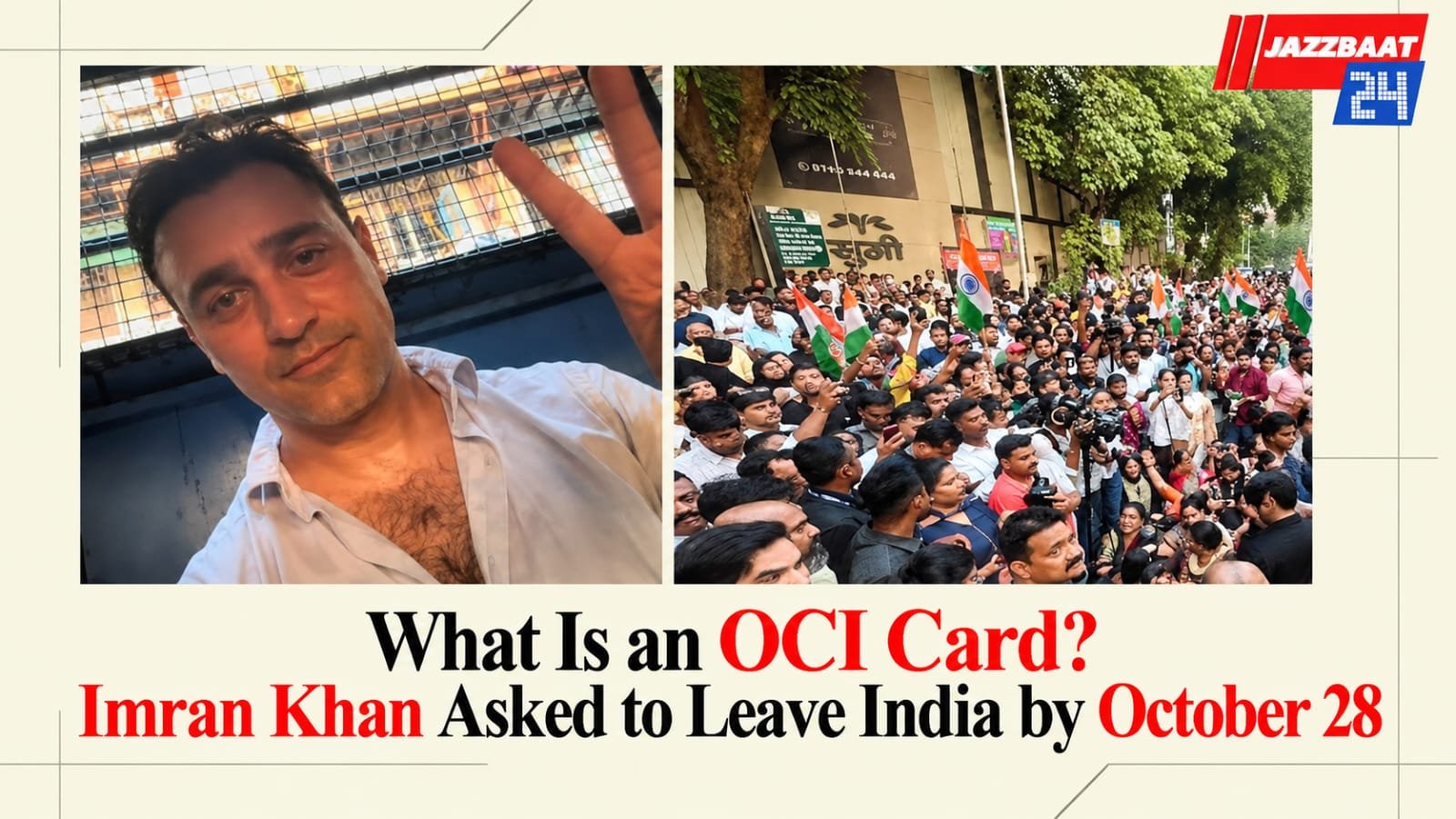
News Desk: Actor Imran Khan has reportedly been asked to leave India by October 28 after participating in a protest against Chief Election Commissioner Gyanesh Kumar in Mumbai. The notice issued by the Foreigners Regional Registration Office (FRRO) has brought the rights and restrictions of Overseas Citizen of India (OCI) cardholders into focus.
According to reports, Khan, who is said to be an American citizen and an OCI cardholder, came under scrutiny after participating in a demonstration at August Kranti Maidan on October 10. The protest demanded the resignation of the Chief Election Commissioner over alleged irregularities in the Special Intensive Revision (SIR) of electoral rolls.
The action followed a complaint by BJP leader Kirit Somaiya, who questioned Khan's participation in the political demonstration despite his foreign citizenship. The complaint was subsequently forwarded to the FRRO, which reportedly issued the notice directing the actor to leave India by October 28.
What is an OCI card?
The Overseas Citizenship of India scheme was introduced in 2005 for eligible people of Indian origin who hold foreign citizenship. It allows them to enjoy certain immigration and other privileges while visiting or residing in India.
Despite its name, an OCI card does not grant dual citizenship. OCI cardholders remain foreign nationals and continue to hold the passports of their respective countries.
According to the Ministry of External Affairs, OCI cardholders generally receive a lifelong, multiple-entry visa to visit India and are exempt from registration with the Foreigners Regional Registration Office for any length of stay, subject to applicable rules.
What rights do OCI cardholders have?
OCI cardholders enjoy certain benefits similar to those available to Non-Resident Indians in specified economic, financial and educational matters. However, they do not enjoy all the rights reserved for Indian citizens.
They cannot vote in Indian elections, contest parliamentary or state assembly elections, or hold certain constitutional offices, including those of the President and Vice-President. They are also generally ineligible for government employment, subject to applicable exceptions.
Can OCI cardholders participate in political protests?
The issue has become significant following the action against Imran Khan. Article 19 of the Indian Constitution guarantees citizens the right to freedom of speech and peaceful assembly, subject to reasonable restrictions. These particular constitutional protections are not available to foreign nationals in the same manner as they are to Indian citizens.
However, the absence of these citizen-specific rights does not automatically mean that every instance of a foreign national attending a protest is illegal. The legality of participation and any action taken by authorities depend on the applicable laws, immigration conditions and circumstances of the case.
Can the government cancel an OCI card?
Yes. The Citizenship Act, 1955, provides for cancellation of OCI registration on specified grounds, including registration obtained through fraud or concealment of material facts, certain conduct considered contrary to India's constitutional framework, and circumstances involving national security or public interest.
The cancellation of OCI registration and an order directing someone to leave India are separate actions, each requiring consideration of the applicable legal provisions.
What happens next in Imran Khan's case?
According to the report, the FRRO has directed Khan to leave India by October 28. The actor was among several people detained during the October 10 demonstration at August Kranti Maidan.
The case has raised questions about the limits of OCI privileges, the participation of foreign nationals in political demonstrations and the powers of immigration authorities.
The legal basis for the notice, the reasons recorded by the authorities and any challenge Khan may pursue will be important in determining the next steps in the case.



Reader Comments 0