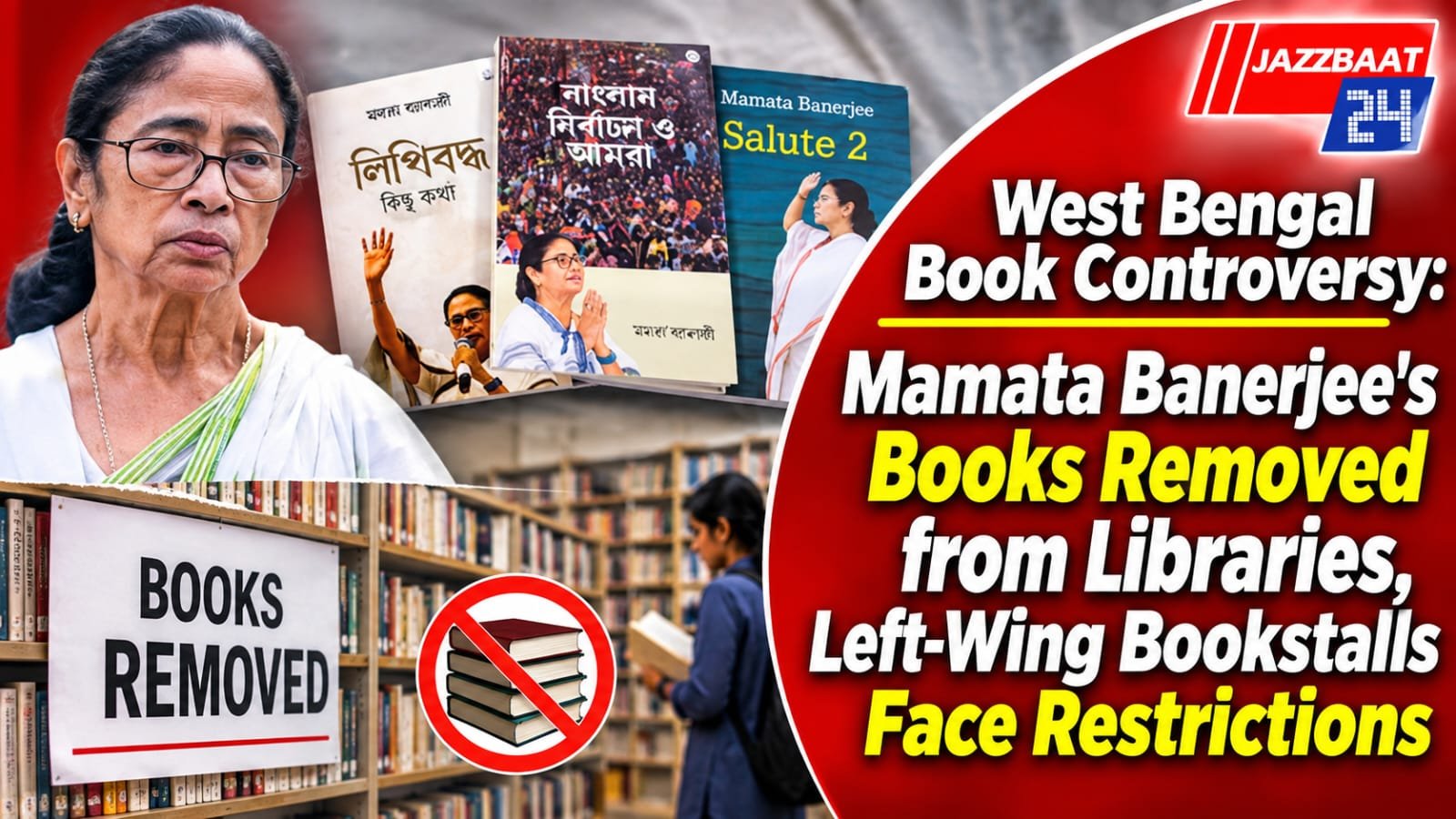
KOLKATA: A fresh controversy over books and political expression has emerged in West Bengal, with the removal of former Chief Minister Mamata Banerjee's writings from government libraries and restrictions on temporary bookstalls organised by Left-wing groups triggering criticism from political and civil rights organisations.
In August 2026, the BJP-led state government reportedly ordered the removal of books written by Mamata Banerjee, including Epang-Opang-Jhapang, from government school and public libraries. State Mass Education Extension and Library Services Minister Gouri Shankar Ghosh reportedly said that these books had been made mandatory during the previous Trinamool Congress government. The present administration, he stated, wanted to give greater importance to educational content promoting what it described as nationalist thought.
The decision, however, drew criticism from sections of the political and literary community, who questioned the need to remove a former Chief Minister's published works from public libraries.
The issue took another turn in October and November when temporary bookstalls organised by the CPI(M) and its student organisation, the Students' Federation of India (SFI), reportedly faced restrictions during Durga Puja and near Calcutta University.
Police authorities cited footpath obstruction while refusing permission for the stalls. The controversy also involved the use of the term Sharodotsav instead of Durga Puja, along with allegations that some stalls were distributing material described as anti-national. Chief Minister Suvendu Adhikari reportedly criticised the activities.
Left-wing organisations, students and civil rights groups subsequently raised objections, alleging that restrictions and incidents of vandalism were discouraging public reading and limiting freedom of expression.
With both developments drawing attention, the debate has moved beyond party politics. The question now being raised is whether political differences should influence the availability of books in public libraries or the right to organise literary activities in public spaces.


Reader Comments 0