
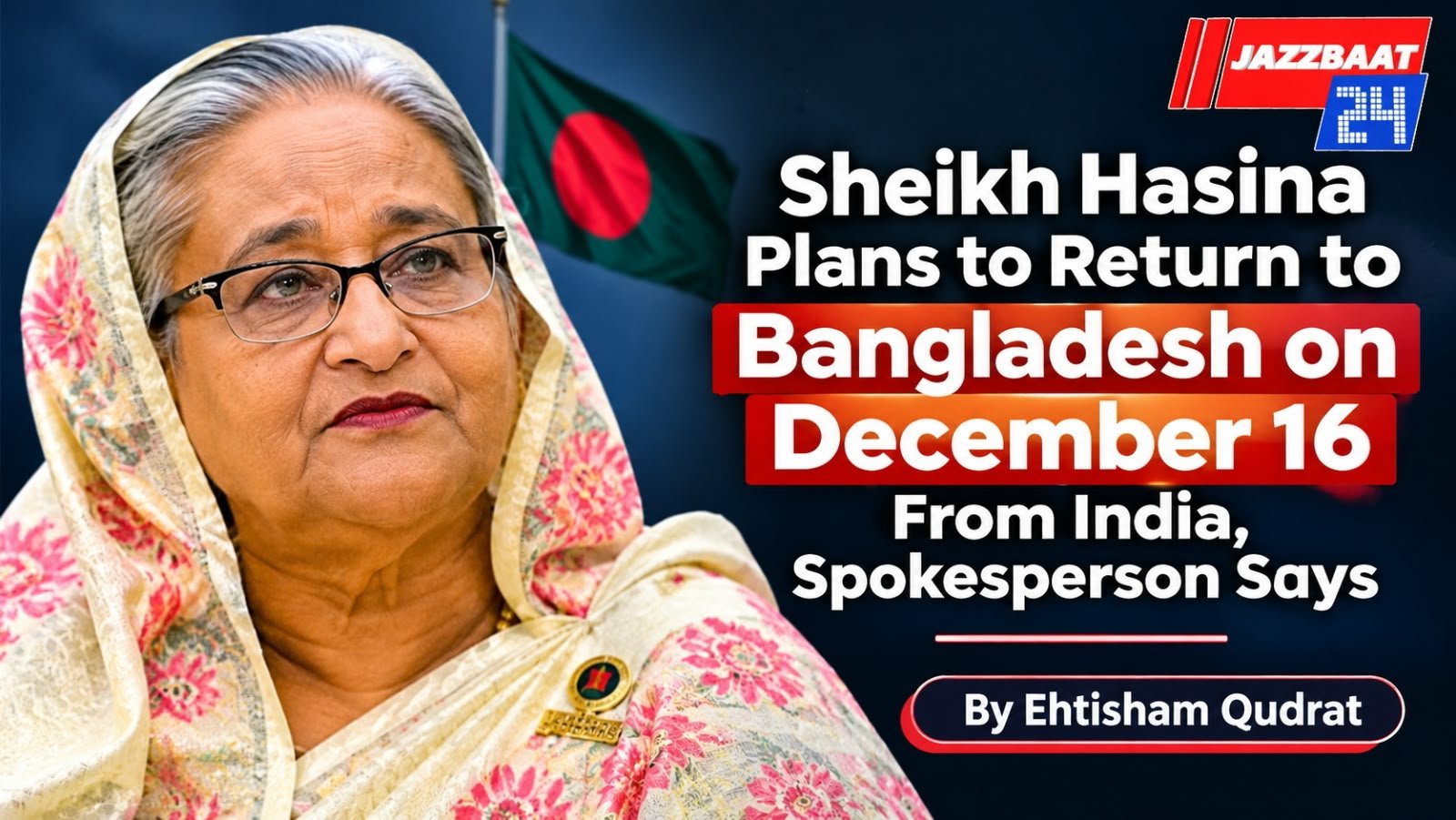
Ehtisham Qudrat, Dhaka: Former Bangladesh Prime Minister Sheikh Hasina is planning to return to the country from exile in India on December 16, coinciding with Bangladesh's Victory Day celebrations, according to a statement issued by her spokesperson on Tuesday, November 24, 2026.
Hasina, who was ousted from power following a student-led mass uprising in August 2024, has been living in India since leaving Bangladesh on August 5, 2024, after 15 years in office.
According to The Associated Press (AP), Hasina's spokesperson Syed Mozammel Ali said she had called upon the government of Bangladesh to arrange her return from New Delhi to Dhaka using the country's national airline.
The proposed return date carries symbolic significance as December 16 marks Bangladesh's Victory Day, commemorating the country's independence following the 1971 war with Pakistan.
Bangladesh Government Maintains Extradition Position
However, Hasina's proposed return could face legal challenges. She was sentenced to death in absentia for crimes against humanity connected to the crackdown on protesters during the 2024 uprising, in which hundreds of people were killed.
Hasina has rejected the verdict and previously said she was prepared to fight the case after returning to Bangladesh.
Abu Abdullah M Saleh, press secretary to Bangladesh's Prime Minister Tarique Rahman, told AP that the government would maintain its position on Hasina's extradition, describing her as a convicted person whose extradition had been sought.
“My government’s stand is very clear. She has been convicted in a tribunal. We have sought her extradition,” he said on call.
According to the government spokesperson, Hasina is expected to be arrested upon her return and sent to prison.
A prosecutor had earlier said that Hasina could not appeal against her death sentence because she had already missed the required deadline. The prosecutor also argued that there was no legal basis to prevent her execution.
Hasina's Aide Describes Return as Symbolic
Abu Obaidha Arin, an aide to Hasina, described December 16 as a deeply symbolic date for her planned return, expressing confidence that she would celebrate Victory Day among the people of Bangladesh.
Hasina's father, Sheikh Mujibur Rahman, led Bangladesh's independence movement and became the country's first leader. He was assassinated during a military coup in 1975, along with most members of his family. Hasina and her younger sister survived because they were outside the country at the time.
Following Hasina's removal from power, Nobel Peace Prize laureate Muhammad Yunus headed an interim government before power was transferred to Tarique Rahman's elected Bangladesh Nationalist Party government.
The interim administration had banned Hasina's Awami League party, which was subsequently barred from contesting the February 2026 elections.


Reader Comments 0