
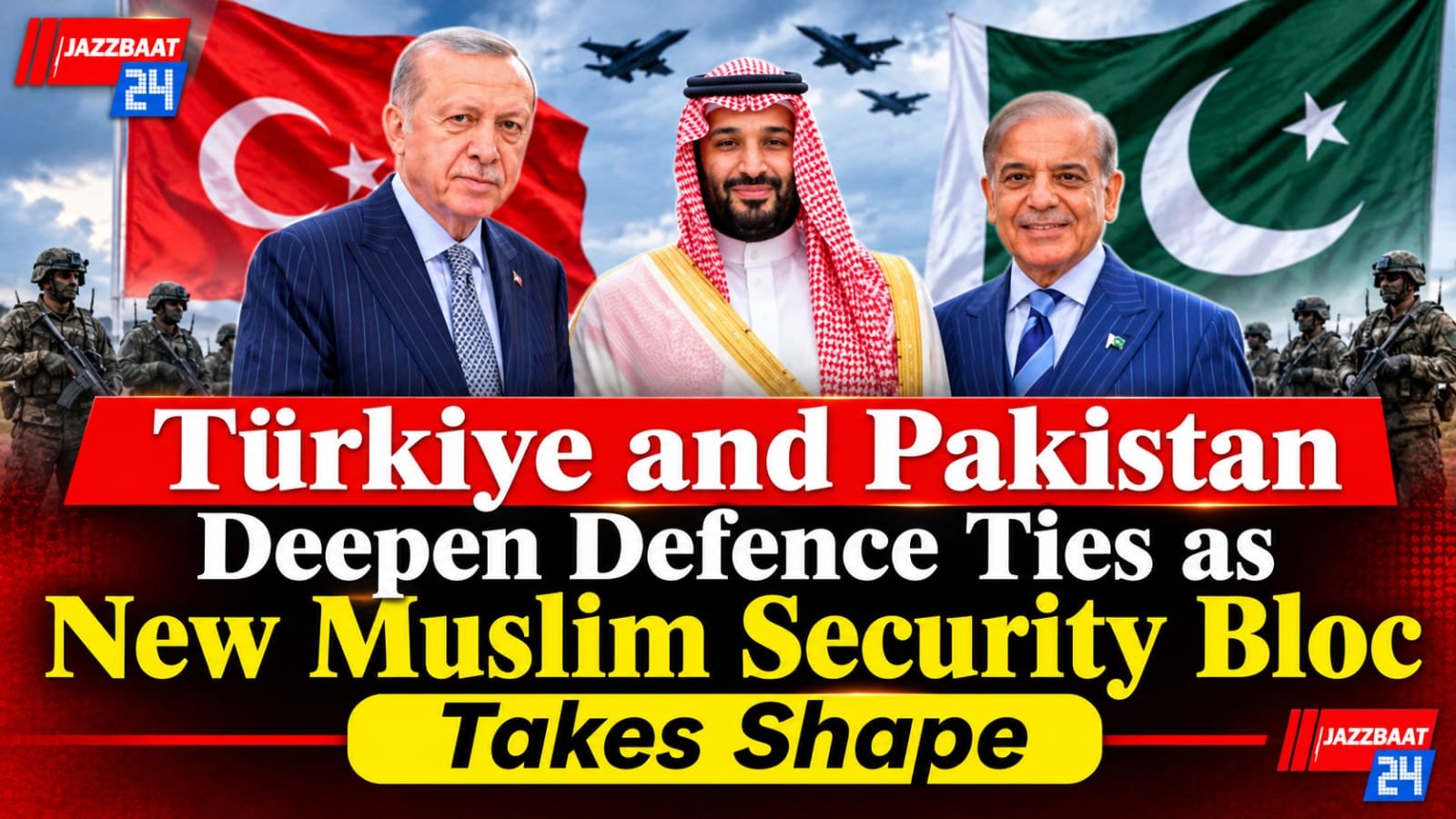
A new network of defence partnerships involving Türkiye, Pakistan and other Muslim-majority countries is taking shape, raising questions about the possibility of a broader security alliance that could eventually be compared to NATO. Recent agreements involving Saudi Arabia, Qatar and Indonesia indicate that Ankara and Islamabad are seeking to expand military cooperation, defence manufacturing and strategic influence across the Middle East and South Asia.
A major step came on August 7, 2026, when Saudi Arabia, Türkiye and Pakistan signed the Mecca Joint Defence Agreement in Mecca. Under the agreement, an armed attack against any one of the three countries would be considered an attack against all three. The arrangement establishes a collective-defence commitment similar in principle to NATO's Article 5.
The agreement brings together three countries with different but complementary military strengths. Türkiye has developed a growing defence industry, particularly in drones, naval systems, missiles and electronic warfare. Pakistan brings decades of military experience, established defence manufacturing capabilities and nuclear deterrence. Saudi Arabia contributes substantial financial resources and strategic influence in the Gulf.
The partnership is also moving towards institutional cooperation. Senior military and defence officials from the three countries have discussed intelligence sharing, military coordination, joint exercises and the integration of defence capabilities. A permanent secretariat has been established in Riyadh to help coordinate the arrangement.
Another significant development came on October 21, when Türkiye, Pakistan, Qatar and Indonesia signed the Badr Memorandum of Understanding in Doha. Unlike the Mecca agreement, this arrangement does not contain a mutual-defence clause. Instead, it focuses on joint defence production, technology transfers, research and development, technical training and strengthening domestic military industries.
The four countries intend to combine their respective industrial strengths. Türkiye offers technological expertise and established defence manufacturing, Pakistan and Indonesia bring production capabilities, while Qatar provides financial resources and demand for military equipment.
Existing projects provide a foundation for this cooperation. Türkiye and Pakistan are already collaborating on the MILGEM naval corvette programme, while Türkiye and Indonesia have partnered on defence technology and armoured vehicle development.
However, describing these developments as the emergence of a Muslim NATO would be premature. The participating countries have different security priorities, military doctrines and international partnerships. Türkiye remains a NATO member, while Saudi Arabia and Pakistan maintain their own strategic relationships with other global powers.
The Mecca agreement also faces questions over military interoperability, operational command structures and how collective-defence commitments would work during an actual conflict.
For now, the emerging framework represents an effort to strengthen defence self-reliance, diversify international partnerships and expand military-industrial cooperation. Whether it eventually develops into a unified security alliance will depend on how effectively these countries translate diplomatic agreements into coordinated military capabilities.

Reader Comments 0