
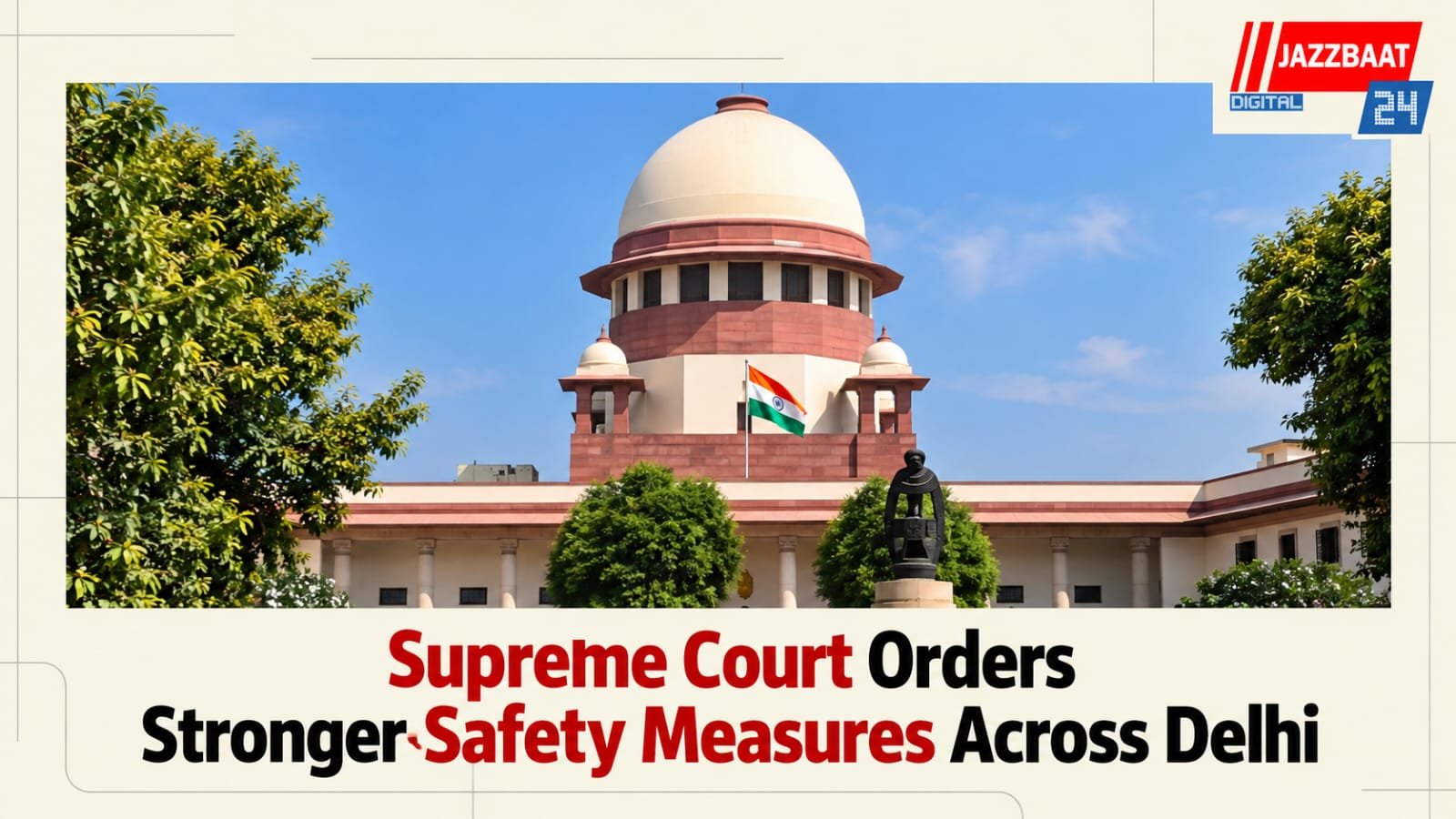
The Supreme Court on Thursday directed authorities in Delhi to strengthen police patrolling around schools, colleges, universities and coaching centres following a series of recent rape cases in Delhi-NCR.
A bench of Justices JB Pardiwala and K Vinod Chandran also ordered stricter verification of drivers and assistants working with buses, taxis, autorickshaws and app-based cab services such as Ola, Uber and Rapido. The court said only registered and verified drivers should be allowed to operate such vehicles.
The directions came as part of the court’s continuing proceedings after it took suo motu cognisance of recent sexual offences in the national capital. The bench stressed that preventive policing must result in visible and measurable action rather than remain limited to official orders and paperwork.
The court directed authorities to establish dedicated command centres, or “war rooms”, to monitor police patrolling and CCTV systems. These centres are expected to identify vulnerabilities and ensure a quick response to incidents and public complaints.
The Supreme Court also ordered regular reviews of beat policing. Senior police officers have been asked to meet beat personnel and assess vulnerable locations, emerging crime patterns and the effectiveness of existing patrol arrangements.
Passenger safety was another major focus. The court directed authorities to conduct strict and surprise checks of drivers and assistants operating public and private transport. Their names and photographs should be prominently displayed so passengers can identify authorised personnel.
The court also prohibited unauthorised sub-letting of vehicles to unverified drivers. Violations may lead to regulatory action, including suspension or dismissal of drivers and seizure of vehicles where necessary.
Authorities were further directed to ensure that vehicle tracking systems and SOS mechanisms are functioning properly and are integrated with emergency response systems. Passengers should also be informed about how SOS alerts work, who responds to them and how quickly assistance can be expected.
The court sought reports on the functioning of Delhi Police’s “Shishtachar Squads”, which deal with eve-teasing and sexual harassment in public places. It also asked for details on the implementation of Operation “Nirbheek” and the “Nazuk” scheme, aimed at encouraging girls and young women to report sexual harassment and offences.
At the same time, the bench cautioned police against excessive preventive action, stressing that policing must remain within the limits of legality, proportionality and accountability.
The court also directed authorities to remove heavy vehicles that create blind spots, identify unauthorised liquor outlets and address other civic conditions that may increase vulnerability.
The Delhi government and police have been given until November 6 to submit detailed compliance reports. The matter will next be heard on November 16.


Reader Comments 0