
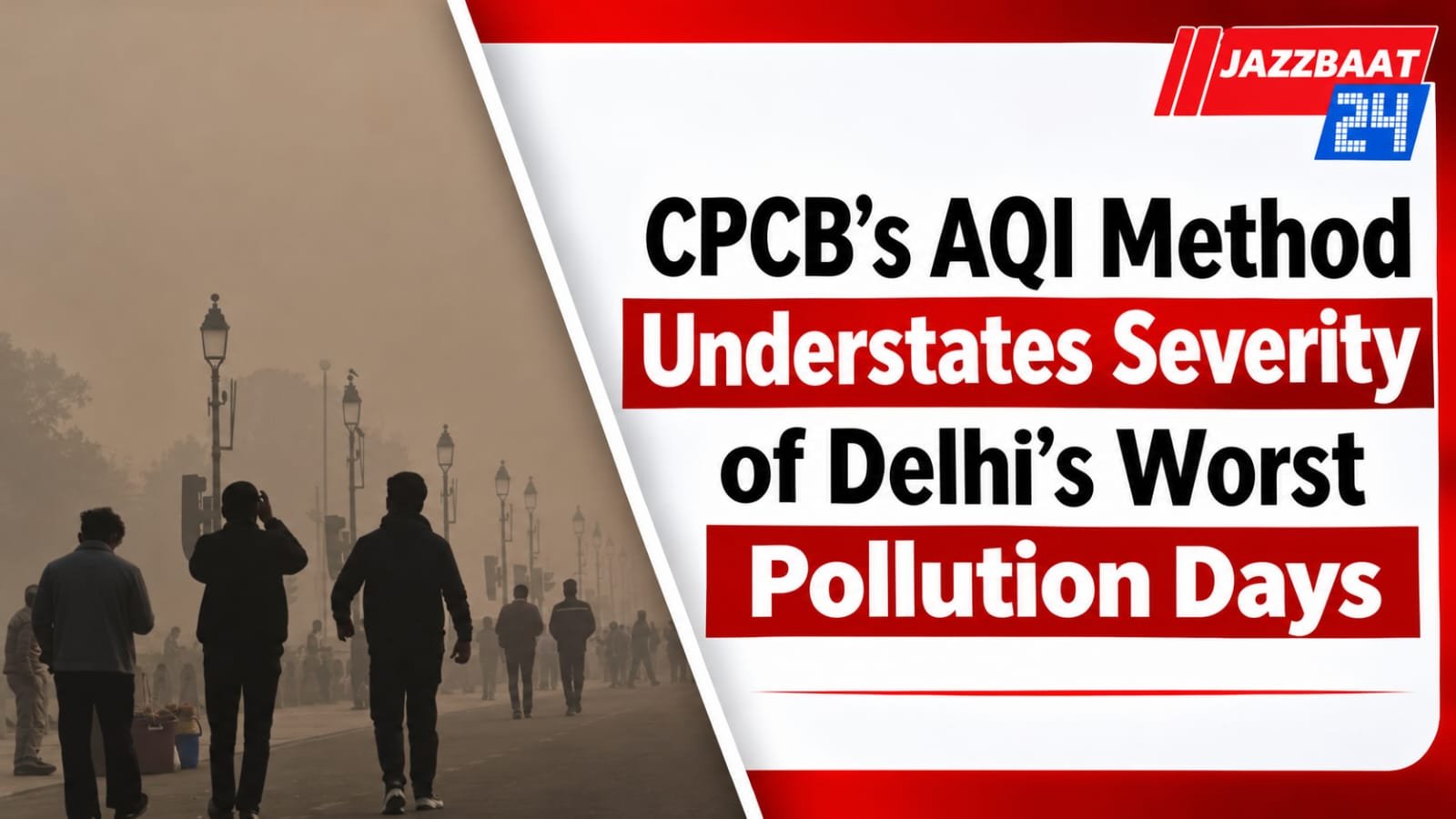
India's official air quality measurements may be understating the severity of pollution in Delhi, particularly on the city's most polluted days. An analysis of the Central Pollution Control Board's (CPCB) air quality calculations has raised questions about whether the official Air Quality Index (AQI) accurately reflects the actual pollution levels experienced by residents.
The findings, published on November 23, 2026, suggest that CPCB's calculation method does not fully follow the methodology described in its own official documents. As a result, several days classified as 'Very Poor' should have fallen into the more dangerous 'Severe' category.
23 Severe Days Instead of 10
An analysis of one year of hourly pollution readings from Delhi's government monitoring stations found that the city should have recorded 23 'Severe' pollution days under the calculation method prescribed in official guidelines. However, CPCB's daily 4 pm bulletins reported only 10 such days.
The difference was particularly noticeable during November, traditionally one of Delhi's most polluted months.
On November 9, the day after Diwali, CPCB reported Delhi's AQI at 344, placing it in the 'Very Poor' category. However, calculations based on the methodology outlined in official documents put the AQI at 411, which falls under the 'Severe' category.
The analysis also found that CPCB classified only one monitoring station in Delhi as 'Severe' that day, whereas 29 stations would have fallen into that category under the prescribed calculation method.
Where Does the Calculation Differ?
Delhi's monitoring stations record pollution levels every hour. According to CPCB's published methodology, pollutant concentrations should first be averaged over 24 hours. That average is then converted into an AQI score.
However, the analysis found that CPCB converts each hourly pollution reading into an AQI score first and subsequently averages those scores.
This difference becomes significant when pollution levels rise sharply. Since the AQI scale has a maximum limit of 500, extremely high hourly readings receive capped scores. Consequently, heavily polluted hours contribute less to the final daily figure than they would under the prescribed method.
Extremely High Readings Also Excluded
Another concern involves pollution readings exceeding 1,000 micrograms per cubic metre. CPCB acknowledged in a clarification issued on November 10 that such readings are excluded from AQI calculations.
The board explained that some monitoring instruments were originally calibrated only up to this concentration level.
On November 9, seven monitoring stations reportedly had readings above 1,000 micrograms per cubic metre that were excluded from the calculations.
Why It Matters
The AQI determines public health advisories and helps authorities decide when emergency pollution-control measures are necessary.
Under the existing classification, 'Very Poor' air quality can cause respiratory illness following prolonged exposure, while 'Severe' pollution can affect even healthy individuals and seriously impact people with existing respiratory or other health conditions.
Experts have called for greater transparency in AQI calculations and the publication of hourly monitoring data.
The findings have renewed questions about the accuracy of India's official pollution measurements and whether the existing system adequately communicates the health risks faced by millions of people during Delhi's worst pollution episodes.




Reader Comments 0