
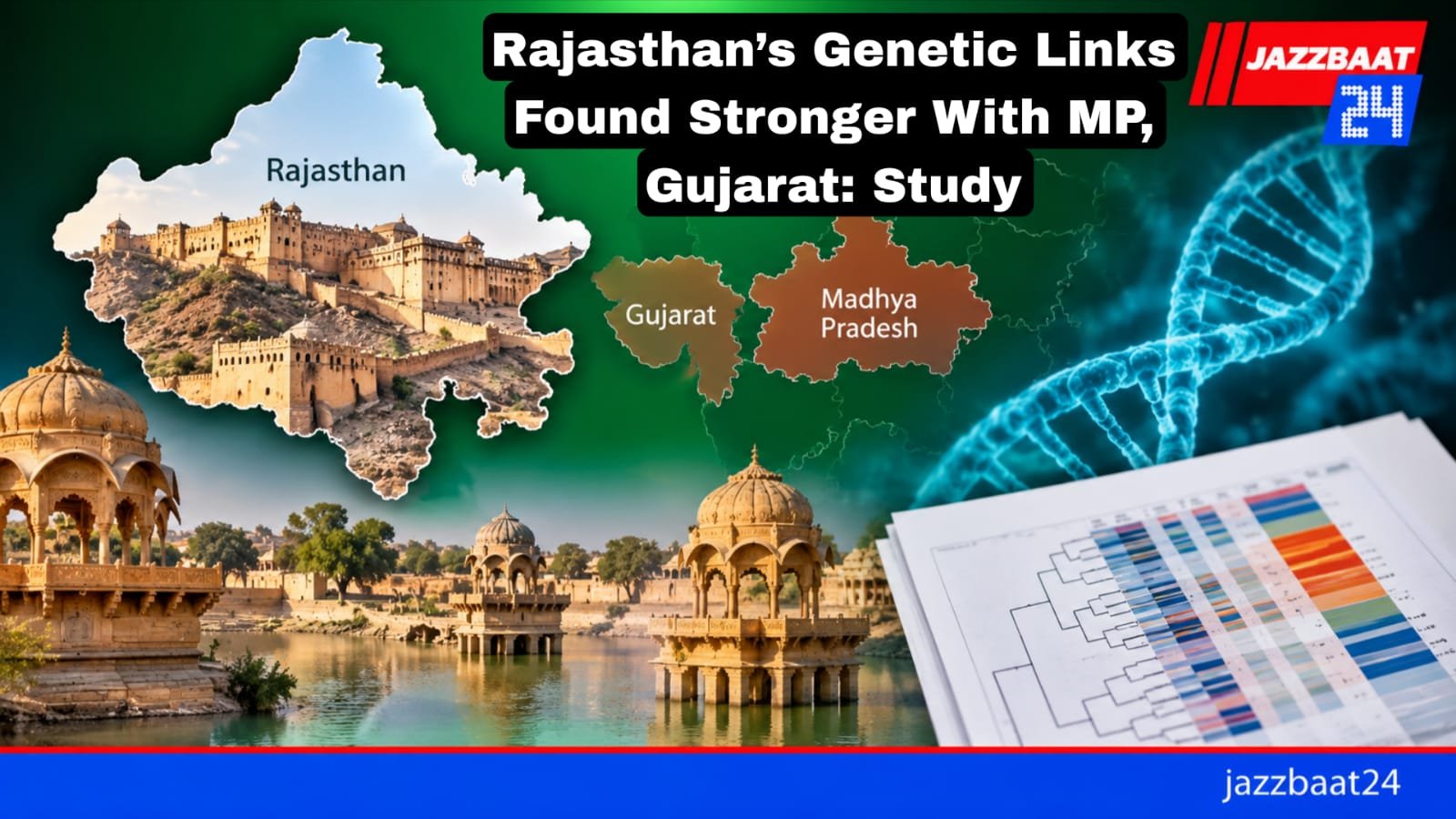
A genome-wide DNA study has found that the population of Rajasthan has stronger genetic links with communities in Madhya Pradesh and Gujarat than with populations across the border in Pakistan, according to findings presented by Banaras Hindu University geneticist Professor Gyaneshwar Chaubey.
Chaubey presented the findings at an international seminar titled ‘Rajasthan: Antiquity and Transformation’, organised by the Varanasi Institute of History in collaboration with the Indian Council of Historical Research in New Delhi.
The research examined genetic data from 669 individuals, including members of the Meena and Gujjar communities as well as people from Rajasthan’s general mixed population. According to the findings presented at the seminar, these groups showed greater genetic affinity with populations from North and Central India.
The study also revisits interpretations from earlier genetic research. A 2005 study based largely on mitochondrial DNA and Y-chromosome data had indicated closer genetic links between Rajasthan and populations in present-day Pakistan. Chaubey’s team argues that genome-wide analysis provides a broader picture of population history than studies based on limited sections of DNA.
The researchers found that the genetic profile of the studied Rajasthani populations fits more closely within a wider Indian genetic continuum rather than indicating a simple west-to-east connection with Pakistan.
The study also examined the Bhil tribe, one of India’s largest tribal communities, which is spread across Rajasthan, Gujarat, Madhya Pradesh and Maharashtra. Genome-wide analysis indicated a shared ancestry among Bhil populations from different regions, described during the seminar as a “Pan-Bhil” ancestry.
Researchers also observed varying degrees of genetic admixture among Bhil groups. Gujarat’s Bhil population showed relatively lower levels of admixture with neighbouring communities, while Rajasthan’s Bhils displayed greater diversity and interaction with surrounding castes and tribes.
Another focus of the presentation was mitochondrial DNA, which is inherited through the maternal line. The researchers identified ancient maternal lineages in Rajasthan associated with haplogroups such as M, R5 and U2i. These lineages have been linked by researchers to early human populations in South Asia.
Chaubey said the findings point towards deep genetic continuity among Rajasthan’s present-day caste and tribal populations. The research, as presented at the seminar, suggests that Rajasthan’s population history reflects long-term regional continuity, migration and admixture rather than a single external origin.




Reader Comments 0