
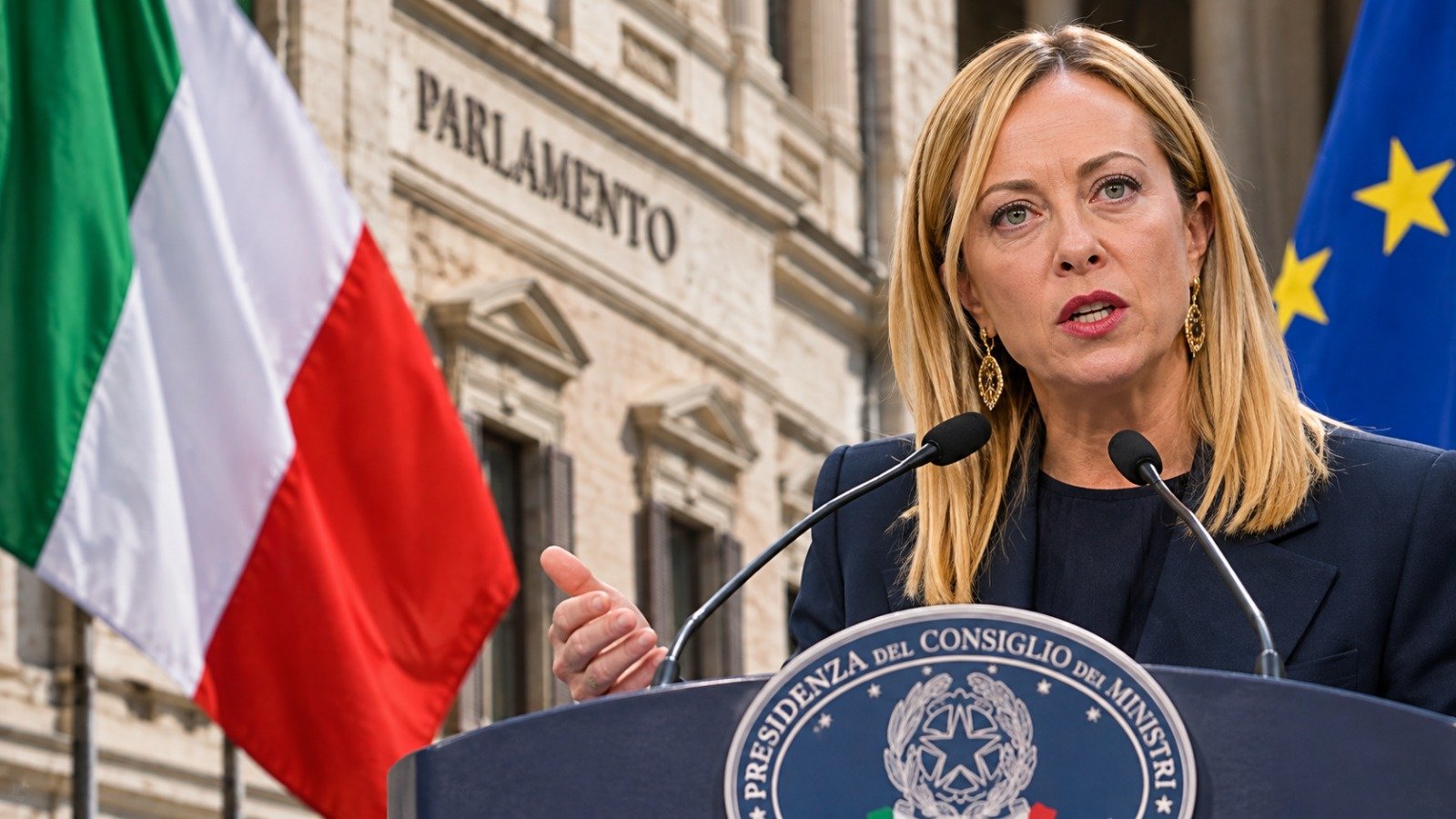
Ehtisham Qudrat: Italy's Parliament on Thursday, November 26, approved a controversial education reform banning face-covering garments, including burqas and niqabs, in schools while introducing a 30% cap on foreign students with insufficient Italian-language proficiency in certain classrooms. The legislation, backed by Prime Minister Giorgia Meloni's government, completed its passage through both houses of Parliament following approval by the Senate on November 20 and the Chamber of Deputies on November 26.
The new law prohibits students from wearing garments that cover their faces during school activities. The restriction particularly affects Muslim female students who wear burqas and niqabs. However, hijabs, which leave the face uncovered, are not included in the prohibition.
The legislation also introduces fines of up to €1,000 for violations. In cases involving minor students, their parents or legal guardians may be held responsible for the penalty.
Italy Introduces 30% Cap on Foreign Students
Apart from the face-covering restriction, the education reform introduces a 30% cap on foreign students in first-year classes at different school levels.
The limit applies to students of foreign origin who do not have sufficient knowledge of the Italian language. Certain exemptions are provided for students who have already developed adequate Italian-language proficiency.
The government has defended the measure as an effort to promote integration and prevent the formation of classrooms with high concentrations of students who struggle with the language.
The legislation also introduces Italian-language courses for foreign parents to improve communication between families and schools and support the integration of foreign students into the Italian education system.
Opposition Criticises Italy's New Education Law
The legislation has faced criticism from opposition parties, which have accused the government of promoting discriminatory policies against foreign families and Muslim students.
During the final parliamentary vote, opposition lawmakers displayed a banner reading, "At school nobody is a foreigner", protesting the restrictions.
Democratic Party representatives argued that the government should focus on improving school infrastructure, increasing the number of teachers and providing better educational resources instead of imposing restrictions on students based on their backgrounds.
Meanwhile, Education Minister Giuseppe Valditara welcomed the legislation, describing it as a step towards strengthening integration and ensuring equal opportunities in education.
The new law forms part of a broader education reform package covering foreign student integration, teacher recruitment, support for students with disabilities and digital educational resources.


Reader Comments 0