
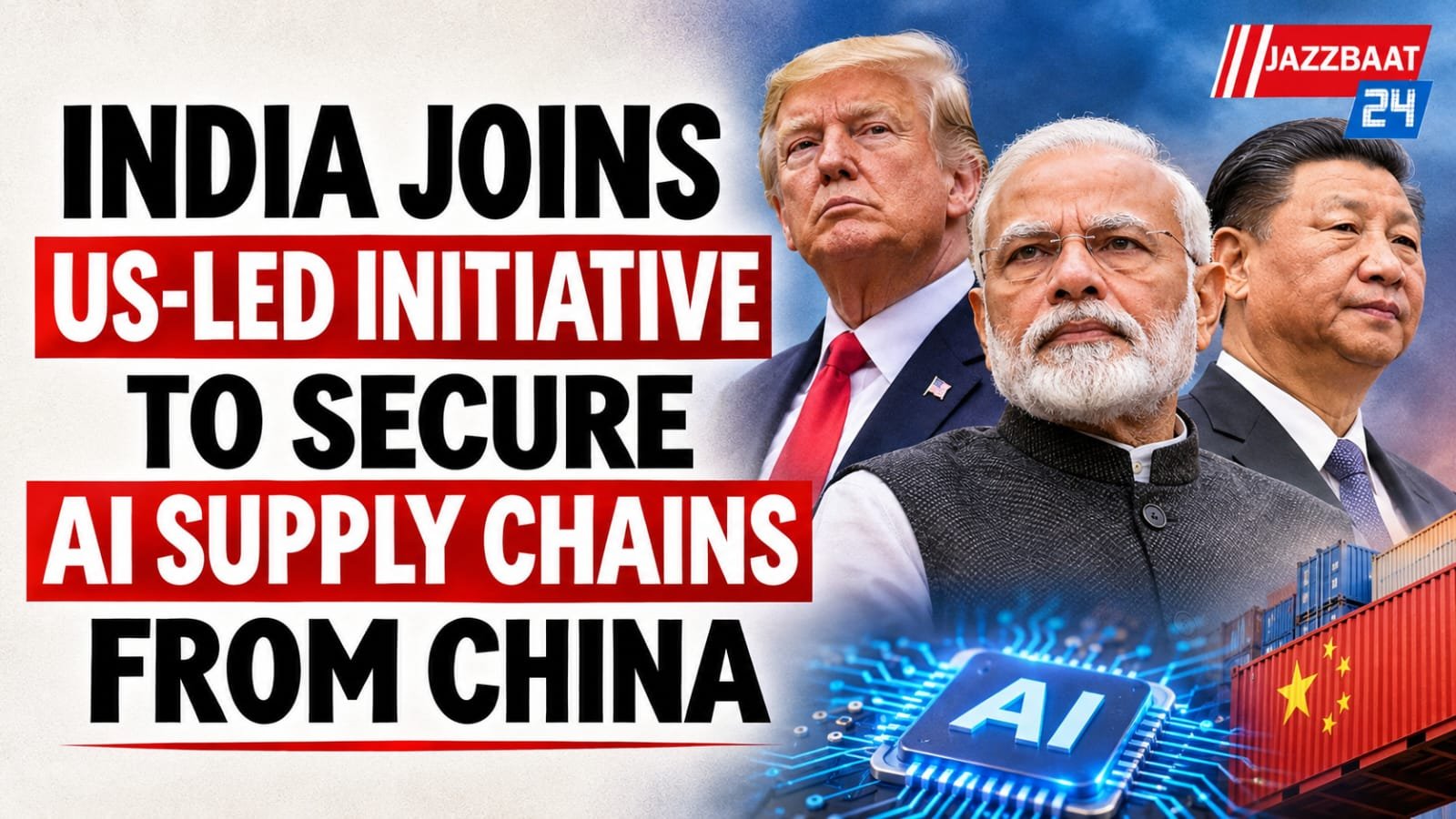
India has joined a US-led international initiative aimed at protecting critical artificial intelligence (AI) technologies and strengthening global supply chains amid growing concerns over China's influence in the semiconductor industry. The move is expected to deepen India's cooperation with key global technology partners and strengthen its position in the rapidly expanding AI sector.
According to reports, the agreement, titled the 'San Francisco Declaration on the Secure Foundations of Enduring Prosperity', has been signed by nine countries, including the United States, India, Japan, Australia, Israel, the United Kingdom, South Korea, Qatar and the United Arab Emirates. Germany, Sweden, the Netherlands and the European Commission are also expected to join the agreement next week.
The development comes at a time when Washington is increasingly concerned about China's access to advanced artificial intelligence chips, particularly those manufactured by Nvidia. US President Donald Trump has reportedly directed authorities to take action against companies suspected of illegally transferring advanced semiconductor technology to China.
What Is Pax Silica?
The agreement represents a significant step forward for Pax Silica, a US-led initiative launched in December 2025 to make global AI supply chains more secure and reduce dependence on critical manufacturing and technology infrastructure controlled by China.
The initiative focuses on several key areas, including semiconductor manufacturing, critical minerals, advanced industrial production, energy infrastructure and data centres. These sectors are considered essential to the development and expansion of artificial intelligence.
The global semiconductor supply chain involves multiple countries. While chips may be designed in one country, their manufacturing, equipment supply and distribution often depend on several others. This interconnected structure creates vulnerabilities that individual governments may find difficult to address independently.
Under the new agreement, participating countries will establish working groups to identify potential risks, share information and explore opportunities to attract investment in AI-related industries.
US Under-Secretary of State for Economic Affairs Jacob Helberg said the declaration reflects a shared commitment among partner countries to protect critical technologies and the infrastructure supporting them.
Why India's Participation Matters
India's participation could open new opportunities for domestic companies to become part of trusted global technology supply chains. It may also encourage foreign investment, strengthen semiconductor manufacturing and support the country's ambition to develop its own AI infrastructure.
India formally joined Pax Silica in February 2026 during the India AI Impact Summit. The latest agreement further underlines the growing technological cooperation between New Delhi and Washington.
However, joining the initiative does not automatically mean India will become self-reliant in semiconductor manufacturing. The country still needs to develop domestic manufacturing capabilities, secure critical minerals and build the infrastructure required to support its AI ambitions.
The agreement also highlights how artificial intelligence has become a major strategic issue worldwide. Access to advanced chips, computing power, energy and essential minerals is increasingly being viewed as a matter of national security rather than simply a commercial interest.




Reader Comments 0