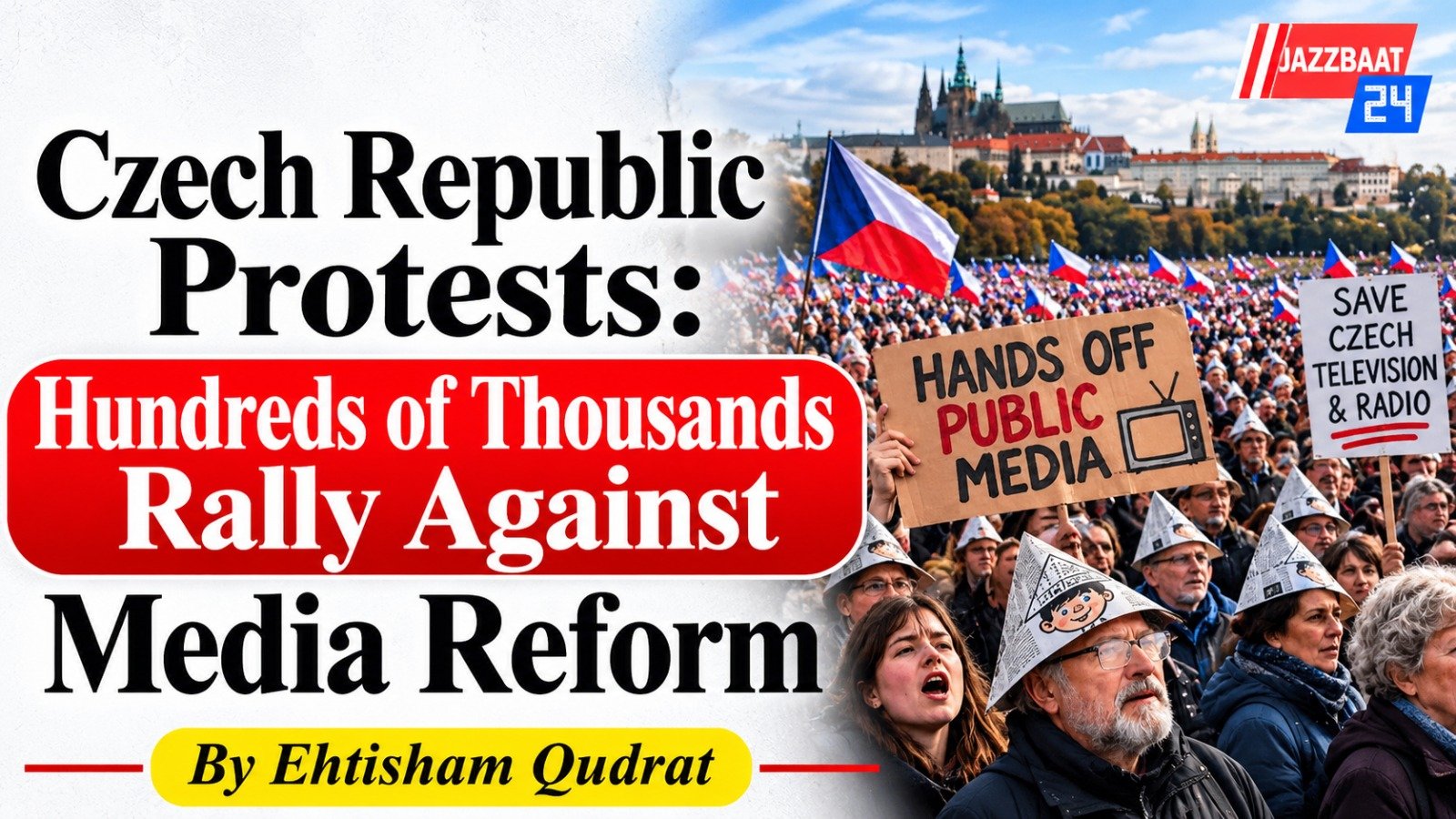
Ehtisham Qudrat: On Sunday, November 15, 2026, hundreds of thousands of protesters rallied in Prague against a Czech government proposal to abolish household broadcasting fees and fund public media directly from the state budget. According to the event's organizers, the demonstration drew roughly 350,000 to 450,000 people, making it one of the largest anti-government rallies in the country since the 1989 Velvet Revolution.
Key Details of the Protests
Demonstrators packed Prague's Letná Park, traveling from across the Czech Republic by bus and train and causing widespread overcrowding on public transit. The rally was organized by the civic association Million Moments for Democracy, which declared that protests will continue until the bill is withdrawn.
Many attendees waved Czech national flags and wore pointed paper hats folded from newspapers. The hats paid tribute to Večerníček, a beloved animated character that has introduced nightly children's bedtime stories on public television for decades.
The mass rally follows months of unrest over the legislation, which passed a preliminary vote in parliament in late October. Broadcast workers have staged strikes against the bill since June, including a one-day walkout earlier in November that prompted state media boycotts by artists and students.
The Proposed Media Overhaul
Prime Minister Andrej Babiš’s coalition government, comprising the populist ANO party, the far-right SPD, and the Eurosceptic Motorists, wants to scrap the mandatory monthly household fee of 205 Czech crowns (roughly $9.44).
Under the draft legislation, Czech Television and Czech Radio would instead be financed directly through the national budget, resulting in an estimated 15% reduction in their overall funding.
Arguments From Critics and the Government
Protesters, opposition figures, and international watchdogs such as Reporters Without Borders and the European Broadcasting Union argue that tying broadcaster funding to the state budget gives politicians leverage over news coverage. Critics have compared the bill to media policies enacted in Hungary under former Prime Minister Viktor Orbán.
Prime Minister Babiš denied any attempt to nationalize or control editorial decisions, telling the Czech News Agency that the existing licence fee system is outdated. Government officials argue the reform will reduce financial burdens on families, require broadcasters to cut costs, and align the Czech Republic with European nations like France and Norway that have already eliminated household TV fees. Foreign Minister Petr Macinka also dismissed the rally by accusing organizers of turning demonstrations into a business model.



Reader Comments 0