
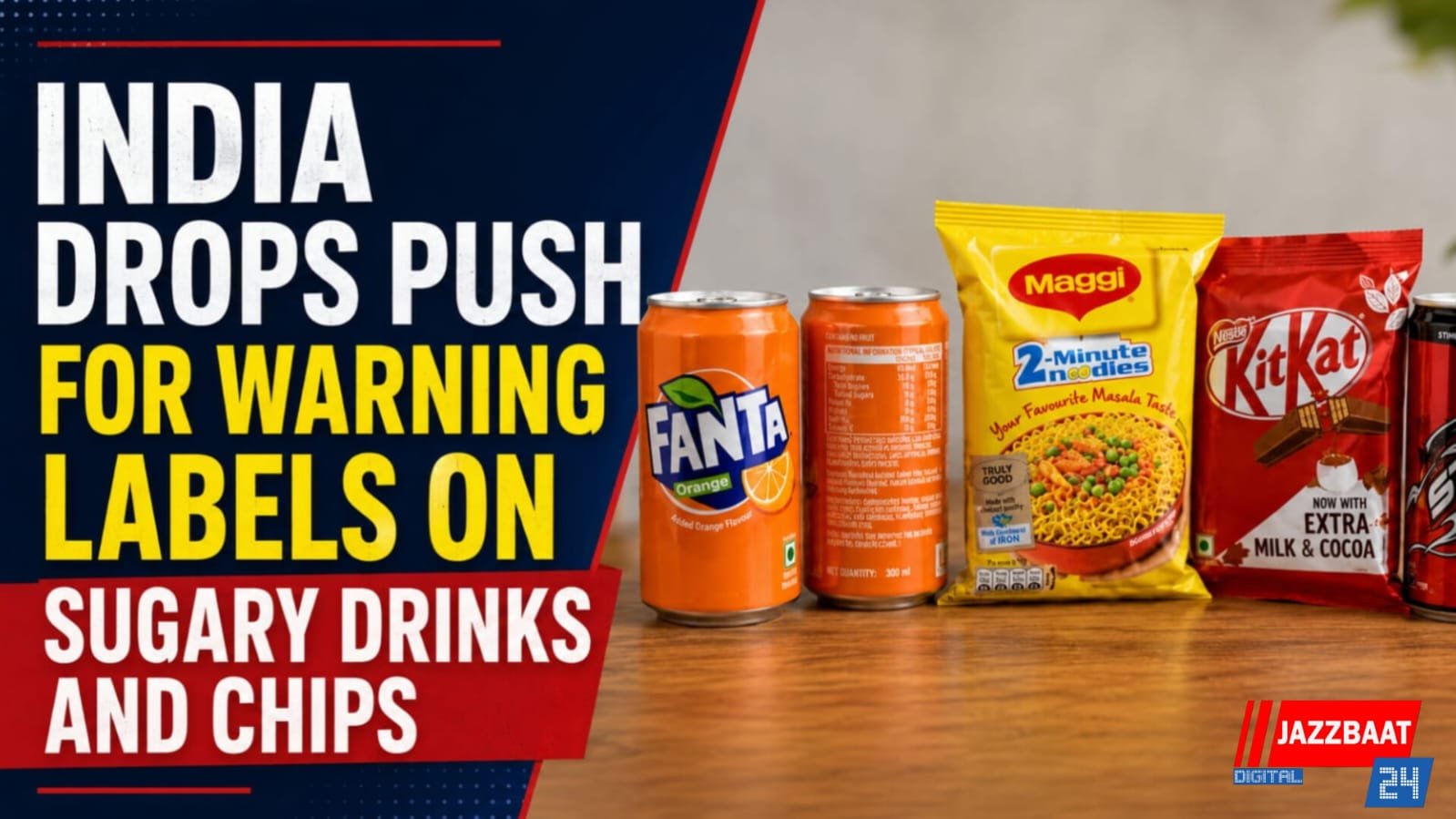
New Delhi, August 25: India’s efforts to introduce prominent warning labels on packaged foods high in sugar, salt and fat have faced strong resistance from major food and beverage companies, according to a Reuters investigation published Tuesday.
The Food Safety and Standards Authority of India (FSSAI) had been considering colourful front-of-pack warnings that could alert consumers when products contain high levels of sugar, salt or fat. However, the regulator dropped the plan after a tense meeting with industry executives in March, Reuters reported.
Instead, the regulator has proposed a black-and-white nutritional table displaying the levels of sugar, fat and salt in packaged products. Public health experts and activists have argued that such information is less noticeable and may not help consumers make quick, informed choices.
The industry has maintained that warning symbols could confuse consumers and would not necessarily change eating habits. At a March 19 meeting, a senior Coca-Cola India executive reportedly questioned whether consumers would significantly change their diets simply because of symbols placed on food packaging.
The debate has gained significance as India faces growing concerns over obesity and diet-related illnesses. A recent study published in The Lancet has projected that around 450 million Indians could be overweight or obese by 2050 if current trends continue.
The controversy has also drawn attention to differences in food labelling between India and Western markets. Reuters reported that Coca-Cola and Nestle have used clearer interpretive labels in several overseas markets, while opposing or resisting similar mandatory requirements in India.
One example highlighted in the report was Fanta. A can sold in London reportedly contains 63 calories, while the same brand sold in India contains around three times as much sugar. The Indian product also contains an artificial colour that receives more prominent health warnings in Europe.
Around 20 countries have adopted some form of interpretive front-of-pack labelling, including colour-coded systems designed to make nutritional risks easier to understand.
India’s Supreme Court is now scrutinising the regulator’s decision following a petition by public health activists. The court has questioned the delay in introducing stronger front-of-pack warnings.
The FSSAI has declined to comment on the issue, citing ongoing legal proceedings. Coca-Cola and Nestle also declined to comment on the Reuters report.
The dispute has renewed questions over whether India’s food labelling rules are strong enough to protect consumers while balancing industry concerns.




Reader Comments 0