
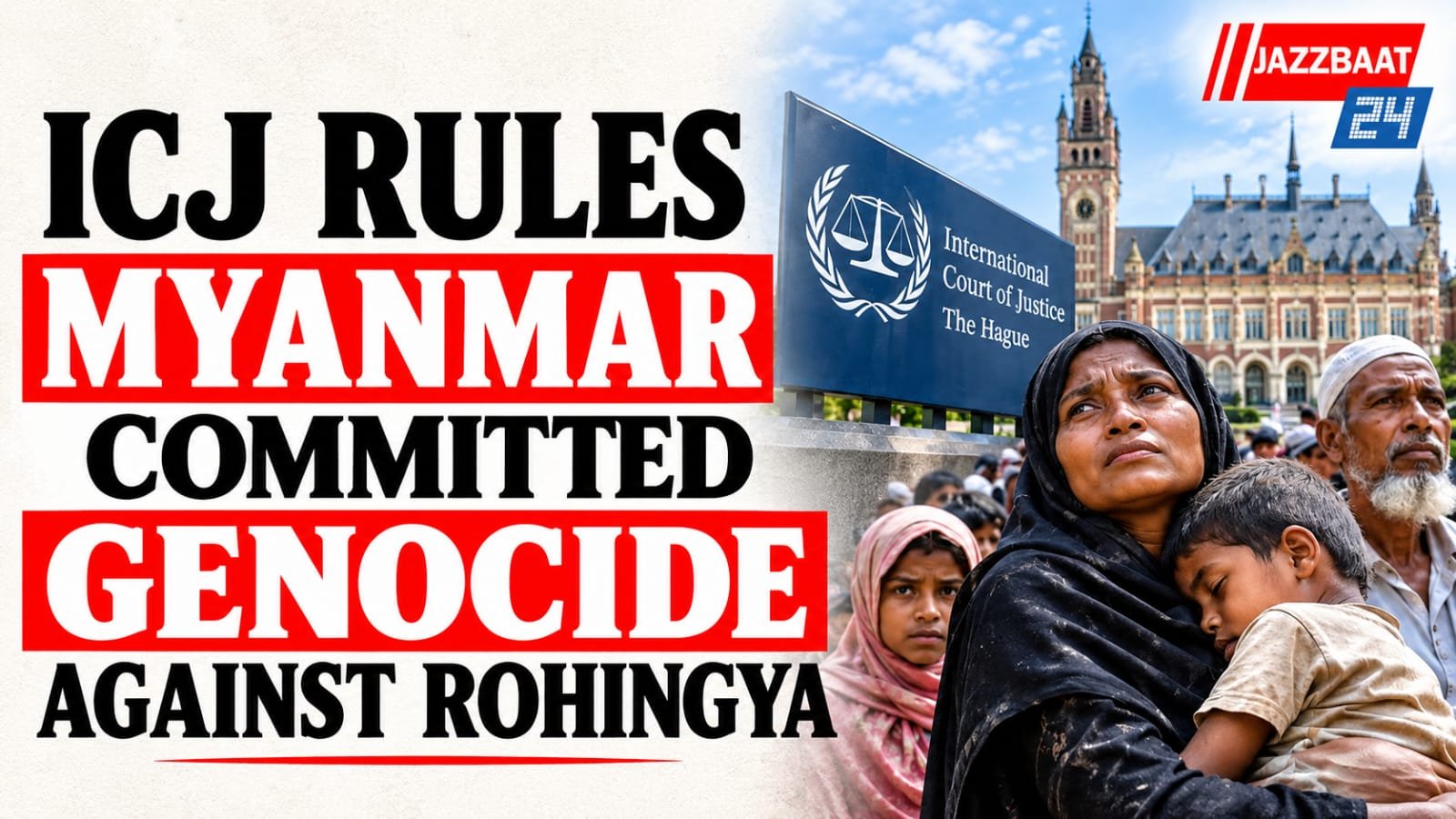
Ehtisham Qudrat: The International Court of Justice (ICJ) on Thursday, November 19, 2026, ruled that Myanmar committed genocide against the Rohingya Muslim community in northern Rakhine State during its 2017 military “clearance operations”, finding the country in violation of its obligations under the Genocide Convention.
Delivering its judgment on the merits in the case brought by The Gambia against Myanmar, the United Nations' principal judicial organ also found that Myanmar violated several other obligations under the Convention, including preventing genocide, punishing those responsible and enacting necessary legislation to implement the treaty.
The court ruled by a majority of nine votes to six that Myanmar had committed genocide against the Rohingya population.
The ICJ further found that Myanmar had failed to prevent individuals acting alongside its security forces from committing genocide. It also concluded that the country violated its obligation to punish genocide and other acts covered under the Convention.
However, the court found, by 14 votes to one, that Myanmar had not directly and publicly incited private individuals to commit genocide against the Rohingya community in northern Rakhine State.
ICJ Orders Myanmar to Investigate and Punish Those Responsible
As part of its judgment, the court directed Myanmar to take immediate and effective steps to investigate individuals reasonably suspected of committing acts contrary to the Genocide Convention during the 2017 clearance operations.
It further stated that Myanmar must prosecute and punish those found responsible, where warranted, and provide assurances and guarantees that similar violations will not occur in the future.
The court also ordered Myanmar to adopt measures of restitution for the Rohingya community, including facilitating their safe, voluntary and dignified return to their places of residence. It also called for the reunification of families displaced by the country's wrongful acts, whether they remain within Myanmar or are living abroad.
Additionally, the ICJ ruled that Myanmar must compensate the Rohingya community and its members for the damage caused by the violations.
Myanmar Given Two Years to Submit Compensation Report
The court decided that the amount and modalities of compensation and other reparations would be determined during a subsequent phase of the proceedings.
Myanmar has been directed to submit a report to the court within two years of the November 19 judgment, detailing the restitution measures it has adopted and the amount and modalities of compensation.
The ICJ also found that Myanmar had violated its obligation under the court's January 23, 2020, provisional measures order to take effective steps to prevent the destruction and ensure the preservation of evidence related to allegations of genocide.
Background of The Gambia v. Myanmar Case
The Gambia instituted proceedings against Myanmar on November 11, 2019, alleging violations of the Convention on the Prevention and Punishment of the Crime of Genocide.
On January 23, 2020, the ICJ ordered provisional measures requiring Myanmar to take steps to prevent acts of genocide and preserve relevant evidence.
In July 2022, the court rejected Myanmar's preliminary objections, confirming its jurisdiction to hear the case and declaring The Gambia's application admissible.
Eleven countries subsequently intervened in the proceedings concerning the interpretation of provisions of the Genocide Convention. Public hearings on the merits took place from January 12 to 29, 2026.
The November 19 judgment is final, binding on the parties and without appeal.
Source: International Court of Justice (ICJ), Press Release No. 2026/30, November 19, 2026.




Reader Comments 0