
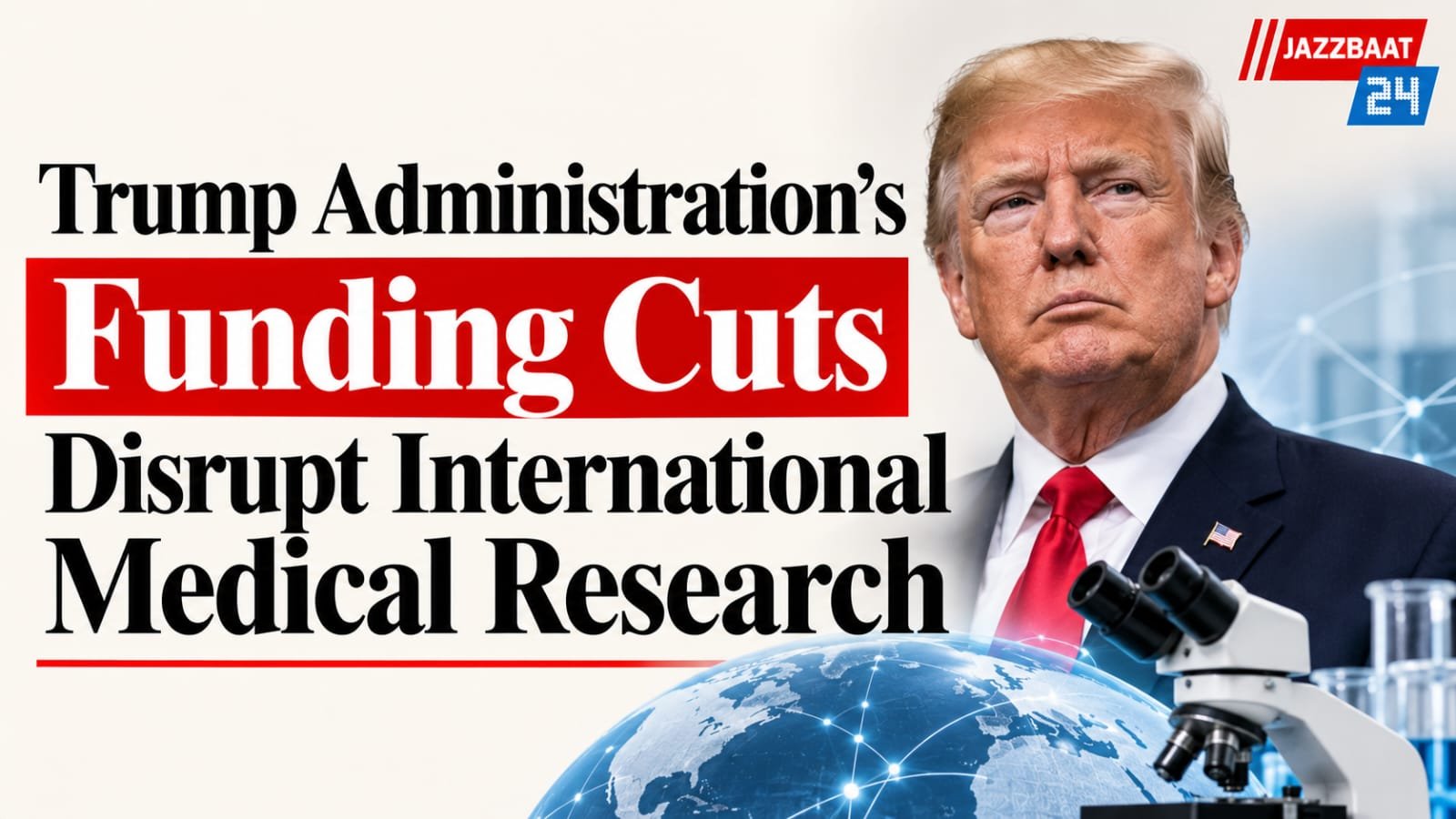
Washington: International medical research is facing a major setback following changes introduced by US President Donald Trump's administration. The National Institutes of Health (NIH), one of the world's largest funders of medical and biomedical research, has significantly reduced financial support for projects involving foreign research institutions. The move is raising concerns about the future of global scientific collaboration, particularly in cancer, HIV, infectious diseases and child health research.
Foreign Research Grants Fall by 38%
In the financial year ending September 2024, the NIH provided approximately $400 million in grants involving nearly 3,600 foreign researchers and institutions. Although this represented a relatively small share of its overall research funding of around $35 billion, international projects have been particularly affected by recent spending cuts.
An analysis of internal NIH data indicates that the average number of grants involving foreign collaborators fell by 38% in 2025 and 2026 compared with the annual average between 2022 and 2024. The reduction has created uncertainty for both new and ongoing research projects.
Major Policy Change in May 2025
In May 2025, the NIH changed the system through which American universities transferred research funding to overseas partner institutions. The earlier arrangement, known as foreign subawards, was discontinued.
Under the revised system, foreign institutions must apply directly for separate grants from the NIH. The administration says the change will improve financial transparency, strengthen oversight and address national security concerns.
However, researchers argue that the transition has delayed funding, disrupted ongoing projects and forced several teams to reduce or suspend their work.
Cancer and HIV Research Among the Worst Affected
The impact is already visible in cancer-related research. Italian biomedical engineer Paolo Decuzzi, associated with the Italian Institute of Technology in Genoa, had been working with American scientists on microscopic technologies designed to deliver medicines directly to affected areas of the body.
The suspension of NIH funding has stalled the research. Another project exploring potential applications in cancer treatment has also faced delays, with its progress reportedly pushed back by nearly two years.
HIV prevention research in South Africa has suffered an even more serious setback. Researcher Dvora Joseph Davey, working with the University of Cape Town, had been studying ways to prevent HIV transmission among pregnant and breastfeeding women.
After international funding was withdrawn in May 2025, the clinical trial had to be suspended. Some participants lost access to pre-exposure prophylaxis (PrEP), a medication that significantly reduces the risk of HIV infection when taken correctly. Two women subsequently contracted HIV, and one reportedly transmitted the infection to her child.
South Africa Faces a Sharp Decline
NIH data also suggest a significant reduction in funding for African research. Between 2022 and 2024, an average of 18 new grant titles annually mentioned South Africa. In 2026, that number fell to just one.
Researchers fear that reduced international funding could weaken scientific networks, delay medical discoveries and limit access to potentially life-saving treatments.
While stronger financial and security oversight is important, experts warn that dismantling established international partnerships could have lasting consequences. Rebuilding research infrastructure, restoring clinical trials and reconnecting scientific teams may take years.
The biggest concern is that funding decisions made today could slow medical progress worldwide, ultimately affecting patients who depend on international cooperation for better treatments and disease preventio


Reader Comments 0