
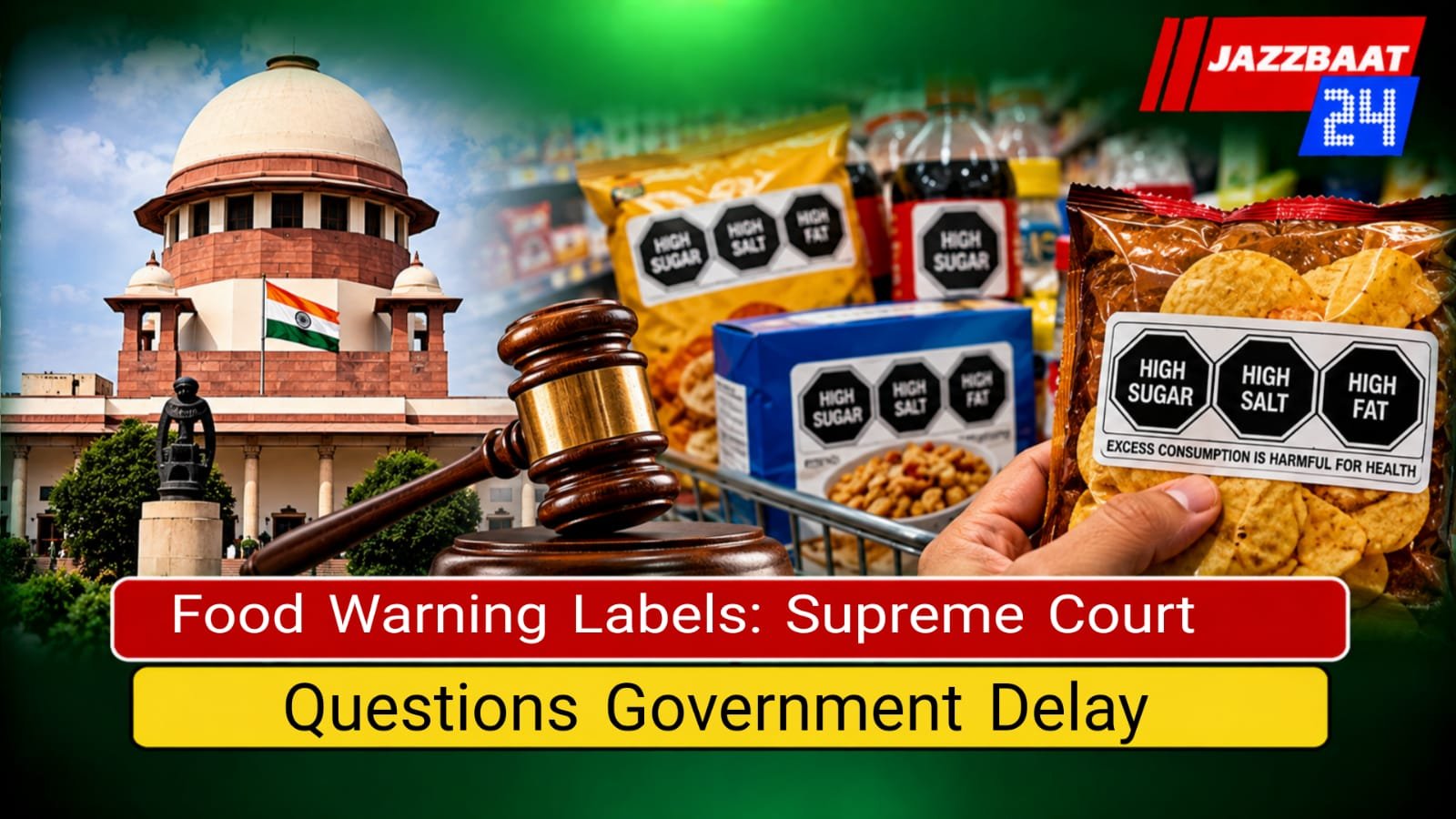
NEW DELHI: The Supreme Court on Monday questioned the Centre over the time being taken to introduce stricter warning labels on packaged food products, asking why fresh consultations were necessary when the issue has already been under consideration for several years.
The court was hearing a matter related to front-of-pack warning labels for packaged foods containing high levels of salt, sugar and fat. During the hearing, Justice J. B. Pardiwala questioned the government's proposed timeline and stressed that the issue was directly connected with public health.
The government and food regulator have proposed red, hexagon-shaped warning labels on packaged products to alert consumers when they contain excessive amounts of certain nutrients. The move comes amid growing concerns over obesity and diet-related health problems in India.
The Supreme Court expressed concern over the regulator's plan to spend several months on notification and public consultation before allowing another year for implementation. The court questioned why another round of objections was required after years of discussions on the issue.
The court indicated that it would soon pass a final order on the matter.
The proposed labelling framework is part of a wider effort to strengthen food safety measures in India. Authorities have also intensified inspections of restaurants, eateries and food manufacturing facilities, with action being taken in several places over alleged hygiene violations.
The debate over front-of-pack labels has also brought the issue of children's consumption of highly processed and junk food into focus. India is considering measures aimed at restricting the sale of unhealthy food in and around schools, following similar initiatives adopted in countries including Chile and Mexico.
However, food manufacturers and industry bodies have raised concerns about the design and scientific basis of the proposed warning system.
The All India Food Processors Association, which represents several domestic and international food companies, has said it does not oppose front-of-pack warnings but wants the proposed thresholds and symbols to be scientifically determined.
One of the industry's key concerns is the use of the colour red. The association has argued that Indian consumers already associate red with the mandatory symbol used to identify non-vegetarian food. It has therefore warned that another prominent red symbol on packaged products could potentially create confusion.
The industry has also questioned whether the nutritional thresholds should be calculated on the basis of 100 grams of a product or according to the amount normally consumed in a single serving.
The association pointed out that many Indian foods are consumed in relatively small quantities. For example, pickles, spreads and condiments are generally eaten in much smaller portions than 100 grams.
India's proposed standards include warning thresholds for added sugar and fat that the industry says are stricter than those followed in several other markets.
The wider debate comes against the backdrop of increasing concern over obesity in India. A study published in The Lancet has estimated that the number of overweight or obese adults in India could rise significantly in the coming decades.
The Supreme Court's intervention could therefore influence the pace and final form of India's proposed food-label warning system, as the court prepares to issue its final order.




Reader Comments 0