
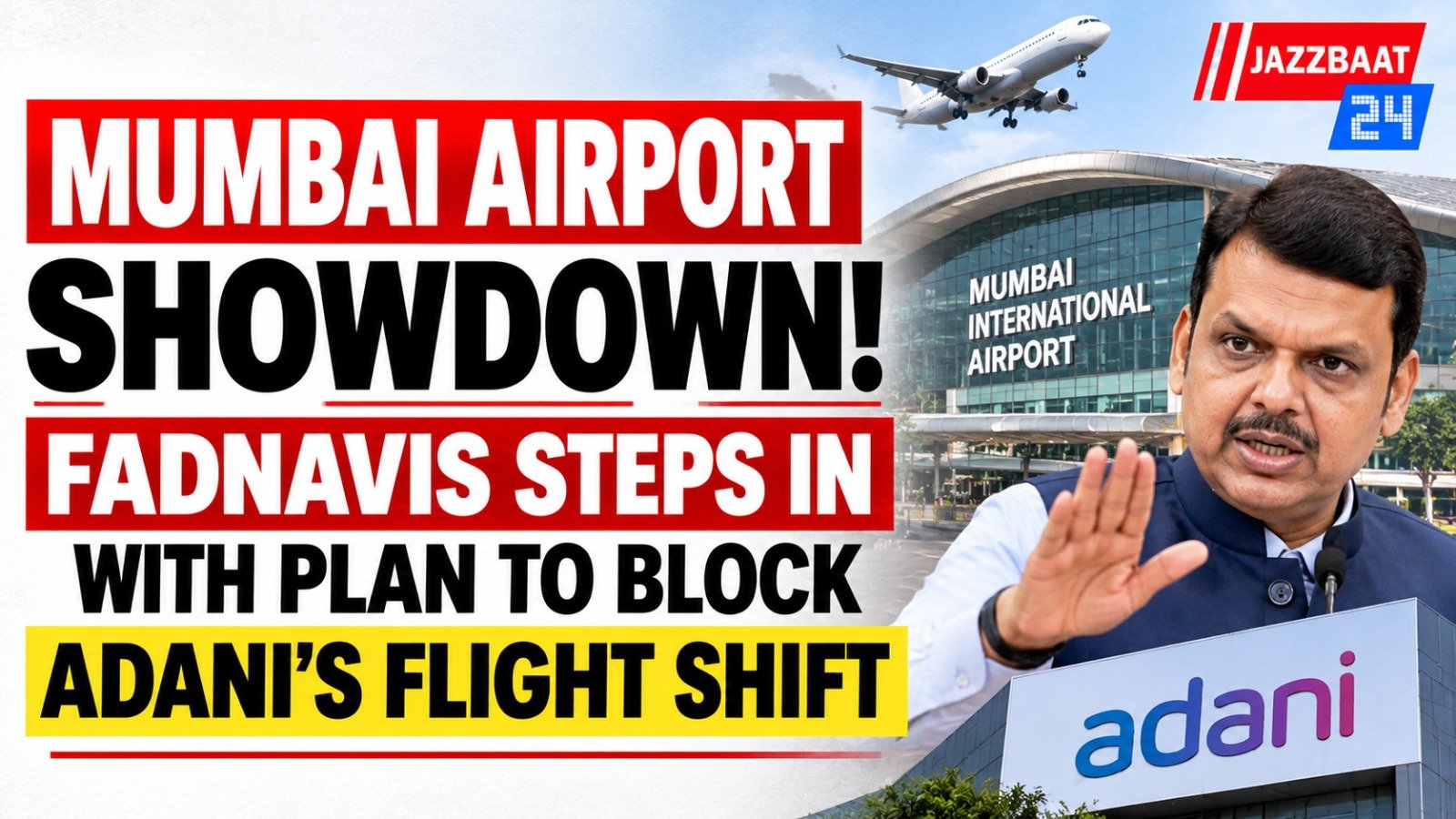
Mumbai: The growing standoff between the Adani Group and international airlines over Mumbai airport operations has taken a new turn, with Maharashtra Chief Minister Devendra Fadnavis stepping in to propose an alternative solution. Amid resistance from several international carriers to shifting their flights to Navi Mumbai, Fadnavis has urged the Centre to consider rebuilding Mumbai's existing Terminal 1 in phases rather than shutting it down at once.
In a letter to Union Civil Aviation Minister Kinjarapu Rammohan Naidu, the Maharashtra chief minister suggested constructing and developing Terminal 1B first. Once the new facility becomes operational, flights currently handled by Terminal 1A could be shifted there, allowing the existing 1A section to be demolished and reconstructed.
Fadnavis said the proposed arrangement could help maintain airport operations without forcing airlines to transfer their services to Navi Mumbai. The state government has reportedly received a positive response from the Centre and is expecting approval for its alternative proposal.
The controversy revolves around the redevelopment of Chhatrapati Shivaji Maharaj International Airport (CSMIA), operated by Mumbai International Airport Limited (MIAL), in which Adani Airport Holdings Limited holds a 74 per cent stake.
The airport operator has proposed shifting international flights connecting 14 destinations from Mumbai to the newly developed Navi Mumbai International Airport (NMIA), beginning with the Summer 2027 schedule in March. These destinations include Doha, Jeddah, Dhaka, Kathmandu, Kuwait, Riyadh and Bahrain.
The proposed relocation is linked to the redevelopment of the ageing Terminal 1, particularly its northern section. The airport operator has cited structural safety concerns and the need to upgrade existing infrastructure.
However, several international airlines have opposed the proposed arrangement. Represented by the Airline Operators Committee (AOC), Mumbai, the carriers have raised concerns about operational difficulties, passenger inconvenience and disruption to established flight schedules.
The airlines have also approached the Union Civil Aviation Ministry, seeking clarity on the proposed transfer and restoration of their historical flight slots. They have questioned whether sufficient operational capacity and supporting facilities are available at Navi Mumbai to accommodate the additional international services.
Earlier, MIAL had also proposed reducing international operations at Terminal 2 by around 33 per cent, involving the temporary discontinuation of 265 weekly international departures. The Centre subsequently put that plan on hold and directed stakeholders to work towards a mutually acceptable transition arrangement.
The redevelopment is expected to affect approximately five million passengers annually. The proposed new Terminal 1 is expected to increase annual passenger-handling capacity from 15 million to 20 million.
Fadnavis's intervention has now introduced another option into the negotiations. The Centre's final decision will be crucial in determining how Mumbai's two-airport system handles the transition without disrupting international connectivity.




Reader Comments 0