
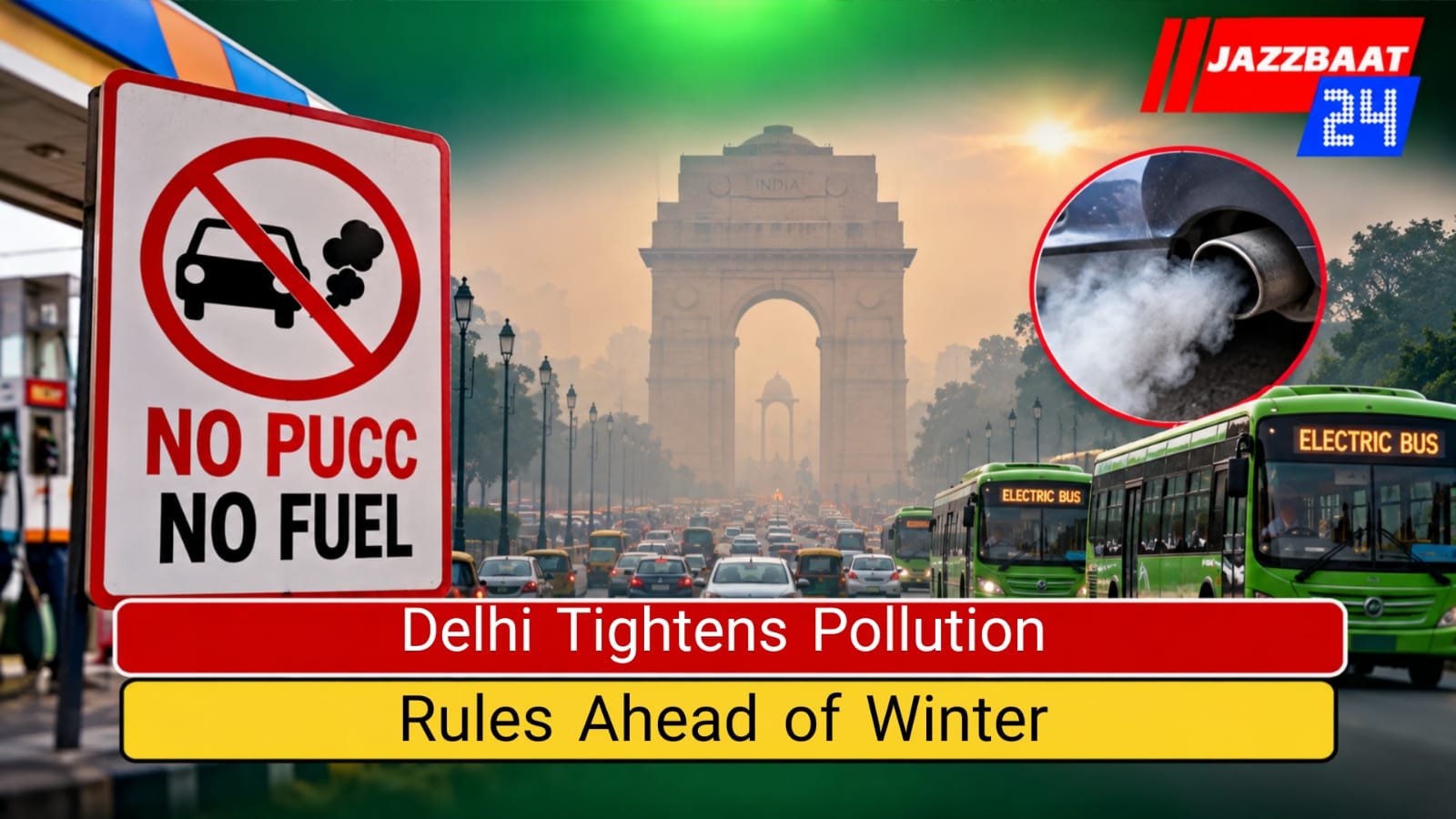
The Delhi government has announced a series of measures to control air pollution and traffic-related emissions ahead of the winter season, when the national capital usually experiences a sharp deterioration in air quality.
Delhi Environment Minister Manjinder Singh Sirsa announced the measures after a meeting attended by Union Environment Minister Bhupender Yadav, Delhi Chief Minister Rekha Gupta, PWD Minister Parvesh Verma and other senior officials.
One of the key measures will be a stricter implementation of the “No PUCC, No Fuel” policy. Under the rule, vehicles without a valid Pollution Under Control Certificate (PUCC) will not be allowed to refuel at petrol pumps. The government plans to intensify enforcement as part of its effort to reduce vehicular emissions.
The administration will also launch a major drive against end-of-life vehicles. According to Sirsa, all 500 petrol pumps in Delhi equipped with Automatic Number Plate Recognition (ANPR) cameras will be used to identify such vehicles. A public awareness campaign will begin in October, while pollution-testing centres are expected to be upgraded in November.
The government will also conduct fitness checks on around 2.5 lakh vehicles through three Automated Testing Stations. The move is aimed at identifying vehicles that may be contributing significantly to air pollution because of poor maintenance or emissions.
150 more electric buses
Public transport is another major focus of the government's winter pollution plan. Delhi currently has 588 electric buses operating on its roads. The government plans to introduce another 150 electric buses, taking the total fleet to more than 700.
Officials are also preparing measures to address pollution and congestion at identified hotspots across the city. Delhi has identified 62 pollution hotspots, of which pollution levels at 42 have reportedly been brought under control.
Sirsa said the government would focus on specific locations within these areas, including cremation grounds, dumping sites and construction and demolition waste sites. District magistrates will be involved in monitoring and addressing problems at these locations.
Parking charges to rise
The Delhi government has also announced measures aimed at reducing private vehicle use. From November 1, parking charges at authorised parking facilities will be doubled.
The government will also introduce staggered office timings during the winter months. From November 1 to February 28, offices under the Municipal Corporation of Delhi will operate from 8:30 am to 5 pm, while Delhi government offices will function from 10 am to 6:30 pm.
A 50% work-from-home arrangement will also be implemented for government and private offices during the same period.
The measures come as Delhi prepares for the winter months, when a combination of vehicle emissions, construction activity, local pollution sources and unfavourable weather conditions can cause air quality to deteriorate rapidly.
The government is therefore seeking to combine stricter vehicle checks, expanded electric public transport, parking restrictions, workplace changes and targeted action at pollution hotspots to manage the city's air quality during the upcoming winter season.

Reader Comments 0