
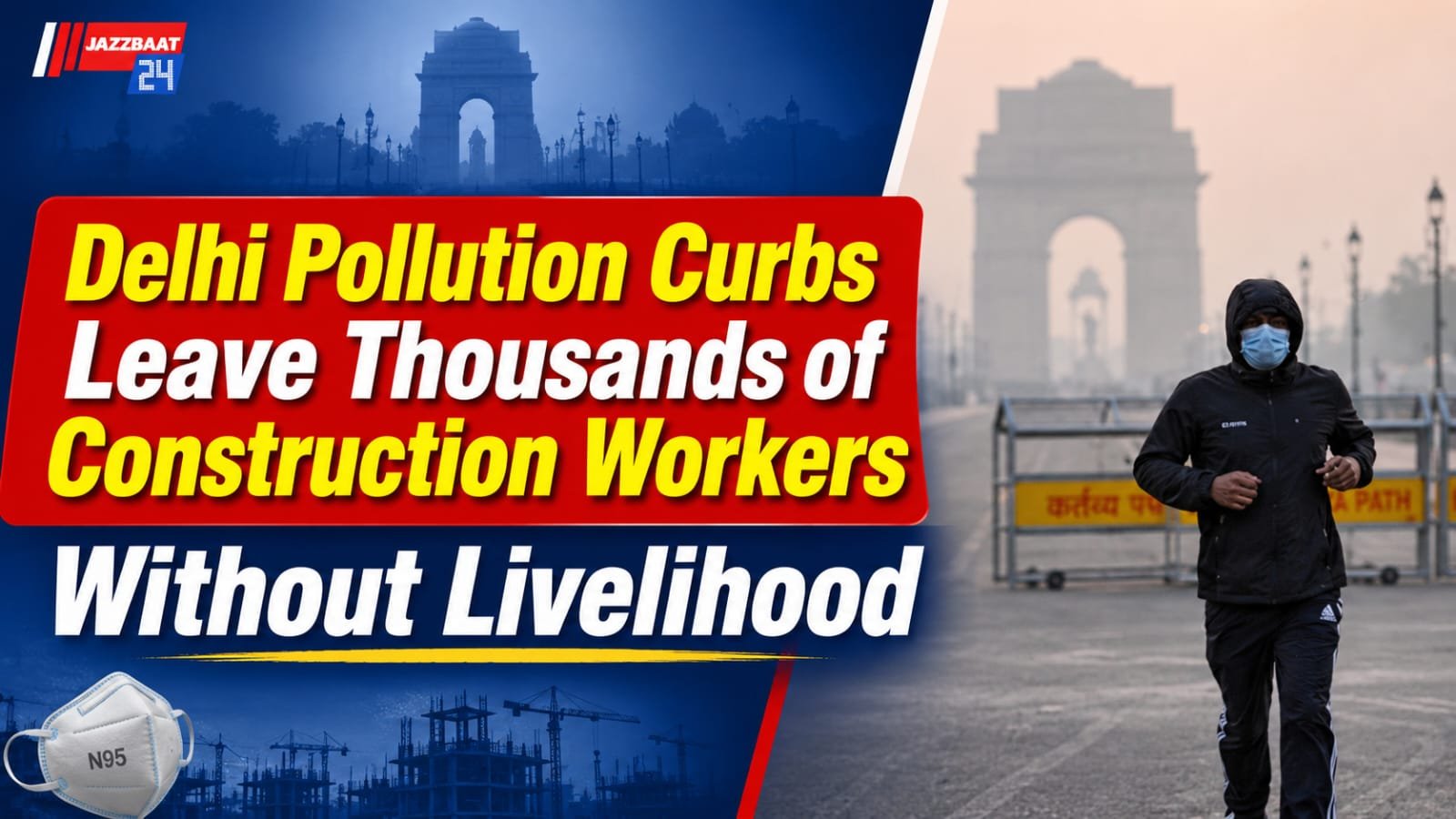
New Delhi: As Delhi battles worsening air pollution, thousands of daily-wage construction workers are facing an uncertain future after restrictions on construction activities brought their livelihoods to a standstill. With work suspended under the Graded Response Action Plan (GRAP), many labourers say they have been left without income, financial assistance or a clear timeline for returning to work.
The GRAP-III restrictions came into force on November 6 as air quality deteriorated across the national capital. Construction and demolition activities were halted as part of emergency measures to control dust pollution. The restrictions have particularly affected workers who depend on daily wages to support their families.
For many labourers, the loss of work means an immediate struggle to arrange food, pay rent, purchase drinking water and meet their children's educational expenses. Several workers have reportedly been forced to borrow money from relatives and friends to manage their daily needs.
A construction worker, who has been living in Delhi with his family for several years, said that his earnings were spent on basic necessities every day. With construction work stopped, he has no regular source of income. Another worker from Bihar expressed concern about celebrating Chhath Puja without money, saying that even the smallest religious rituals require expenses that he can no longer afford.
The workers have also questioned the government's approach to tackling pollution. They argue that construction activities have been stopped, but effective action against other pollution sources remains a concern. Their frustration has grown following the Diwali celebrations, when firecrackers were permitted during restricted time slots on November 7 and 8. A complete ban on firecrackers came into force from November 9.
The problem is further complicated by the registration system. Delhi had around 10.04 lakh construction workers in May 2022, but the number of workers with active labour cards stood at approximately 2.15 lakh in November 2026. This leaves a large section of the workforce outside the formal welfare system and potentially unable to access government assistance.
Workers and trade union representatives have also raised concerns over delays in registration and renewal of labour cards. They claim that the new Labour Welfare Board website has remained problematic for months, preventing fresh registrations and renewals.
In 2025, the Supreme Court had directed governments in Delhi and neighbouring states to provide subsistence allowances to construction workers affected by pollution-related restrictions. However, several workers allege that they did not receive the promised assistance and that corruption affected the distribution process.
Trade unions are demanding immediate financial compensation, accessible registration facilities and transparency in welfare payments. They have also called for action against officials allegedly demanding bribes.
As pollution-control restrictions continue, the question remains how the government will protect both public health and the livelihoods of workers who depend on daily earnings to survive.


Reader Comments 0