
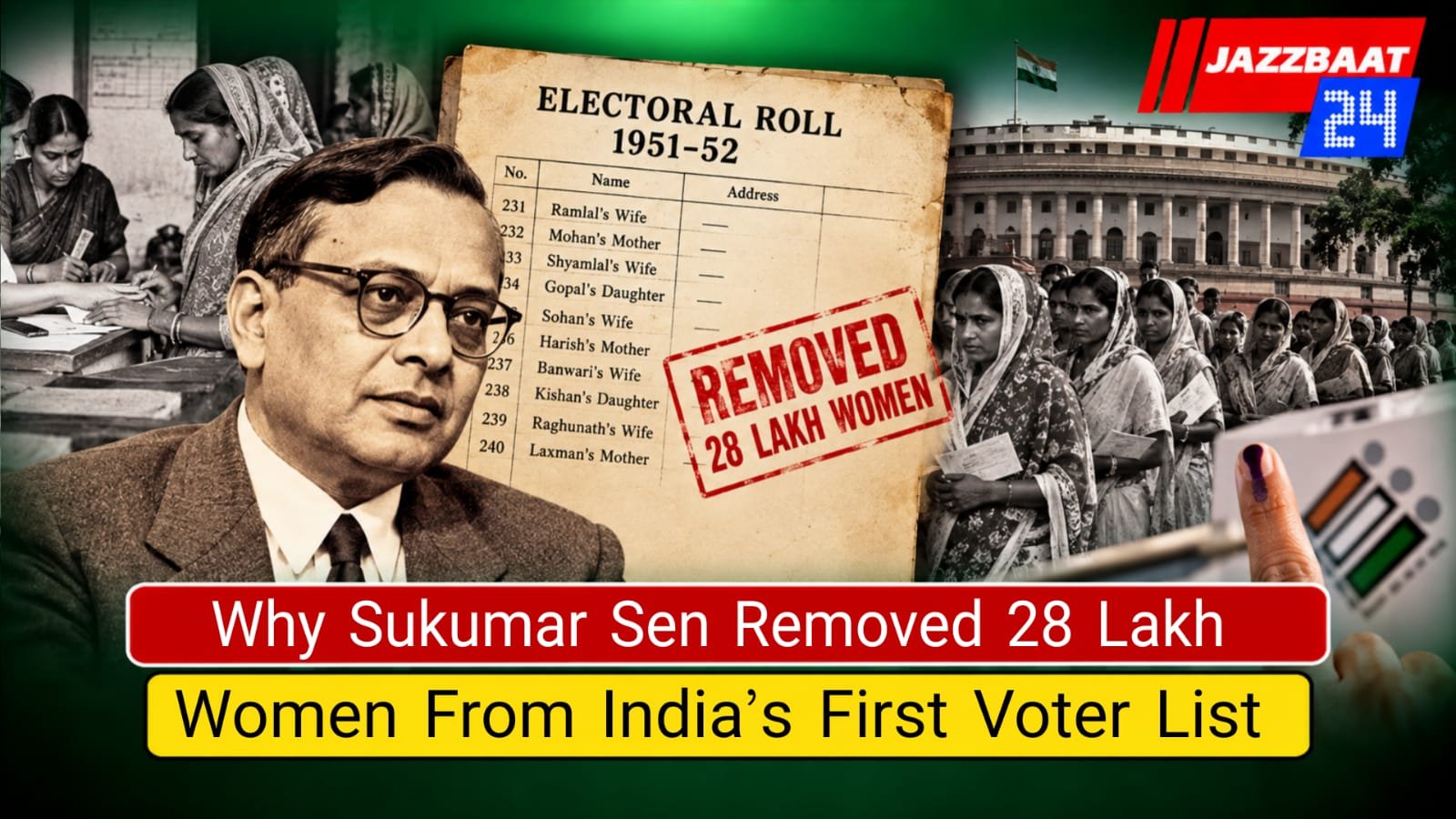
NEW DELHI: When independent India prepared for its first general election in 1951-52, the country faced a challenge that went far beyond arranging polling booths and printing ballot papers. Millions of citizens had to be registered as voters for the first time, and one of the biggest hurdles involved women whose identities were often recorded through their male relatives.
India's first Chief Election Commissioner, Sukumar Sen, took a firm position on the issue. He insisted that women must be registered under their own names rather than being listed simply as someone's wife, mother or daughter.
During the preparation of the first electoral rolls, officials in several parts of northern India found women reluctant to disclose their names. Social customs in some communities discouraged women from telling their names to outsiders. As a result, draft electoral rolls contained descriptions such as "Ramlal's wife" or "Mohan's mother" instead of the women's actual names.
Sen refused to accept such entries. According to historical accounts cited in the Hindustan Times report, nearly 28 lakh women were left out of the electoral rolls when they did not provide their individual names.
The decision was rooted in the principle that every eligible citizen had to be identified independently on the electoral register. For Sen, a woman's identity as a voter could not depend on her relationship with a male member of her family.
However, the women were not permanently excluded from India's electoral system. Following the 1951-52 election, efforts were made to revise and improve the electoral rolls. Election officials worked to register women under their own names, while political parties and women's organisations were also involved in the campaign.
By the 1957 election, the number of women electors had increased substantially. Electoral data cited in the report shows that India had around 8.9 crore women electors in 1957, compared with approximately 5.6 crore in 1952.
The challenge was enormous because India's first election was conducted on an unprecedented scale. The 1951 Census recorded India's population at around 36.5 crore, while approximately 17.2 crore people aged 21 and above were eligible to vote under the system then in place. The country's literacy rate was only 16.6 per cent.
The first general election was held between October 1951 and February 1952. Unlike modern elections, there were no electronic voting machines. Voters used ballot papers and deposited them into separate boxes assigned to candidates.
The Election Commission also had to address the practical difficulties of conducting elections in a country with limited infrastructure. Millions of ballot boxes were required. Godrej & Boyce reportedly produced around 12.83 lakh steel ballot boxes at its Vikhroli factory in Bombay within about four months.
Sukumar Sen, an Indian Civil Service officer, became India's first Chief Election Commissioner in 1950. He served until 1958 and supervised not only the first Lok Sabha election but also the simultaneous state assembly elections.
The first Lok Sabha election involved 489 seats, while thousands of seats were contested in state assemblies.
Sen later assisted Sudan in organising its first parliamentary elections based on universal adult suffrage. India honoured him with the Padma Bhushan in 1954 for his contribution to public service.
The story of the first electoral rolls highlights one of the less-known challenges faced by India's young democracy: ensuring that citizens were not merely counted, but individually recognised as voters.

Reader Comments 0