
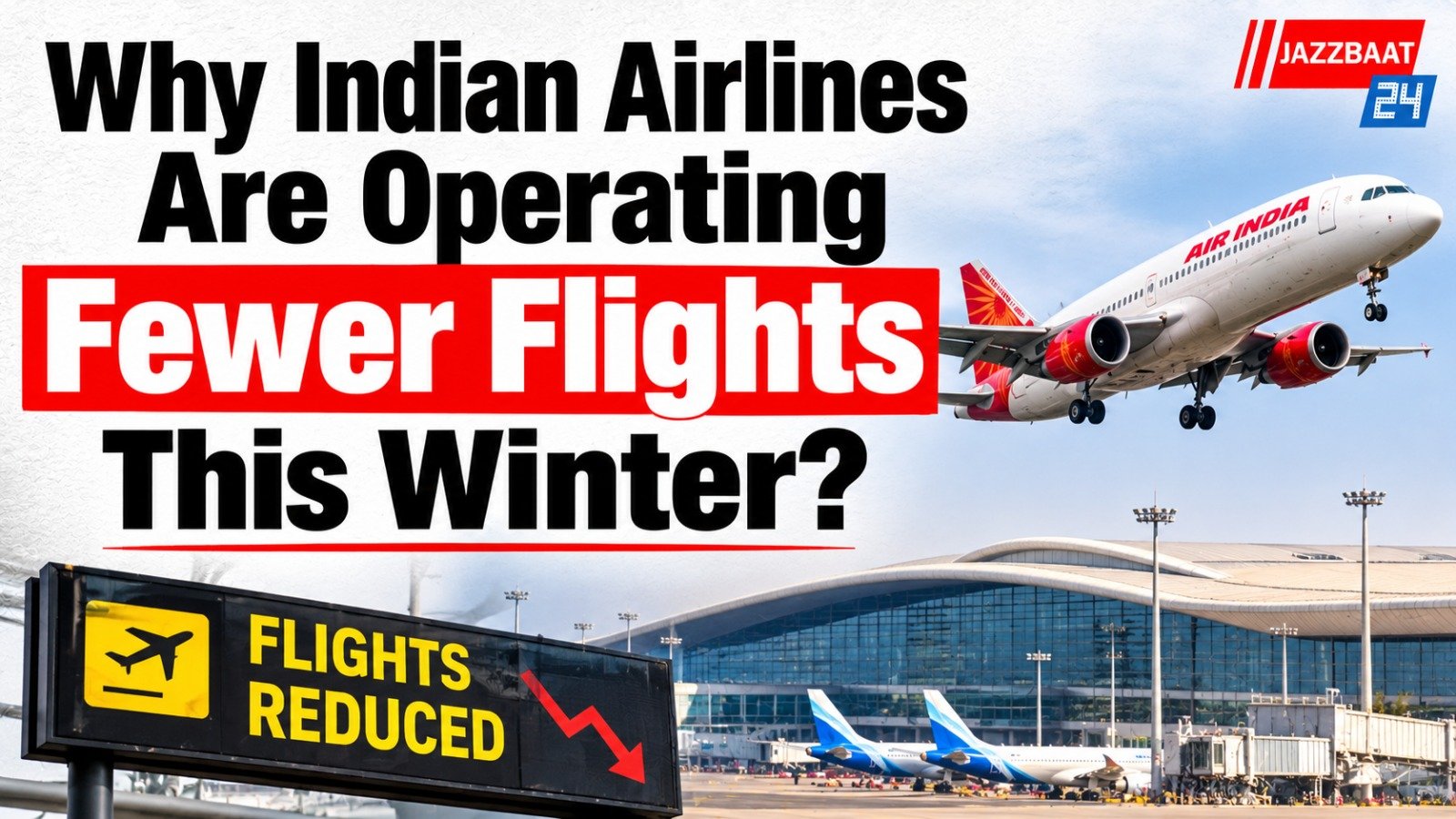
India's aviation sector is heading into a challenging winter season, with airlines preparing to operate fewer flights compared with the previous year. Despite the traditional rise in air travel during the festive and holiday season, passengers may face fewer flight options, higher ticket prices and limited flexibility when planning their journeys.
According to aviation scheduling data, Indian airlines are set to operate more than 100 fewer flights per day this winter, representing a decline of approximately 3.7% compared with last year. Separate industry data also indicates that airlines scheduled around 6% fewer flights across October and November 2026 than during the same period a year earlier. This marks the first significant annual reduction in scheduled capacity since the Covid-19 pandemic. NewsBytes +1
One of the biggest reasons behind the reduction is the sharp increase in aviation turbine fuel (ATF) prices. Fuel is among the largest expenses for airlines, accounting for a substantial share of their operating costs. Rising international fuel prices, geopolitical tensions and a weaker Indian rupee have made operating flights increasingly expensive. Airlines are finding it difficult to absorb these additional costs without increasing ticket prices.
Air India has made one of the biggest adjustments to its domestic schedule. It has reduced its weekly domestic flights by approximately 543 compared with the previous year's corresponding period. IndiGo has also reduced its weekly schedule by around 375 flights, while Air India Express and SpiceJet have made smaller reductions. Top Aviation News - Business Standard
Another important factor is changing passenger demand. Although the festive season traditionally brings increased travel, expensive air tickets are discouraging some passengers from booking flights. Airlines need to maintain high passenger occupancy to make individual services financially viable. Operating flights with a large number of empty seats can result in significant financial losses. Consequently, carriers are reducing frequencies on routes where demand is not strong enough.
Regional airlines are facing even greater difficulties. Star Air, for instance, has reduced its weekly operations by approximately 15–20%, largely because of rising fuel expenses. Smaller operators have limited financial flexibility and often struggle to pass increased costs on to passengers. The Economic Times
Operational challenges and aircraft availability are also contributing to the situation. Maintenance requirements, aircraft deployment decisions, geopolitical disruptions and longer international flight routes have increased pressure on airline operations.
Interestingly, fewer flights do not necessarily mean a similar reduction in total passenger capacity. Airlines are increasingly deploying larger aircraft with more seats to maintain available capacity while operating fewer services. NewsBytes
For passengers, the consequences could be significant. Fewer departures may mean less convenient travel timings, limited alternatives during cancellations and higher fares on popular routes.
India's aviation industry continues to expand over the long term, but the winter schedule highlights a growing challenge: balancing passenger demand, operational efficiency and rising costs. Until these pressures ease, travellers may have to prepare for a more expensive and less flexible flying experience.


Reader Comments 0