
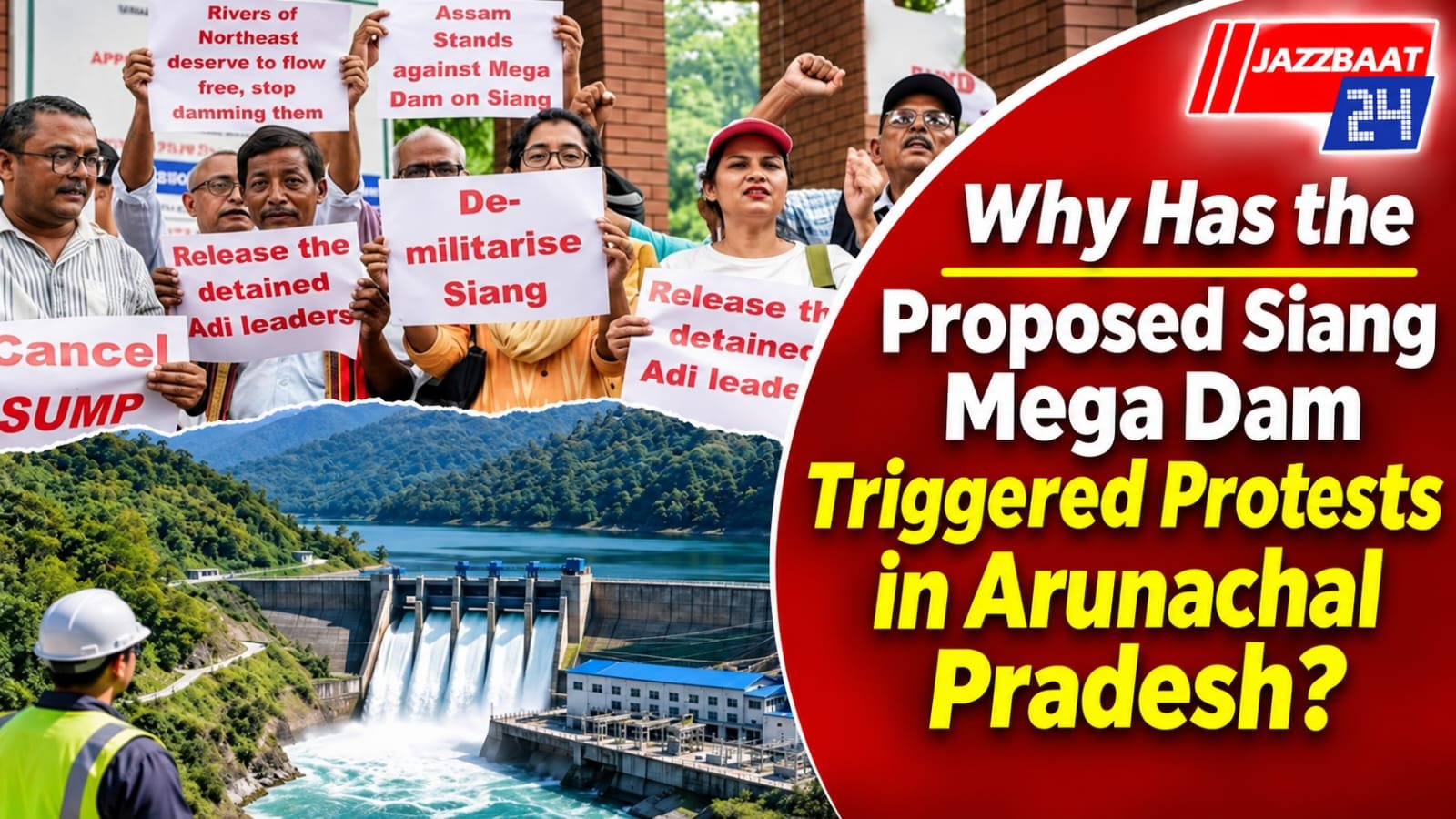
The proposed Siang Upper Multipurpose Project (SUMP), an ambitious 11,200-megawatt hydropower and water-storage project in Arunachal Pradesh, has triggered strong protests among sections of the indigenous Adi community. The controversy has intensified as the Centre and the state government push forward with preliminary studies, while local organisations remain concerned about the project's potential impact on their land, livelihoods and traditional way of life.
Union Home Minister Amit Shah arrived in Arunachal Pradesh for a two-day review visit amid the growing unrest. During his visit, Shah acknowledged the concerns of residents of the Siang Valley and assured them that the government was willing to engage in positive dialogue. However, he also described the project as strategically important for India's national interests and Arunachal Pradesh's development.
The project, being undertaken by the National Hydroelectric Power Corporation (NHPC), will cover parts of Siang, Upper Siang and East Siang districts. It has been designated a National Project by the Union Cabinet since February 2008. Unlike conventional hydropower projects, the proposed reservoir is being presented primarily as a strategic water-storage and flood-management facility, alongside electricity generation.
One of the major reasons behind the government's renewed focus is China's ongoing construction of a massive 60,000-MW hydropower project in Medog County, Tibet, approximately 40 kilometres from the Indian border. The development has raised concerns in India over the availability of reliable water-flow information and the possibility of sudden changes in river discharge.
The Siang River originates in Tibet as the Yarlung Tsangpo before entering Arunachal Pradesh and eventually becoming the Brahmaputra in Assam. Arunachal Pradesh Chief Minister Pema Khandu has argued that the proposed reservoir could help manage unexpected water surges during the monsoon and address water shortages during the winter months.
However, the project remains at the pre-feasibility survey stage, and construction has not yet received approval. The government has maintained that the current activities are limited to technical and environmental investigations to assess the project's feasibility. Khandu has also stated that further decisions would require public hearings and compliance with existing land acquisition and environmental laws.
Several indigenous organisations, including the Siang Indigenous Farmers' Forum and Adi Baane Kebang United, have strongly opposed the surveys. They fear that a reservoir of this scale could submerge ancestral villages, agricultural land and orange orchards, threatening the livelihoods and cultural heritage of local communities.
Tensions escalated in October following the preventive detention of four activists and a 12-hour shutdown. Violence during the protests resulted in damage to an NHPC office and police vehicles, leading to the deployment of 30 to 34 companies of Central Armed Police Forces across the affected districts.
Although the government is attempting to build consensus through village-level agreements and rehabilitation proposals, protesters have demanded the withdrawal of security forces and withdrawal of cases against demonstrators before agreeing to further dialogue.
The central challenge now is balancing India's strategic water-security concerns with the rights, concerns and livelihoods of the people who call the Siang Valley home.




Reader Comments 0