
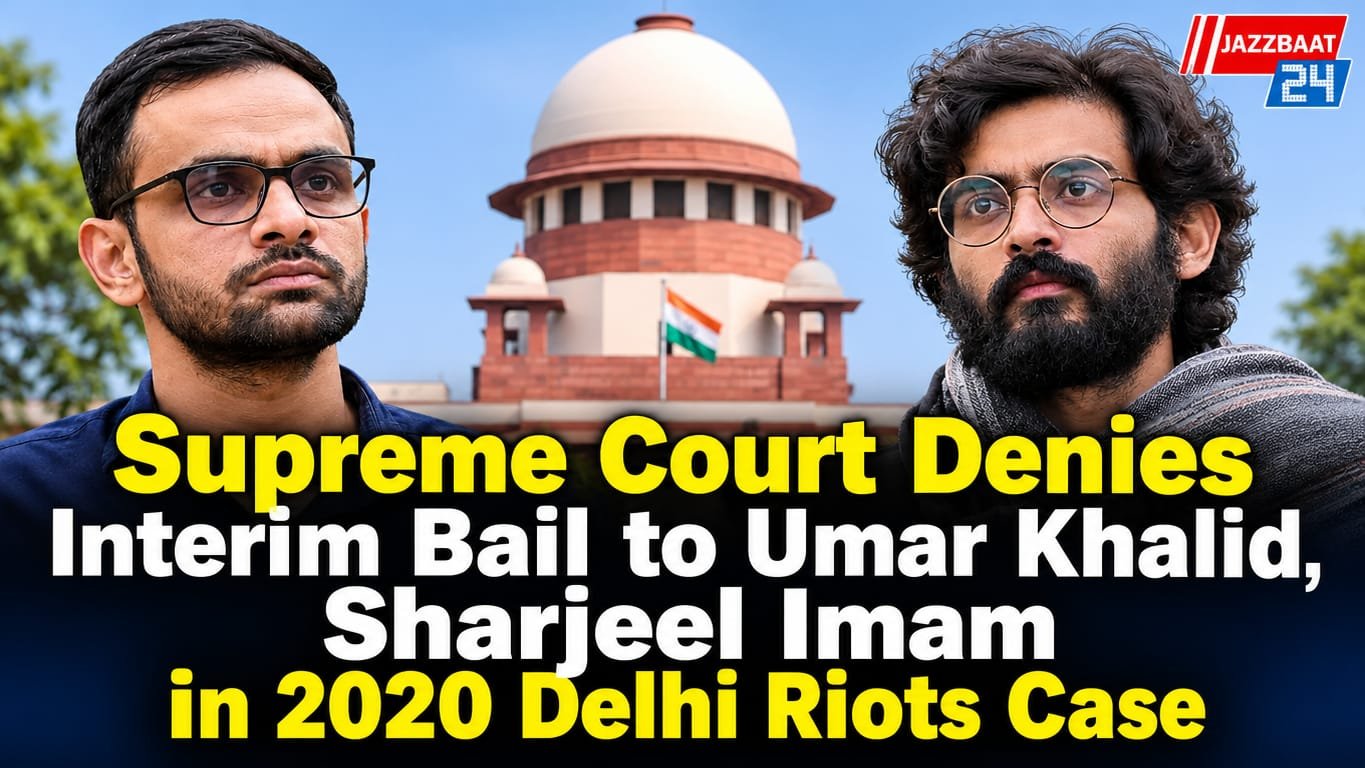
Ehtisham Qudrat, New Delhi: The Supreme Court of India on Wednesday, November 25, declined to grant interim bail to activists Umar Khalid and Sharjeel Imam in the 2020 northeast Delhi riots larger conspiracy case registered under the Unlawful Activities (Prevention) Act (UAPA). However, the apex court issued notices to the Delhi Police and sought its response to their bail petitions.
A three-judge bench comprising Chief Justice of India (CJI) Surya Kant and Justices Joymalya Bagchi and V Mohana heard the separate pleas filed by Khalid and Imam, challenging the Delhi High Court's decision to deny them bail.
During the hearing, senior advocate Kapil Sibal, appearing for Umar Khalid, requested interim bail while the matter remained pending before the court. Senior advocate Siddharth Dave, representing Sharjeel Imam, also sought similar relief, citing their prolonged incarceration.
However, the bench declined to consider the interim bail requests at this stage, indicating that the Delhi Police should first be given an opportunity to respond. "Not today," Chief Justice Surya Kant said when the request for interim relief was raised.
The court also directed that the matter be placed before the Chief Justice on the administrative side for the constitution of an appropriate three-judge bench to hear the petitions.
Why Did Umar Khalid and Sharjeel Imam Approach the Supreme Court?
The two activists approached the Supreme Court after the Delhi High Court rejected their fresh bail pleas in September 2026. They are accused in the alleged larger conspiracy behind the February 2020 communal violence in northeast Delhi.
The riots, which broke out in February 2020, resulted in 53 deaths and left hundreds of people injured. Khalid and Imam have been charged under the UAPA and other provisions of the law in connection with the alleged conspiracy.
Earlier, on January 5, 2026, the Supreme Court had rejected their regular bail applications while granting conditional bail to five other accused in the same case. The court had allowed Khalid and Imam to approach it again either after the examination of protected witnesses or upon the completion of one year from the date of the order, whichever occurred earlier.
The activists have challenged their continued detention, citing prolonged incarceration and delays in the trial proceedings.



Reader Comments 0