
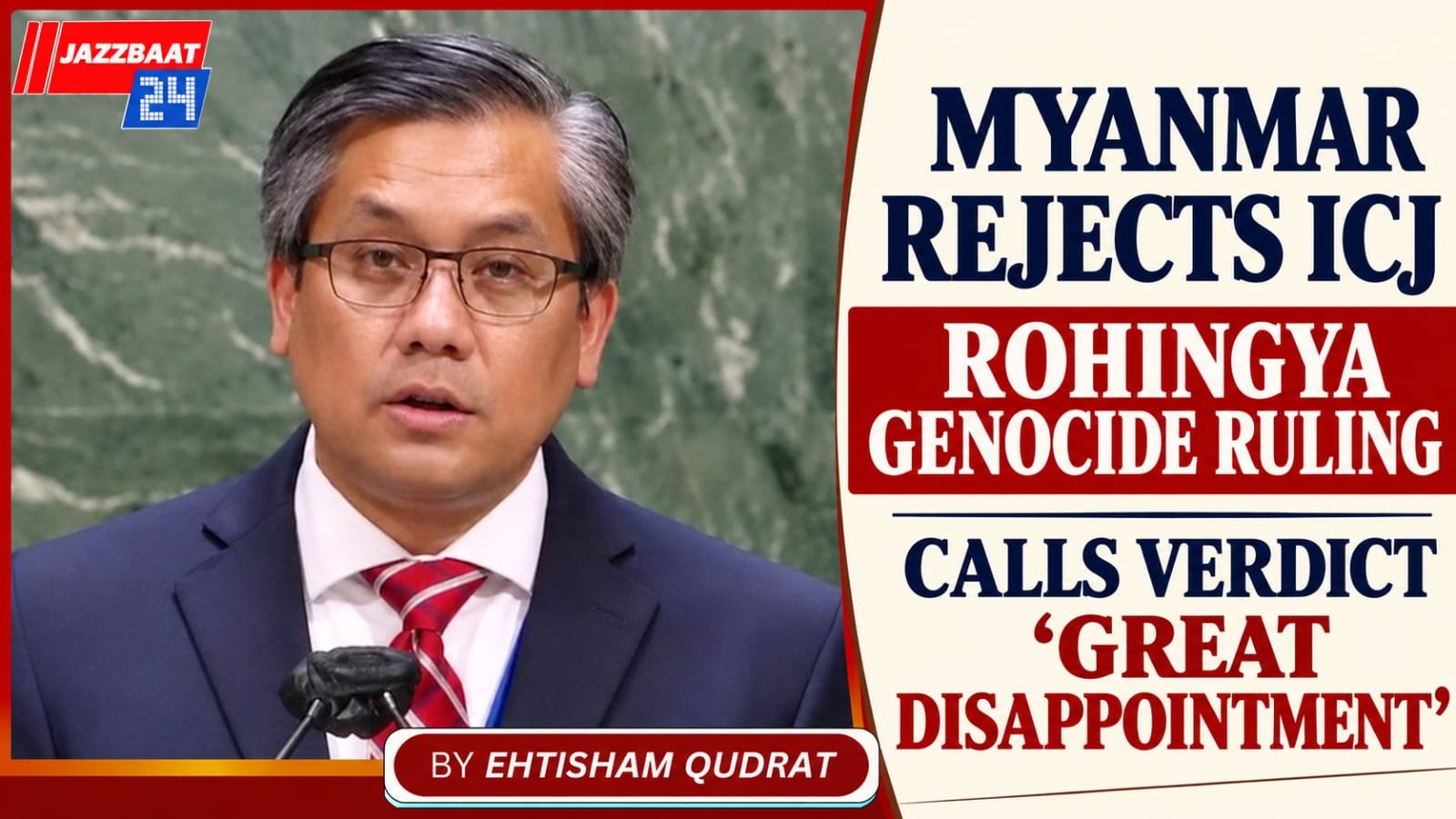
Ehtisham Qudrat: Myanmar has rejected a landmark International Court of Justice (ICJ) ruling that found its security forces responsible for genocide against the Rohingya Muslim minority, describing the verdict as a “great disappointment” and disputing the court's findings. The country's Foreign Ministry also said the return of Rohingya refugees from Bangladesh would take place only “as and when situations permit”.
In a statement issued on Friday, November 20, Myanmar's Foreign Ministry questioned the judgment, pointing to dissenting opinions among the judges.
“It should be noted that the judgment of the court was delivered with dissenting opinions and was therefore not decided unanimously,” the ministry said.
The reaction came a day after the ICJ delivered its judgment in a genocide case brought by The Gambia against Myanmar over the military's treatment of the Rohingya population.
ICJ Finds Myanmar Responsible for Rohingya Genocide
The United Nations' highest court found that Myanmar's military carried out mass executions of Rohingya men and boys, widespread rape and sexual violence against women, and the destruction of hundreds of villages during military operations in Rakhine State.
The judges also cited extreme violence against children and attacks on Rohingya civilians attempting to flee during the 2017 military crackdown.
The ruling marked the first time the ICJ had held a state responsible for genocide. It was also the fourth time since the Nazi Holocaust that an international court had ruled that the legal threshold for proving genocide had been met.
The court further ruled that Myanmar was obligated to compensate the Rohingya for the violations committed, with the amount to be determined at a later stage. It also said the country must facilitate the safe return of Rohingya refugees displaced by its actions.
Myanmar Defends Military Operations
Rejecting the allegations, Myanmar maintained that its military operations in northern Rakhine State between 2016 and 2018 were counterterrorism measures rather than actions intended to destroy an ethnic group.
The Foreign Ministry argued that the operations were conducted in response to terrorist attacks and were limited in scope and duration.
In its statement, the ministry said the counterterrorism operations were “not carried out with genocidal intent” and were undertaken in direct response to widespread terrorist attacks.
Myanmar also disputed the accuracy of allegations presented by The Gambia, which brought the case before the ICJ, as well as reports referenced during the court proceedings.
Return of Rohingya Refugees Remains Uncertain
The question of Rohingya repatriation remains a major challenge following the court's judgment.
Around 750,000 Rohingya fled Myanmar during the 2017 military crackdown and sought refuge in neighbouring Bangladesh. The refugee population in the country's densely populated camps has since grown to approximately 1.2 million.
Myanmar's Foreign Ministry said the country would continue providing humanitarian assistance and rehabilitation for displaced people in northern Rakhine State. It also said verification and repatriation of Rohingya refugees living in Bangladesh would continue “as and when situations permit”.
The ministry called on the international community to consider the challenges facing Myanmar objectively and contribute constructively while respecting the country's sovereignty, independence and territorial integrity.
However, prospects for the refugees' safe return remain uncertain amid continuing instability and armed conflict in Myanmar.
The country has been in turmoil since 2021, when the military ousted the elected government led by Aung San Suu Kyi, triggering a civil war that has also intensified fighting in Rakhine State.
Myanmar has long described the Rohingya as illegal migrants from neighbouring Bangladesh and denied them citizenship, despite generations of Rohingya families having lived in the country.


Reader Comments 0